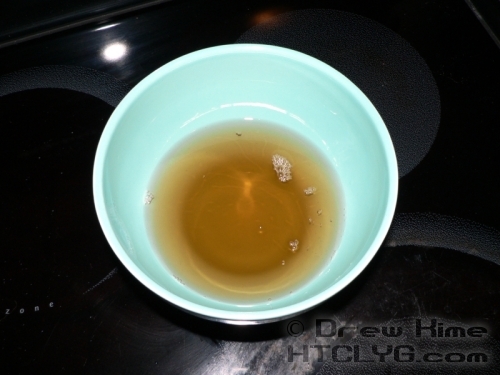
Not too long ago the average housewife would have been amazed at how wasteful we are, throwing out all that great bacon fat. After all it’s a rendered fat, just like lard or tallow, suitable for cooking and use in recipes.
I followed the lead of someone who’s done more research and started keeping mine. It’s really easy to keep, and much better than vegetable oil for frying.
All you need is a bowl and a paper towel next time you make bacon.
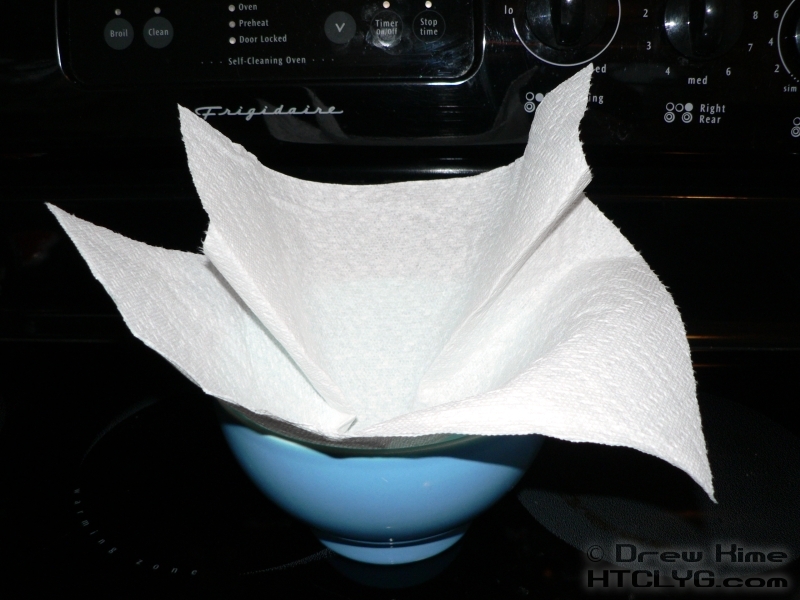
Pour the fat into the bowl while it’s still hot.
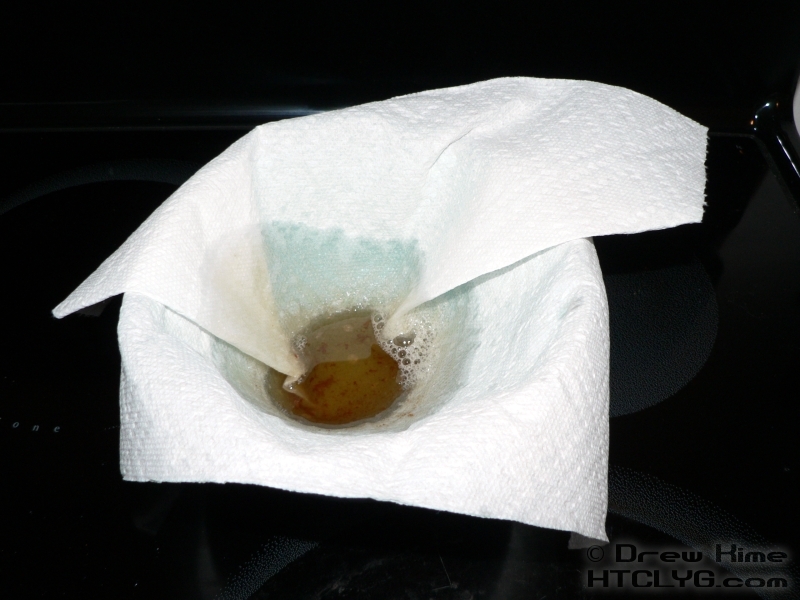
Lift the paper towel up by the corners and let the melted fat drain through. The hotter it is when you do this step, the faster it will drain.
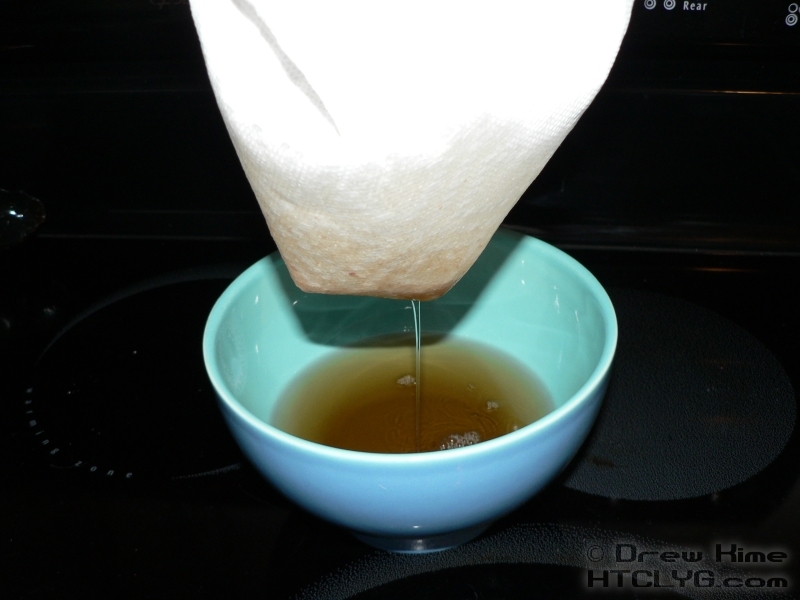
The paper towel will catch all the solid bits, which is all we’re really trying for.
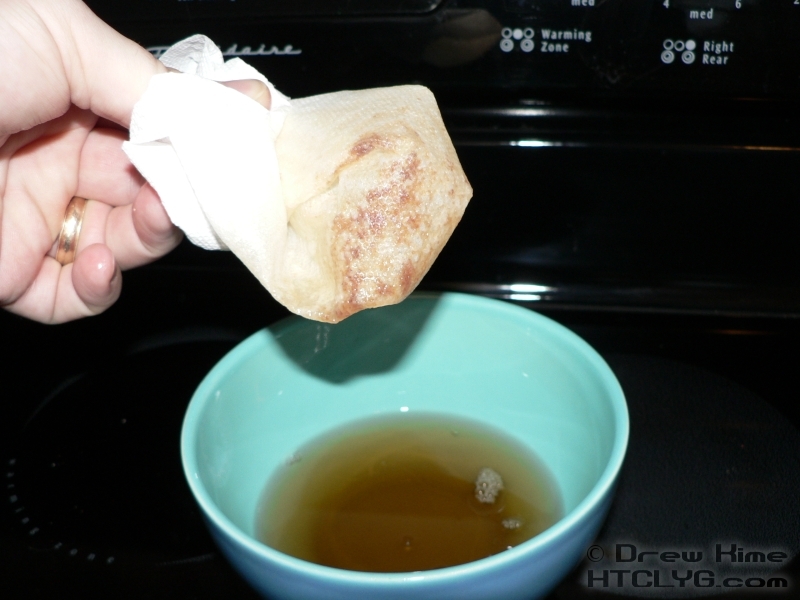
The finished product will be anywhere from light yellow to nearly brown, depending on how crispy you made the bacon and how hot you had the pan.
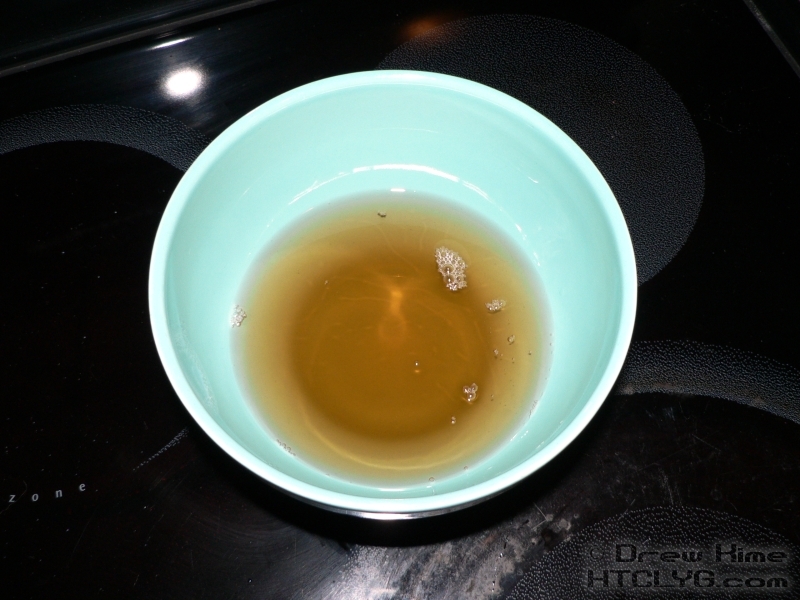
I leave this to cool for a while before transferring to a plastic container, which I then keep in the fridge.
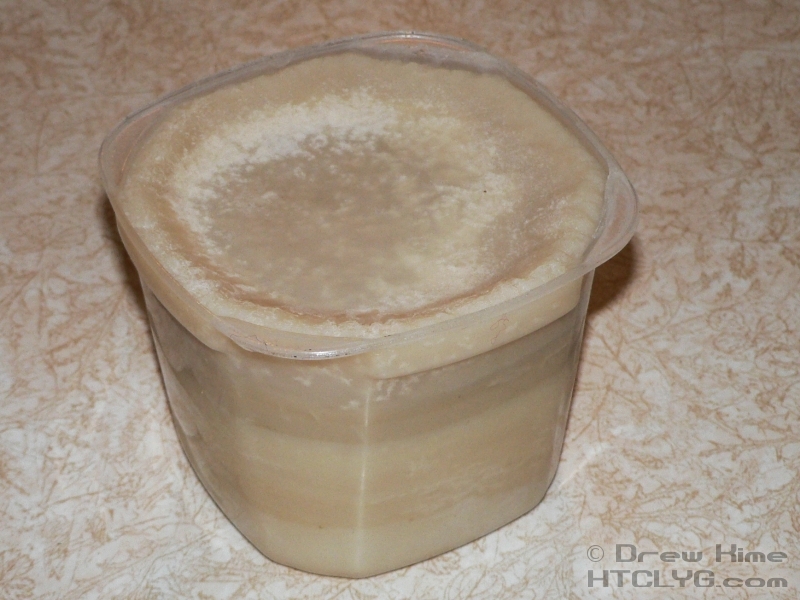
I could go with glass or stoneware for storage, but I’d worry about shattering it by pouring hot fat into a cold vessel. You can see in the photo above that I’ve got three or four rounds of bacon fat in there. We like bacon more than we like frying, so we end up with a surplus. If you know some recipes that call for bacon fat, let me know.
In colder areas you can probably store this in the pantry, though you’d have to have a secure lid and make sure the outside is spotlessly clean or you’ll attract pests. In fact, just put it in the fridge. If you want it softer for a recipe take it out an hour or so ahead of time.
Unlike lard, this will add some flavor to whatever you’re cooking. But everything’s better with bacon.











58 Comments
Julia, that’s being really frugal. But since I don’t consider Crisco to be a food I don’t have it to begin with, so I don’t have to deal with leftovers or reusing it. And if you keep your bacon fat, you don’t really need Crisco anyway.
How long can bacon fat be stored safely in the refrigerator?
Sandra, I’ve got an old recipe for sausage that calls for packing them in bacon fat to preserve them. As in without refrigeration, bacon fat was used as a preservative. So I’m not saying it lasts forever, but I’ve got a container in my fridge that gets topped up every so often, and hasn’t been completely emptied since … I honestly can’t remember.
Loved that helpful hint for bacon fat. I really need to cook more bacon as my husband and I really like Texas Chicken Fried Steak (which really isn’t chicken at all but tenderized pork cutlets, breaded like chicken and then fried) and they’d be marvelous fried in bacon fat.
I’ve been saving my bacon grease lately (although I don’t actually make bacon that often)-although I admit that I just poured it out of the pan into a container w/out straining.
I used it for half the “oil” in my cornbread recipe last night. Bacon-y flavored corn bread? Awesome!
Jenn, the big advantage to straining is that you can use it in baked goods where you don’t want the crunchy texture. For instance, I know someone who uses it to make the crust for her apple pie, which she then covers with a lattice-weave bacon crust.
How nice to find a bunch of other bacon fat aficionados
I’ve been saving mine for about a year or so. Baked beans, cornbread, savory muffins (like bacon cheddar) and my garlic-cheese biscuits are some of my favourite ways to use it. Makes great hash brown potatoes, and totally awesome fried perogies, too!
5 Trackbacks
[...] a couple of tablespoons of bacon fat in a hot [...]
[...] large Russet potatoes 1 cup bacon fat 1 cup sour cream 1 large onion 1/2 cup [...]
[...] a few tablespoons of bacon fat over medium heat, and add the [...]
[...] that everything’s diced, melt a couple of tablespoons of bacon fat over high heat in a non-stick or cast iron [...]
[...] cooking grease for re-use. (See my post on how to render and store bacon fat. I hadn’t thought to use a coffee [...]