For special deals and more great content, sign up for the free How To Cook Like Your Grandmother Newsletter.
Email address:


Also receive blog posts via email

Name: (optional)

Not now, thanks

How To Make Bread And Butter Pickles

Ever since I was a kid I’ve loved bread and butter pickles. My mother’s garden always produced way more cucumbers than we could possibly eat, and she would turn the extras into pickles. I don’t remember if she made any other kinds. All I remember is the bread and butter.

Ingredients
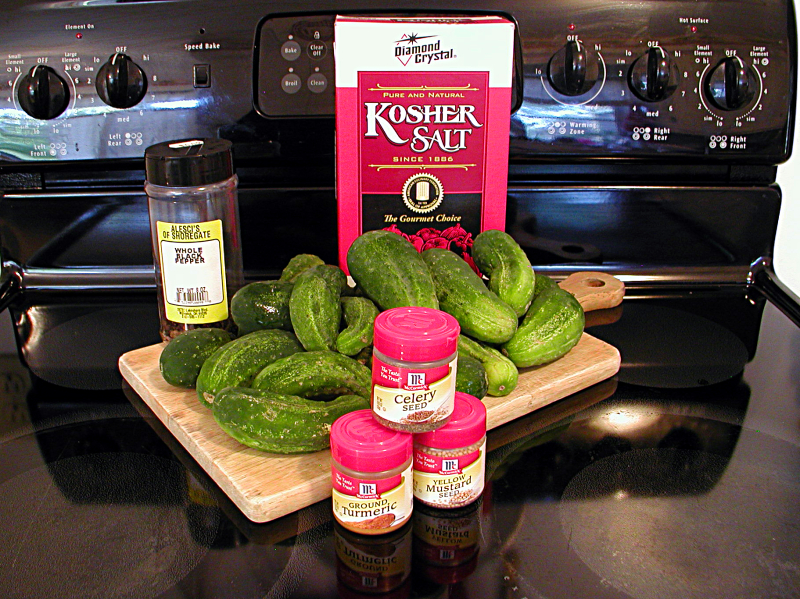

5 pounds cucumbers
1 cup kosher salt
5 cups cider vinegar (not pictured, because I’m a dummy)
5 cups sugar
1-1/2 pounds onion (also not pictured … big dummy)
2 tablespoons yellow mustard seed
1 tablespoon celery seed
1 tablespoon turmeric
1 tablespoon coarsely cracked black pepper

Directions

The brine

You can do bread and butter pickles either as chunks or as thin slices. So I did both.
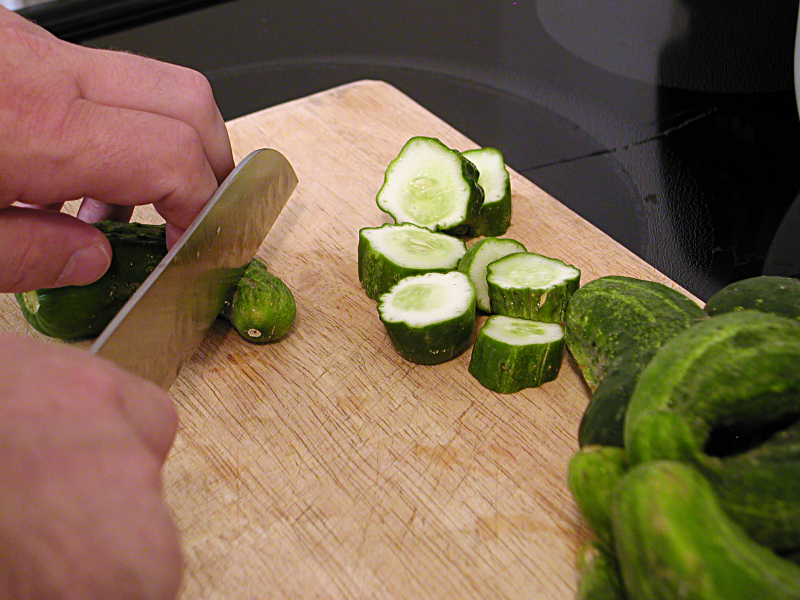
I did about 50/50, figuring I could separate them back out when I put them in the jars. Stop laughing, I’m an optimist.

Dissolve the salt in a large pot with 6 quarts of water. Filling with hot tap water instead of cold will help it dissolve faster.

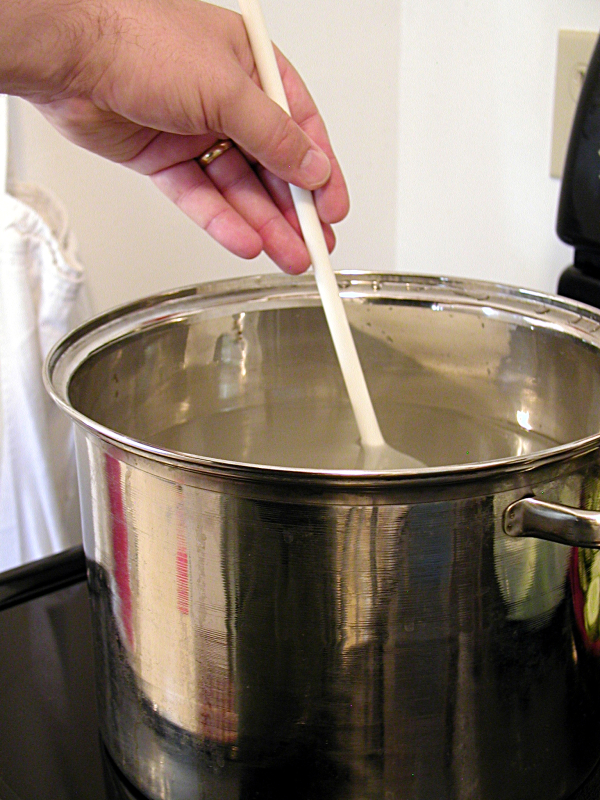
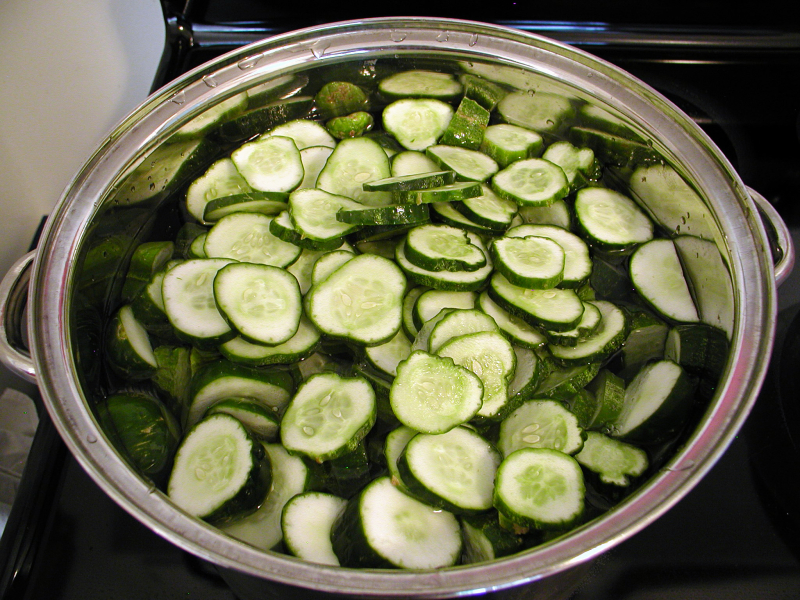
Once the salt is dissolved, add the cuke pieces and stir to make sure they’re not all stuck together.
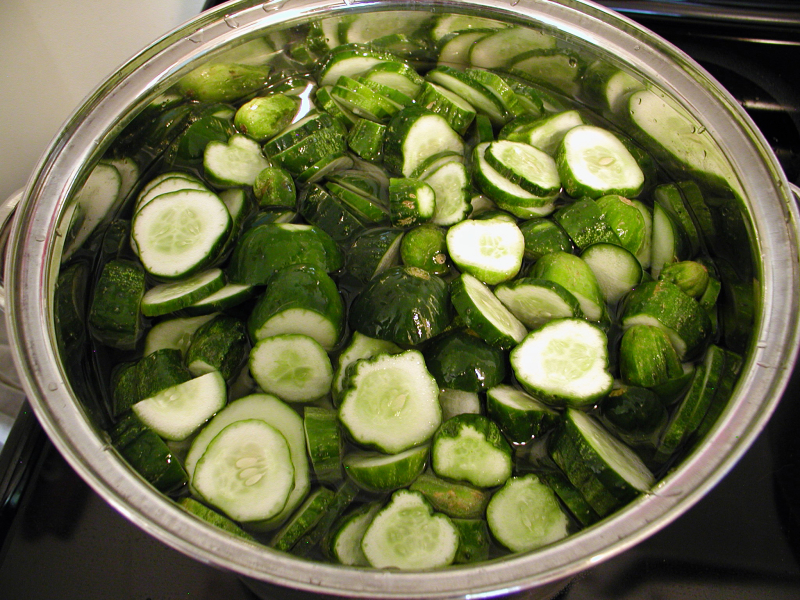
Oh, a note on salt. You can use kosher salt, like I did, or pickling salt. Yes, they make special salt for this. But don’t use iodized table salt. The iodine will make the liquid all cloudy. Still tastes the same, but it will look gross.

My cukes kept floating, so I put the strainer in on top to keep everything submerged.
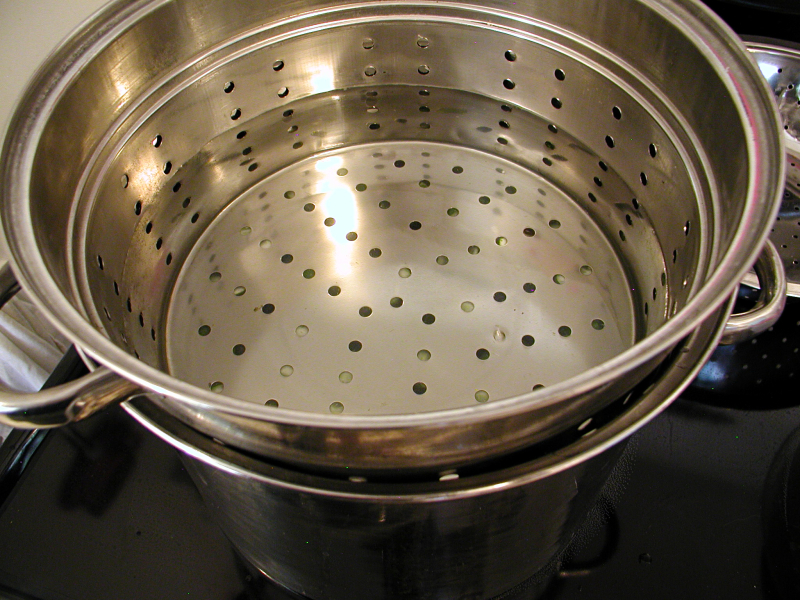
I don’t know that this was necessary, but it made me feel better.

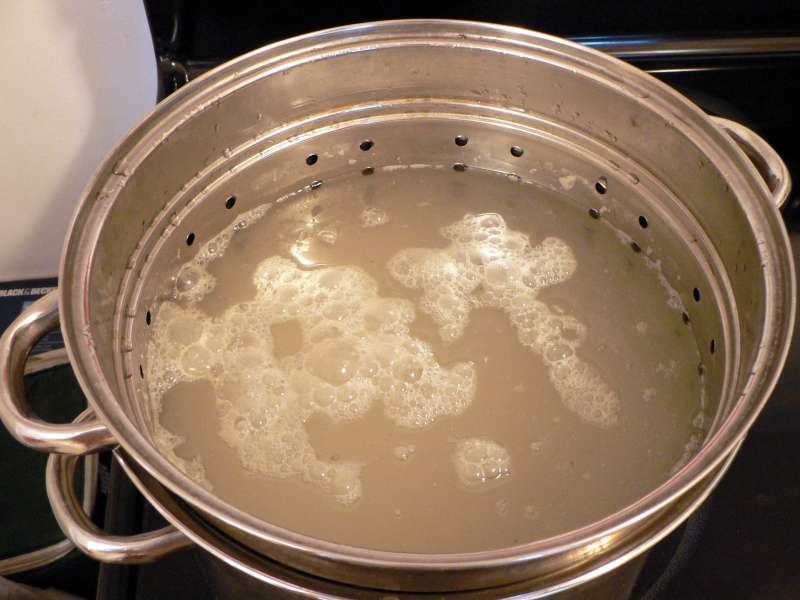
Cover the pot and leave it somewhere cool overnight. The fridge is good if you have room. Otherwise a cool basement should be fine. When you open the pot the next day, there will be a bit of foam on top. Don’t worry, this is normal.

The flavor

Combine the sugar and the cider vinegar in a large pot over medium heat and stir until it’s dissolved.
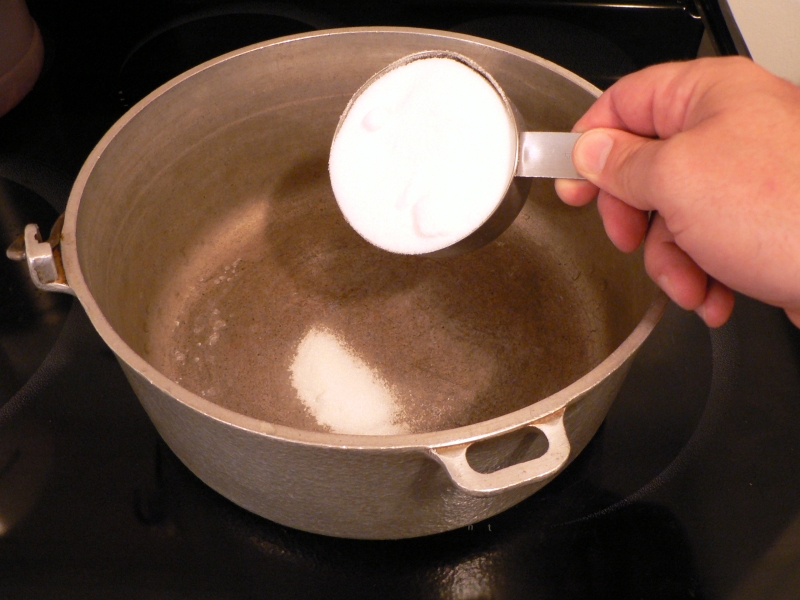
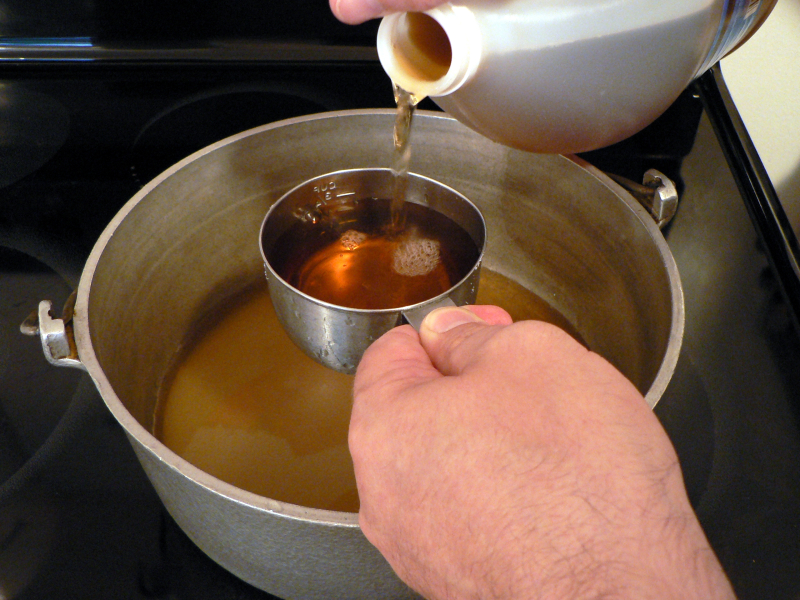
Don’t inhale the steam from this. Cider steam will burn your lungs. (Okay, it burned my lungs. I’m assuming it would do the same to yours.)

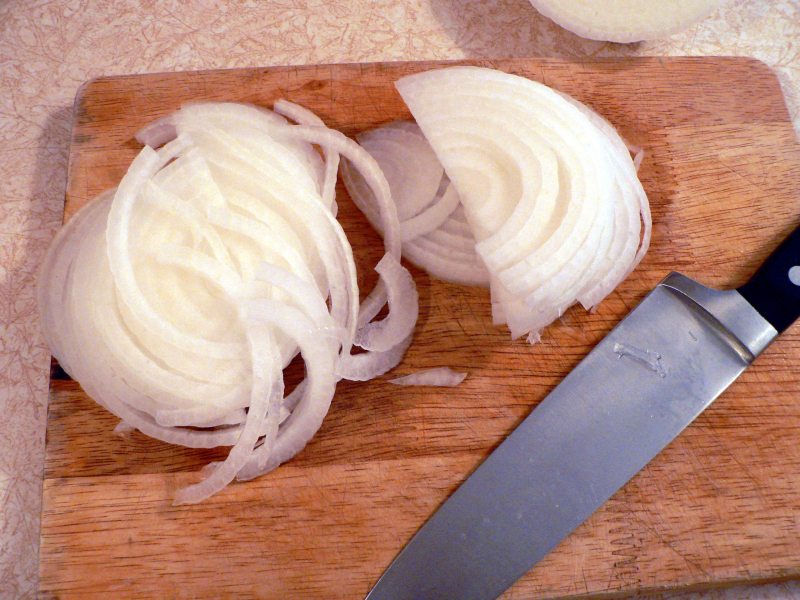
While you’re waiting for the sugar to dissolve, slice the onion very thin.
Add the mustard and celery seed to the pot.
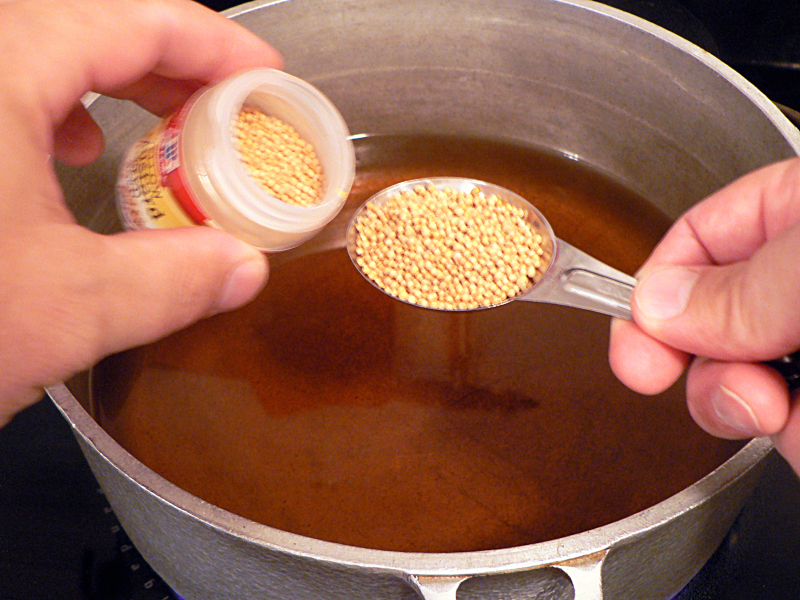
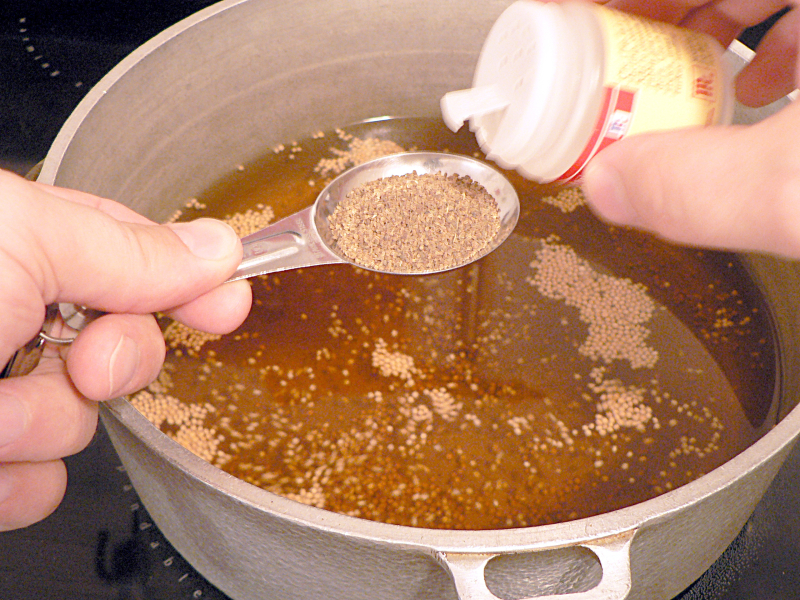
Wow, this looks like a lot of seeds.
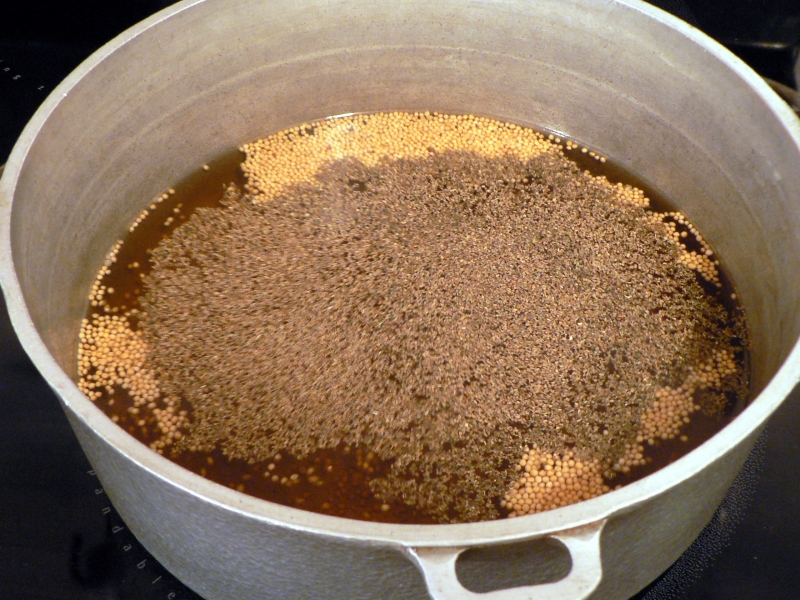
Be careful with the turmeric. This stuff stains everything it touches. Remember those chewable tablets the dentist gave you when you were six, that would stain all the tartar and junk in your teeth so you knew where to brush? Turmeric is like that, except yellow, and it shows you where your pot isn’t spotlessly clean. I don’t want to get any of this on my counter. I’m afraid of what I’ll see.

UPDATE – Important note on turmeric: Because my measuring spoons wouldn’t fit inside the little jar, I dumped it into the spoon over the bowl. As you can see, I got a bit more than I wanted, maybe an extra teaspoon. Turmeric is bitter, peppery with a hint of mustard. In fact it’s used in mustard for bite and for color. Don’t put too much in your bread and butter pickles. They come out as a good hot pickle, but not what you would expect from a bread and butter pickle.
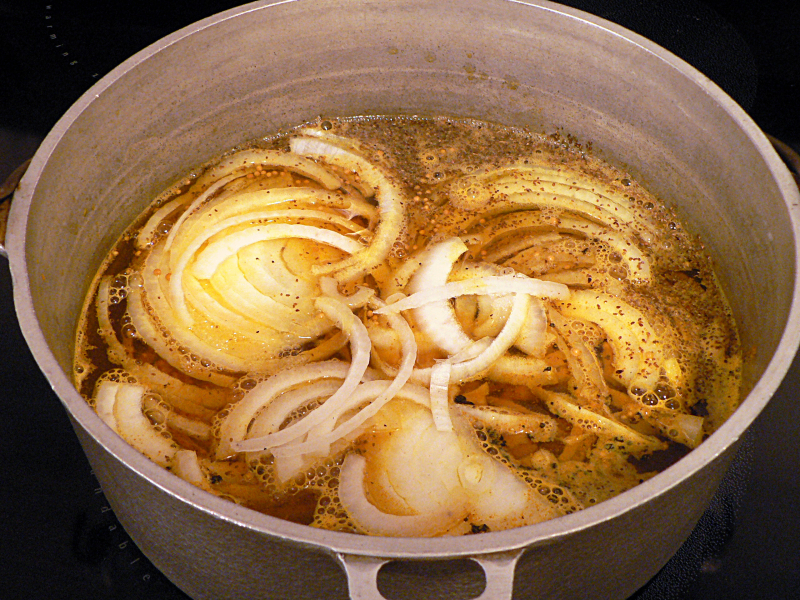
Add the onion and turmeric and stir.

Drain the cuke pieces. I already had the strainer in my pot, so I just used that. Otherwise use the colander.

As I was about to add the cukes to the juice, I decided I should have cut the onions into smaller pieces. I was about to scoop them all back out onto the cutting board when I got a better idea.
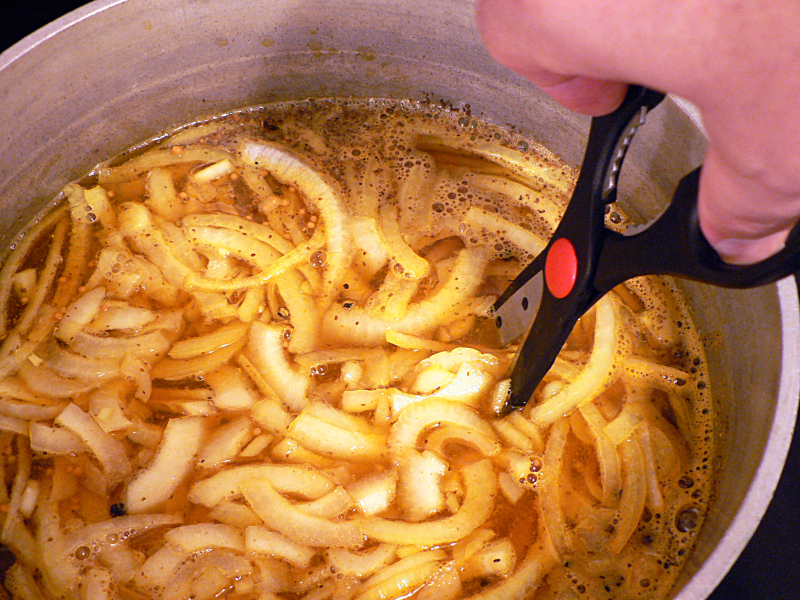
Yeah, perfect. Now add the cukes and stir. If you measured everything correctly, there should be just enough liquid to cover the cukes.
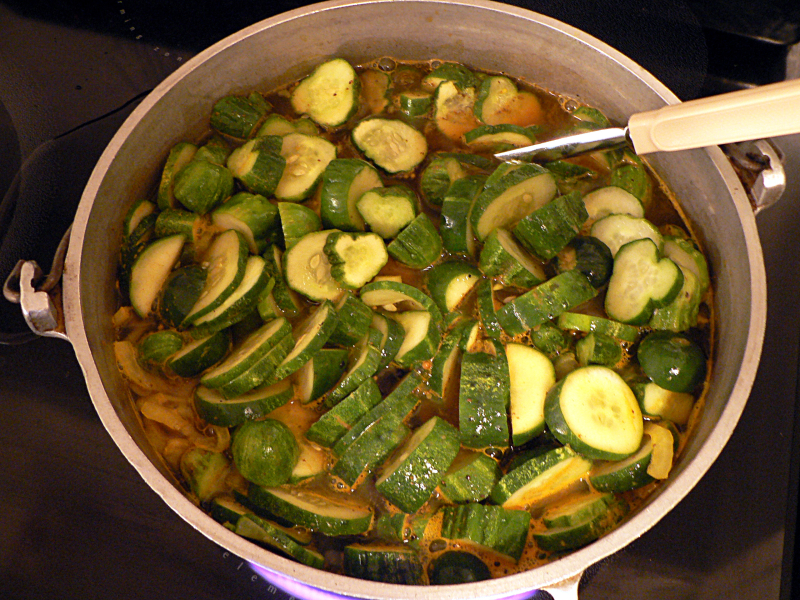
Place over medium heat until it comes to a boil.

Don’t walk away. If your pot is as full as mine was, it can start to boil over the edges almost immediately after starting to boil. (No, I didn’t this time.) Then turn the heat down, cover the pot and simmer for five minutes.

Canning

Unless you’re having a party, or pregnant and having cravings, you won’t be able to finish all of these right away. You can let them cool for several hours in the pot, then store them in a tightly-sealed container in the fridge for two weeks.

Even better, if you’ve got the hardware, is to can them. In jars. Yes, you can things in jars. Don’t ask.

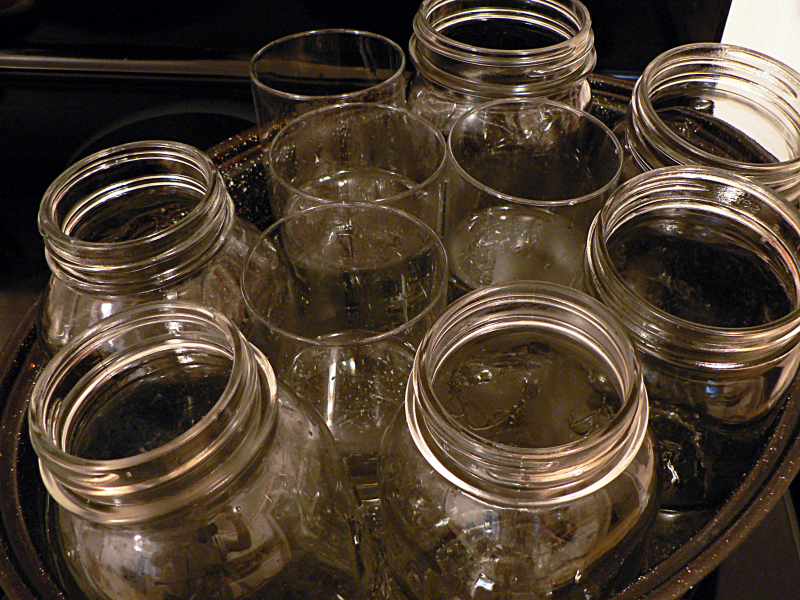
If I had read the recipe I was working from correctly, I would have 6 pint jars here. If you’ve done this before, or if you’re a good judge of volume, you’ll see that there are 6 quart jars there. This is why you always read recipes all the way through before you start. So that you don’t make mistakes like this.

I don’t have a special pot for canning, so I just grabbed something that was big enough to hold all the jars. That happened to be my roasting pan. It was more than big enough. So big, in fact, that when I started to fill it with water all the empty jars started floating and falling over. Oops. So I took the jars out, re-sterilized them, and packed the extra space in the roaster with drinking glasses.
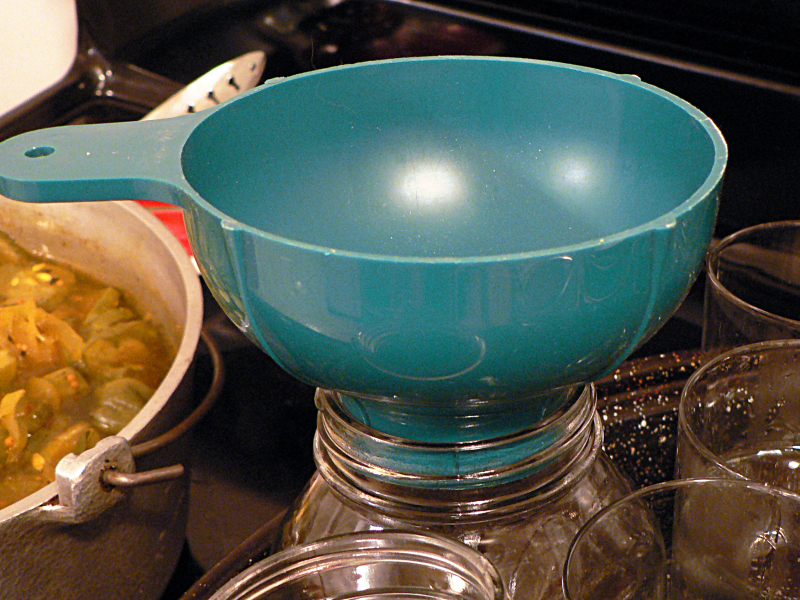
You can get the cukes into the jars without a funnel, but not the juice. If you’re doing this for the first time, get yourself one of these wide-mouth funnels. They’re made especially for canning. You should find them where you get your jars and lids.
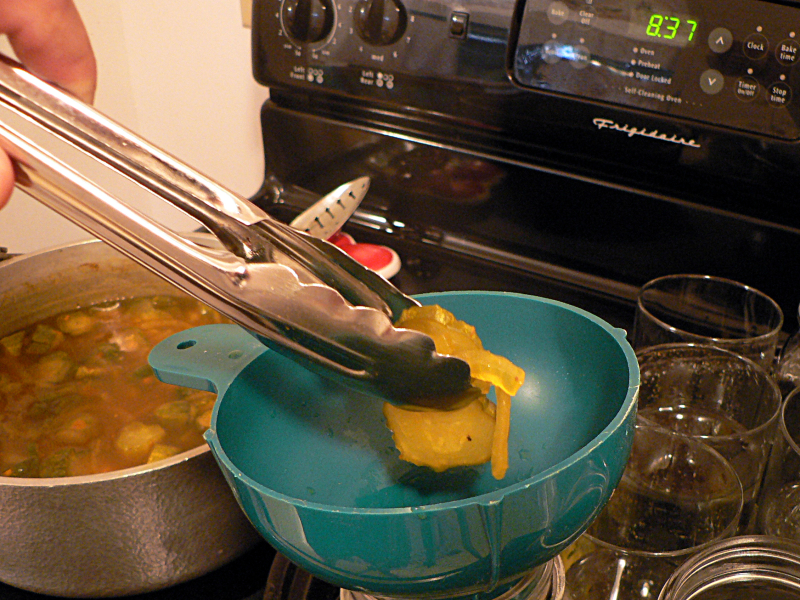
I started out with the tongs, trying to separate the slices from the chunks. Once I accepted that there was no way that was going to happen, I switched to the ladle.
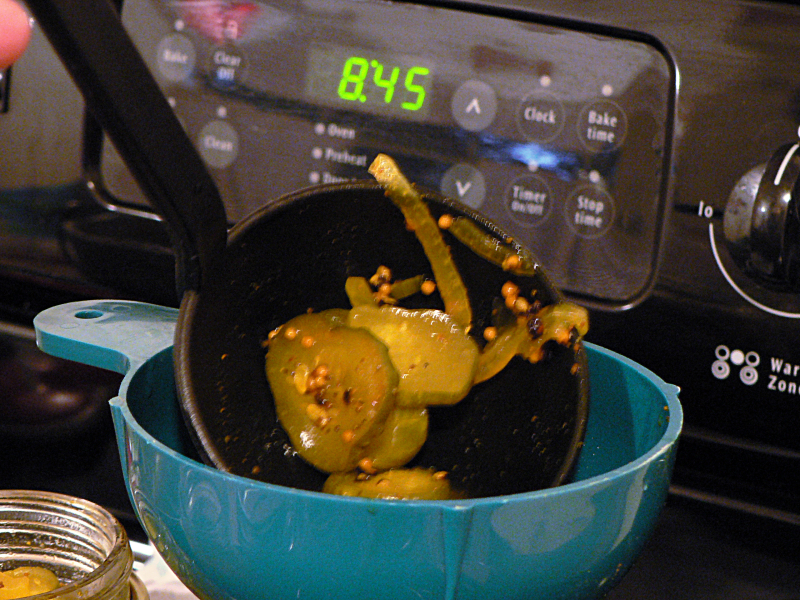
I got lucky and there was exactly enough to fill the three jars.
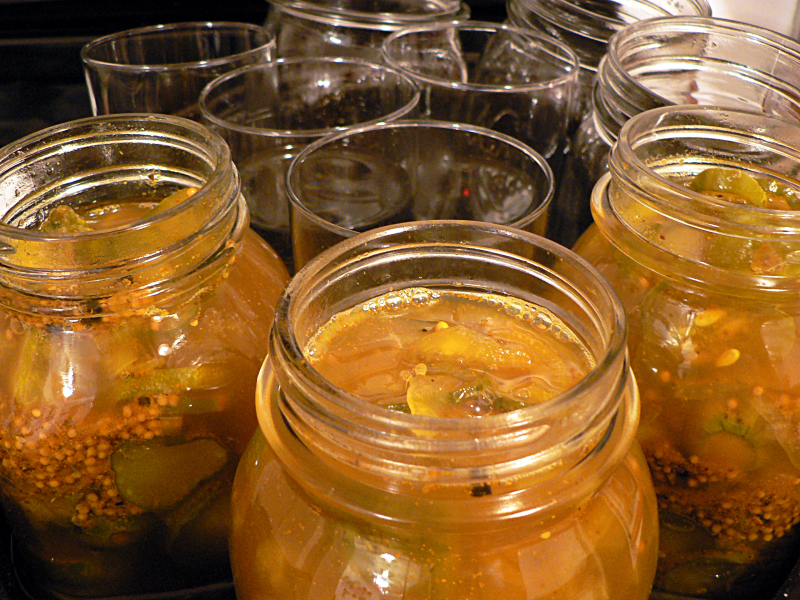
Leave a half inch of “headspace” in each jar. The jars won’t seal right if you don’t. Just fill to the bottom of the threads and you should be fine. They also won’t seal right if there is any pickle juice on the top of the rim, so make sure they’re all clean.

Put the pot and filled jars over high heat and bring everything to a boil. Don’t expect a rolling boil in the jars, but you should see bubbles coming up. Go for about 10 minutes after the water in the pot comes to a boil.

The lids for canning jars come in two pieces, a ring and a lid.
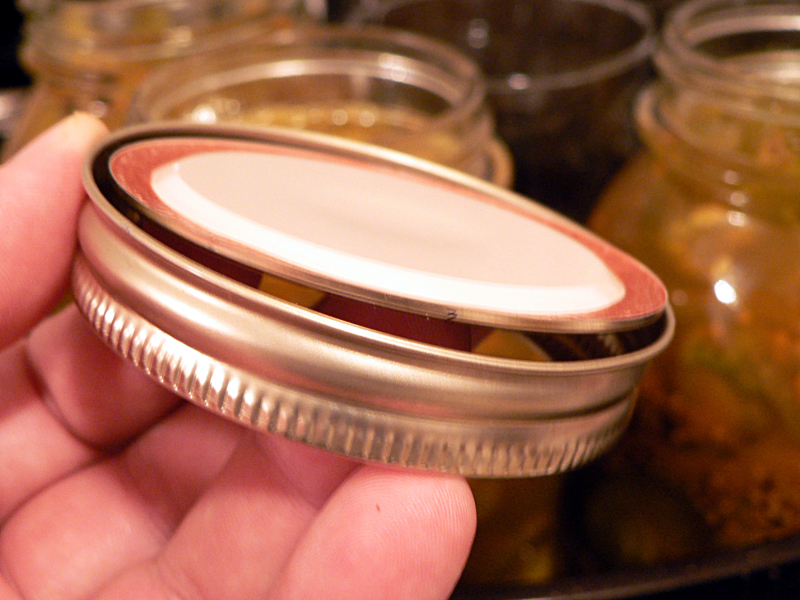
After the 10 minutes of boiling, remove from heat and put a lid and ring on each jar and tighten barely finger tight. The ring should lightly hold the lid against the top of the jar. The heat will cause the air in the headspace to expand and squeeze out under the lid. When it cools, the air will contract and vacuum seal the lid. You’ll know it’s done when you hear a pop.

Three pops later, I’ve got three jars of pickles ready to … I was going to say “ready to eat” but they’re not. I’m going to leave these for at least two weeks before trying them.
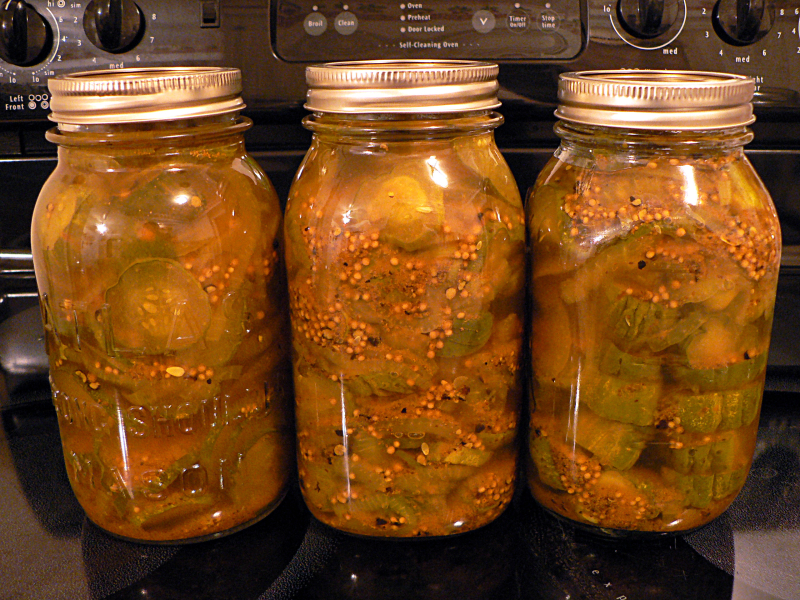
And that’s it.


A note on re-using parts

When you open a jar, you’ll have to break the seal on the lid. Depending on how tightly it sealed, you might have to pry pretty hard. But no matter how easily it may have opened, you don’t re-use the lids. You can keep the jars and the rings and use them over and over, but the lids are a single-use item. That’s why they’re sold separately.


Whew, that was a bit more work than I expected. But it should go much faster next time. Which should be in another month or two when my father-in-law’s garden is ready to harvest. I’ll put some pictures up tomorrow of what I’ve got to look forward to.

Want more like this? For more recipes like this, that you can hold right in your hands, and write on, take notes, tear pages out if you want (Gosh, you're tough on books, aren't you?) you might be interested in How To Cook Like Your Grandmother, 2nd edition, Illustrated. Or to learn your way around the kitchen, check out Starting From Scratch: The Owner's Manual for Your Kitchen.

This entry was posted in Side and tagged , . Bookmark the permalink. Post a comment or leave a trackback: Trackback URL.

48 Comments

  1. Kristin
    Posted August 1, 2008 at 7:27 am | Permalink

    Yay! A canning post! But I would add that it helps to dunk the lids in hot water for a few seconds before putting them on the jars. That softens the rubber sealing part and helps create the tight seal.

    I’m going to try to find a method for making fresh dill pickles today, to use up the beginnings of our pickling cucumber crop. It’s the pickling time of year . . .

  2. Posted August 1, 2008 at 8:12 am | Permalink

    If you sterilize the lids while the full jars are cooking, they should still be hot when you’re ready to use them. But does it really make that much of a difference? The top of the jar was nearly too hot to touch when I put the lids on. I assumed that was all the heat I’d need.

    Oh, and that reminds me of a tip I need to go add.

  3. Mel
    Posted August 1, 2008 at 9:39 am | Permalink

    I recently wrote a post about my grandmother and have been thinking about her a lot recently. These pickles were one of her specialties! I know EXACTLY what you kitchen smelled like and yes it can burn your lungs :) Thank you so much for rekindling this memory.

  4. Posted August 1, 2008 at 9:46 am | Permalink

    Mel, I just figured out while reading your comment why I haven’t eaten these yet. The kids came home from the pool just as I finished sealing the jars. The five-year-old said that the house smelled funny. She was right.

    I think, without realizing it, I didn’t want to try the pickles with that smell in my nose. It didn’t smell like food, it smelled like chemicals.

    I’m going to crack one this weekend and see how it came out.

    By the way, how close is this to your grandmother’s recipe? The color isn’t what I remember from my childhood, so I don’t know what to expect.

  5. Nancy from Mass
    Posted August 4, 2008 at 8:17 am | Permalink

    The only pickles my Dad made while growing up were Bread & Butter Pickles also! I ate so many, that I can't stand the thought of eating them again. They look good though! He made those and piccalilli. jars and jars of piccalilli.

  6. Posted August 4, 2008 at 9:01 am | Permalink

    I know what you mean. My father ate a lot of trout growing up. (His father was a fisherman.) To this day he can’t eat anything that smells the least bit fishy.

  7. Genie
    Posted August 4, 2008 at 10:25 am | Permalink

    What is the difference between sweet pickles and bread and butter pickles. I never liked either, but I still remember my mother, aunt, and uncle getting VERY excited whenever my grandmother made bread and butter pickles. While I didn’t like them, it was still fun to see how they’d sit around and think of things to eat that would complement the pickles.

    I cheated and added a tiny bit of tumeric to my chicken stock the other day to give it a richer color. It worked fabulously and didn’t change the taste in any way that I could tell.

  8. Posted August 4, 2008 at 11:15 am | Permalink

    I suspect “sweet pickles” can refer to a whole lot of different recipes. And while I’m thinking about it, I never understood what “bread and butter” has to do with these anyway.

    As for the turmeric, you don’t need very much to add color to a dish. If you’re going for the flavor, like in these pickles, you’re using quite a bit. And I went a bit beyond that. (Oops.)

  9. Anonymous
    Posted August 4, 2008 at 2:41 pm | Permalink

    Great recipe! I made these this weekend, and they turned out perfect. What a fun thing to do on a chilly, rainy day here in Alaska! Thanks.

    Kim

  10. Posted August 4, 2008 at 2:49 pm | Permalink

    It’s still hot and humid here. I can’t imagine cold and rainy yet, though it will give me the chance to do more “recipes” and less techniques. There’s only so many ways to say, “Coat librally with salt and pepper, then put it on the grill.”

  11. Anonymous
    Posted August 4, 2008 at 3:01 pm | Permalink

    Nasty summer up here so far. Only a few days of sunshine. Oh well, it’s given me lots of time for fishing and now I have lots of smoked salmon in the freezer. You might like that for something to try on your site. Not sure how many of your readers have lots of access to wild salmon though.

    Kim

  12. Posted August 4, 2008 at 3:12 pm | Permalink

    I know one person who doesn’t have access: me. But I’d be more than happy to let you do a guest post if you want to show off your mad fishin’ and smokin’ skillz.

  13. Anonymous
    Posted August 4, 2008 at 3:32 pm | Permalink

    That would be so cool! Thanks for the offer. We got 5 more fish this last weekend, and I’ll probably be smoking them up in the next week or two. It is a drawn-out process, you start with the brine, and then the glaze, and then the smoking. I’ll take lots of pictures during the process and get back with you afterwards. I can let you know when I’m done and go from there. Where do you live?

    Kim

  14. Posted August 4, 2008 at 3:37 pm | Permalink
  15. Anonymous
    Posted August 4, 2008 at 3:44 pm | Permalink

    I tried, but the link doesn’t work……..

  16. Posted August 4, 2008 at 4:15 pm | Permalink

    Okay, Blogger is doing something strange. I can’t make this link clickable here in the comment, sorry. drew@CookLikeYourGrandmother.com

  17. Debbieleigh
    Posted August 11, 2008 at 6:29 pm | Permalink

    I have made sweet pickles in the past useing my Mom’s recipe. It called for the cukes to be brined in lime water. Then rinsed and rinsed and rinsed. you get the picture. This does make the cukes nice and crisp. Why don’t we use lime water brine to make bread and butter or dill pickles? I am trying this bread and butter recipe for the first time to do something different.

  18. Mel
    Posted August 12, 2008 at 10:05 am | Permalink

    OK – after more conferencing with my Mother, she did agree that my Ge (my name for my grandmother) rarely wrote a recipe down. She did, however, later in her life, enjoy a particular cookbook. One that my Mother reminded me that I had in my possession. Amazingly, I knew exactly where it was and there is a Bread and Butter recipe. Very similar to yours, but uses an ice bath and adds one green and one red pepper (sweet). Not my Ge’s recipe, but one from a cookbook that I know she approved of! :)

  19. Posted August 18, 2008 at 2:01 pm | Permalink

    Debbieleigh, I’ve never had a crisp bread and butter pickle. Not sure I’d even like it … though of course that’s just because I’m not used to it. Do you have directions for that lime water recipe? I’d like to do dill next, and I like for those to be super-crisp.

    Mel, I want to try pickling a bunch of stuff this fall. Peppers will definitely be in the mix.

  20. Anonymous
    Posted August 27, 2008 at 2:52 pm | Permalink

    I love these pickles!
    It is the only kind my Mom ever made. I made a big ole batch but they are too salty, my Mom’s recipe calls for only 2 hours soaked in salt water (and I followed your recipe). I am hoping the saltiness goes away a bit after they sit.
    john

  21. Posted August 27, 2008 at 3:08 pm | Permalink

    I’ve seen recipes that called for rinsing them after the soak. Might try that next time. But actually I’ve got a tip coming up for what to do with the over-seasoned ones that I did.

  22. Anonymous
    Posted September 6, 2008 at 5:33 pm | Permalink

    Just thought I’d chime in – late as usual – and add a comment that the “lime water” used to make pickles crisp is made with pickling lime. This is also known as slaked lime. Mrs. Wage’s (commercial brand) Pickling Lime can be found in some stores, but definitly online. If you are lucky enough to have an old-fashioned hardware store that sells canning supplies, they’ll have this.

    Have fun with your dills Drew! Don’t forget a little garlic and a couple of hot pepper flakes.

    Marianne

  23. Posted September 6, 2008 at 7:40 pm | Permalink

    Oh … that kind of lime. That makes much more sense. Thanks for chiming in, Marianne.

  24. Buffy
    Posted May 17, 2009 at 10:17 am | Permalink

    Equal parts hilarious and informative! I’m definitely going to use your recipe, and hope I have as much fun as you seemed to. Many thanks!

  25. Posted May 18, 2009 at 1:13 am | Permalink

    Buffy, I’m glad you said something about these. I forgot I’ve still got a jar of these in the basement. Time to go crack it open.

  26. Buffy
    Posted May 19, 2009 at 4:48 pm | Permalink

    How were they?

  27. Posted May 19, 2009 at 5:09 pm | Permalink

    Buffy, I mentioned in the followup that they were more like a hot pickle because I accidentally added way too much turmeric. But then I made some hot dog relish with them that came out great.

  28. Jerry
    Posted June 6, 2009 at 1:08 pm | Permalink

    you might want to add cooking times to your receipt

  29. Posted June 7, 2009 at 10:10 am | Permalink

    Jerry, do you mean listing the time up where I list the ingredients? That's not a bad idea. I'll try to remember to do that.

  30. Wendy
    Posted June 14, 2009 at 1:15 am | Permalink

    So, I can make these without doing the whole hot water bath thing where you have to completely cover the jars with water??? That is so COOL. Can you do tomatoes this way too? Also, is this the technique for dills as well? Love your blog Drew!

  31. Posted June 14, 2009 at 9:02 am | Permalink

    Wendy, you can do them without covering the jars, but I don't recommend it — at least not any longer. I've read a lot more about canning since I did these, and the directions to use full-immersion water bath are pretty universal.

    However … pickles have traditionally been done in open-top wooden barrels that sit out for months at a time. Just keep topping up the cukes, vinegar, salt and spices. So I'm really not too worried that these are going to go bad.

  32. Anonymous
    Posted July 28, 2009 at 5:01 pm | Permalink

    I just tried your recipe and everything seemed to go just fine. This was my first time canning and as I began to check out other sites (ball and another official site on canning) they said to put the lids on and cover with water over an inch above the jars and process in the water bath… however I just filled the water over half way, lids off and processed then took them out, placed the lids and rings on. I am just wondering if my pickles will be safe to eat?

  33. Posted July 28, 2009 at 9:07 pm | Permalink

    Anon, promise not to call the FDA or the USDA on me? Pickles are so high in vinegar that you could probably leave the jars open and they'd be fine. Have you ever seen a big barrel at a deli with pickles in it? Pickling was originally a way to preserve food. The fact that it happens to be really tasty is just a bonus.

    I should tell you, though, that you really should do them completely submerged, especially if you plan on keeping them around for a while.

  34. Anonymous
    Posted July 28, 2009 at 11:36 pm | Permalink

    Thank you for the reply. I am relieved all my work is not in vain!! I will definately submerge next time. By the way I love your site… its so pretty and easy to follow :O) One more question, I was looking into doing my own pasta sauce and read up on yours… can I use my own recipe? As I was checking around, the "officials" seem to want you to use "already tested" recipies and I can't understand why I can't just can my own? Thank you again for your help. Athena

  35. Posted July 29, 2009 at 8:41 am | Permalink

    The reason for the "already tested" recipes is that canning is about preserving food. If you do something wrong, then set it on a shelf in the pantry for three months before eating it, you could make people seriously ill.

    You could do something "almost right" a half-dozen times and get lucky, or you could get food poisoning. When you use the tested recipes, and follow the directions, you're extremely safe.

  36. Nila Smith
    Posted August 2, 2009 at 2:55 pm | Permalink

    HI, you use the same recipe I do and it is very tasty. I don't have room for cans anymore, and I've been looking at freezer recipes, and none of them that I've found thus far use turmeric.

    I'm wondering if you know, is turmeric one of those things that isn't safe to freeze??

    I may be wrong, but I feel that ingredient is what gives the pickles their buttery taste, and they just won't be as good without it.

  37. Posted August 3, 2009 at 6:58 am | Permalink

    Nila, I don't know of any reason you couldn't freeze it. And by the way, turmeric is one of the key ingredients in most prepared mustard. It's got a peppery flavor, so it's what gives these pickles their tanginess.

  38. Nila Smith
    Posted August 3, 2009 at 7:16 am | Permalink

    Thanks Drew!

    We have pickles running out our ears this year, and I so hate to see them go to waste.

    I'm gonna give them a try at least. Some things I don't like at all from the freezer, and some things are do-able, but with practically zero pantry space, I just don't have room to store canned goods anymore, so wish me luck!

  39. Siusanne
    Posted August 25, 2009 at 8:53 pm | Permalink

    I love that I cracked up about six times just reading this recipe. Great site!

  40. Posted August 25, 2009 at 10:11 pm | Permalink

    Uh oh, I only made four jokes …

  41. Bob
    Posted September 13, 2009 at 1:19 pm | Permalink

    Make these this morning….SUPER. Thanks for sharing the recipe.

  42. Anonymous
    Posted September 13, 2009 at 5:37 pm | Permalink

    My grandmother used to
    make these. Got to the point
    that everyone fought over the
    onions, so she ended up making
    about 1/4 cukes to 3/4 onions.
    and we still fought over them.

  43. Posted September 14, 2009 at 7:24 am | Permalink

    Heh, that's good. I should cut the onions thicker next time so they'll hold up better.

  44. Diana
    Posted September 28, 2009 at 12:12 pm | Permalink

    Only a year late but I plan on using your recipe. Since it's almost October I hope I can still find some fresh cukes. I'm in the canning groove after putting up some salsa this past Saturday.

  45. Posted September 28, 2009 at 2:33 pm | Permalink

    Diana, the cukes can't be all done already, can they? The only thing I've been keeping track of in my father-in-law's garden are the tomatoes.

  46. unclejoes125
    Posted September 29, 2009 at 2:16 am | Permalink

    just did a batch of sweet peppers and 6 pints of califlower using this recipe.which by the way is my grandmothers recipe also. cant wait to crack open the jars yummmmmmm

  47. The Frugal Fraulein
    Posted September 29, 2009 at 1:33 pm | Permalink

    I have a concern about the pot you canned with. Hot Water Bath Canning requires a pot large enough to hold water which covers the jars to ensure that the internal temperature reaches a high enough level. Steam canning does make the lids seal but the method does not ensure the correct temp is reached. If the correct temp is not reached you can not ensure the bateria, molds, yeast and enzymes are killed and the food is not safe. I know our grandmothers used other methods but these days we have more bateria than they did in those days. Please can cautiously.
    My blog is at http://frugalcanning.blogspot.com Thanks!

  48. Posted September 29, 2009 at 1:54 pm | Permalink

    Fraulein, you're right, of course. I pointed that out on the page where I did tomato sauce, and I have since gotten a proper canning setup.

    However, for pickles, there is so much vinegar and salt that in lots of places you can see them stored open indefinitely. Delis are famous for their pickle barrels.

    Can you point me to anything showing why some pickles can be left open, while others might need water bath canning?

» Subscribe to comments on this post

Post a Comment

Your email is never published nor shared. Required fields are marked *

*
*

You may use these HTML tags and attributes: <a href="" title=""> <abbr title=""> <acronym title=""> <b> <blockquote cite=""> <cite> <code> <del datetime=""> <em> <i> <q cite=""> <strike> <strong>

  • Free Online Class

    Sign up now for my free 10-day online course in the basics: Starting From Scratch

  • Buy the Book


    Cooking used to be all about making food that tasted good. But somewhere along the way, we seem to have decided the diet-of-the-week was more important. How to Cook Like Your Grandmother is a return to recipes and techniques that are based on what tastes good, not on junk science and fad diets. You won't find the words lite, low, lean, free or skim anywhere. This is all real food, cooked the way Grandma would have done it.
  • Buy the Other Book


    People have been making and eating food as long as there have been people. And food. But somehow we've let ourselves believe that it's something only experts can do "right". That's where Starting From Scratch comes in. I'm not saying you'll go from zero to hero just by reading it, but at least now you'll know what those self-proclaimed experts are talking about.
  • Follow this blog

     Subscribe in a reader

    -- OR --
    To get recipes in your email
    Enter your email address:
    -- OR --
    Sign up for the weekly newsletter. Email address:
  • All-time Favorites

    Perfect Brownies French Onion Soup Bruschetta Pizza Egg Salad Onion Rings Banana Cake Cheesesteak Peach Cobbler Frozen Chocolate Truffle Pie Emily's Creamy Cheesecake
  • No Awards Please

Page optimized by WP Minify WordPress Plugin