For special deals and more great content, sign up for the free How To Cook Like Your Grandmother Newsletter.
Email address:


Also receive blog posts via email

Name: (optional)

Not now, thanks

How To Make Pizza Crust

My first attempt to make pizza crust didn’t come out quite right. It was too dry, but I didn’t trust my own judgment. So of course I had to try it again.

Same recipe, but doubled. And sure enough, it was way too dry until I added more water. And it came out just right. Except …

I like the chewiness of pizza crust. This one was tasty, but had a somewhat bread-like texture. I’m pretty sure what I need to do is get some high-gluten flour. I could mail order it, but first I’m going to call the Minneapolis Flour Co. (No, I don’t know why it’s called Minneapolis and it’s in Cleveland.) That’s where I get the 50-pound sacks of flour and cornmeal.

What, don’t you buy your flour in bulk?

Update: I finally got the bread flour. It works.

Ingredients
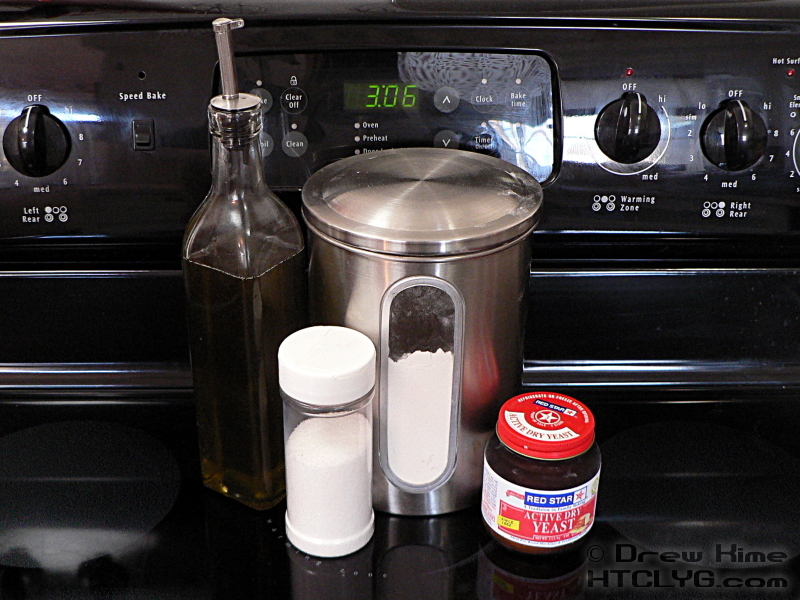

4 cups sifted flour
4 teaspoons active dry yeast (two packages)
1-1/2 cup warm water (105° – 115°)
2 teaspoons salt
1/4 cup extra virgin olive oil

Directions

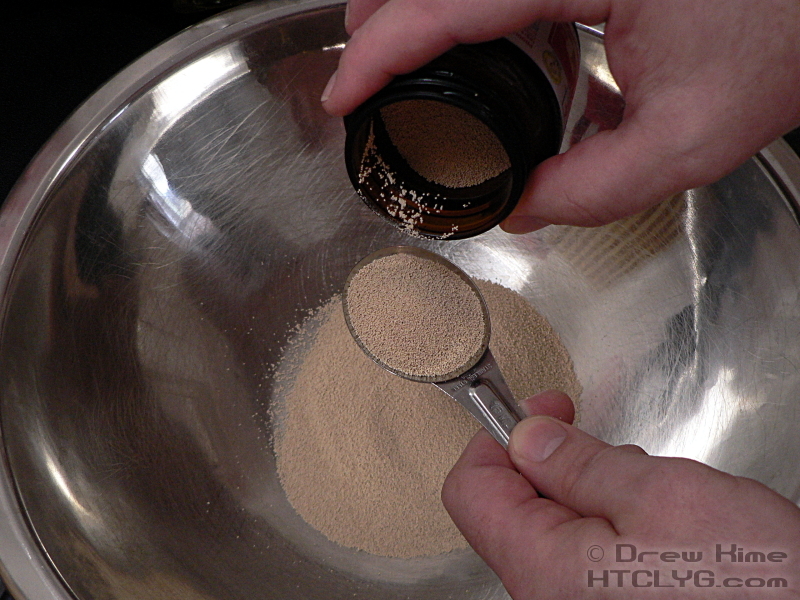
Let me start with an admission. When I started making bread I was using a recipe that called for yeast measured in ounces. I suspect they meant ounces by weight, and I converted based on ounces by volume. Or vice versa. In any case, all the recipes I’ve done since then that called for one package of dry yeast should have been 2-1/2 teaspoons. I’ve been doing tablespoons. Oops.

I finally discovered my mistake after adding the yeast in this recipe. It just looked wrong. I went and looked it up in a few different places. So “one package” of active dry yeast is 2-1/2 teaspoons.

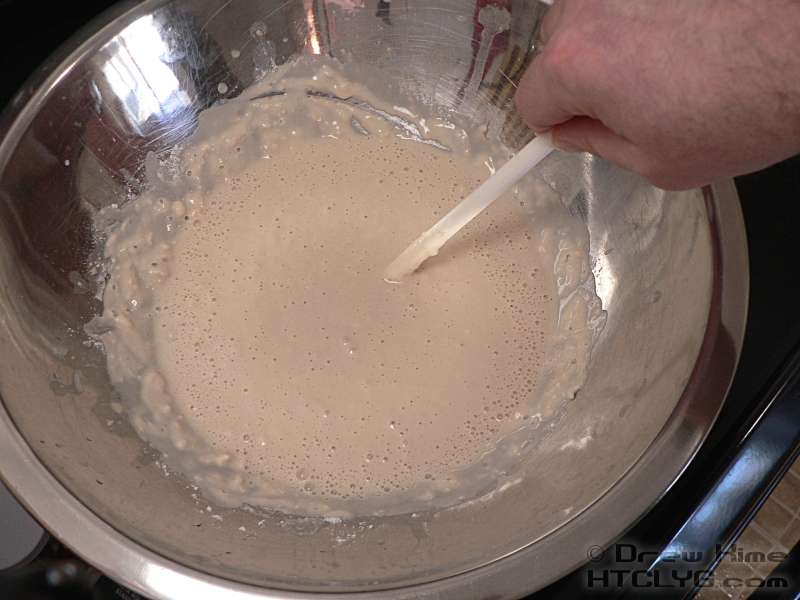
Now that that’s out of the way … Dissolve the yeast in the warm water. Don’t try to stir it too much or it will stick to your spoon. I use the handle of the spoon so there’s less for the yeast to stick to.
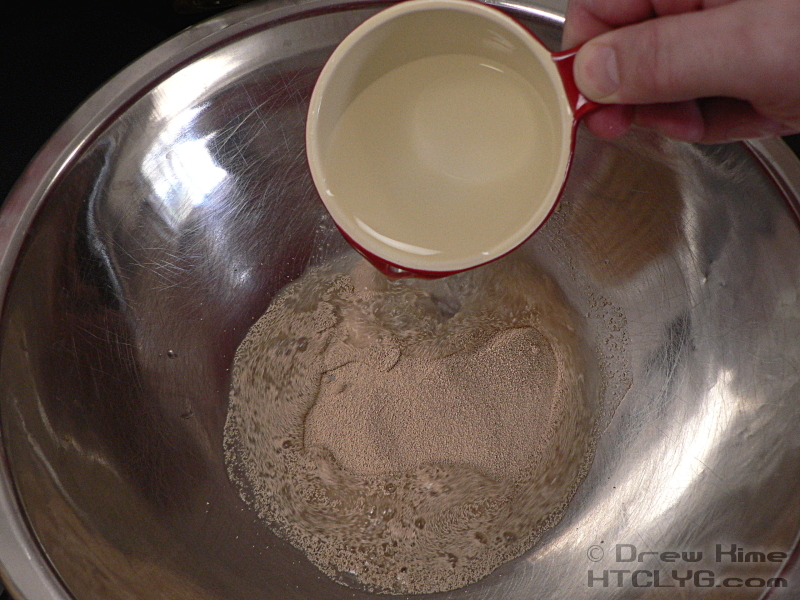
Add the first cup of flour and mix well.
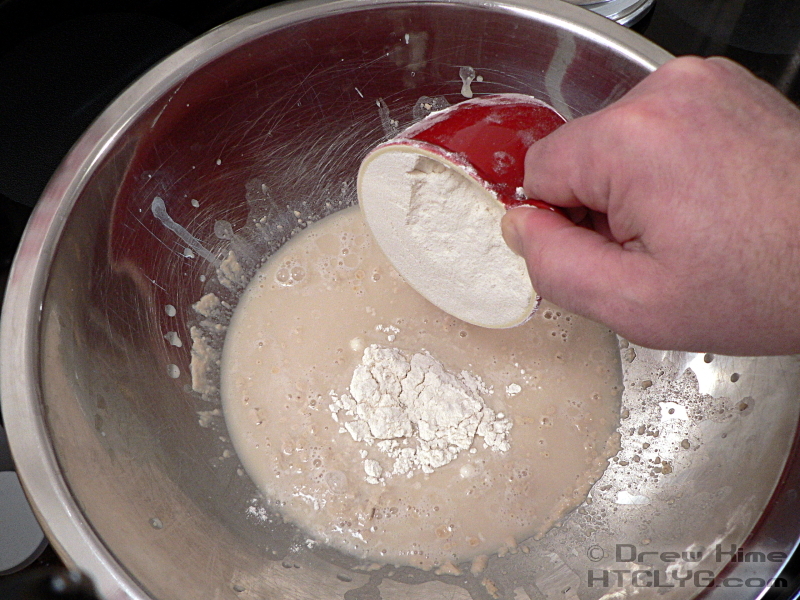
Leave the mixture in a warm place for about 10 minutes, until you see bubbles starting to break the surface. This is “proofing” the yeast to make sure it is active.
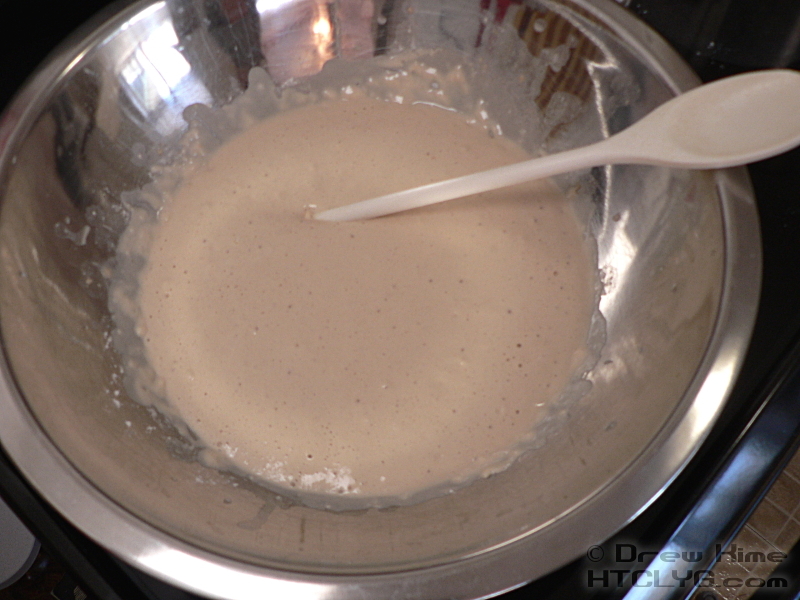
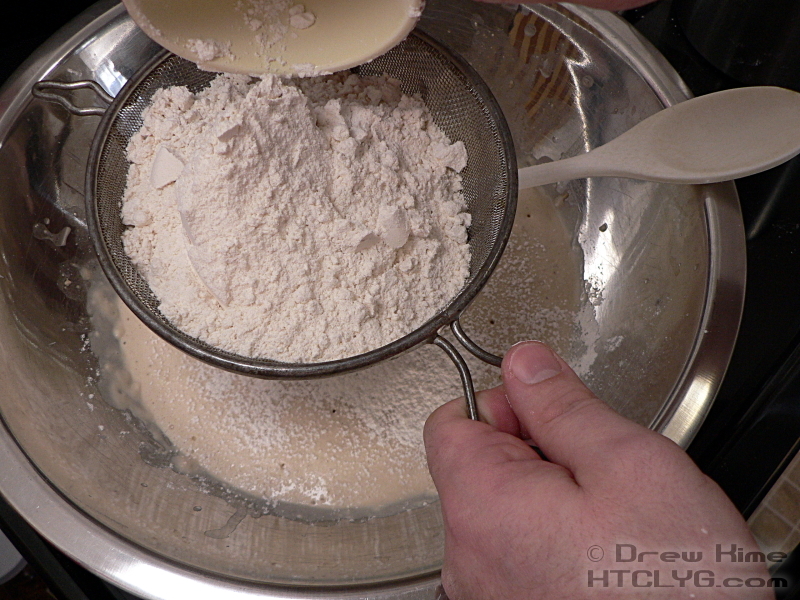
Sift in the rest of the flour and mix roughly.
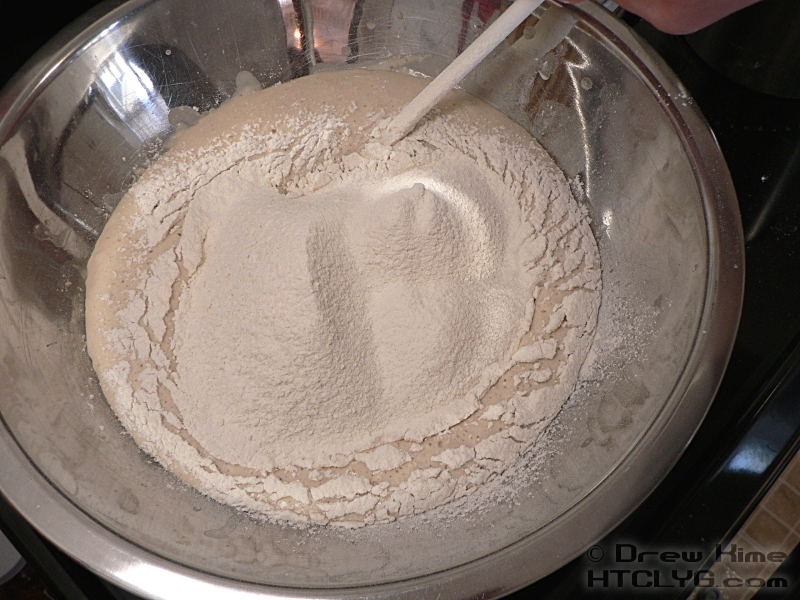
Add the salt and the olive oil. Don’t add the oil until after you’ve mixed in the water, or the oil will surround the flour and it won’t hydrate.
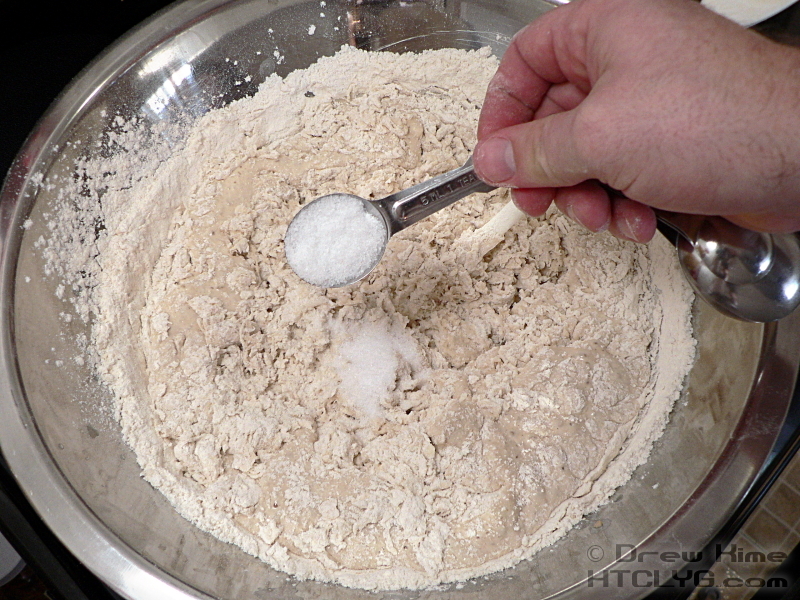
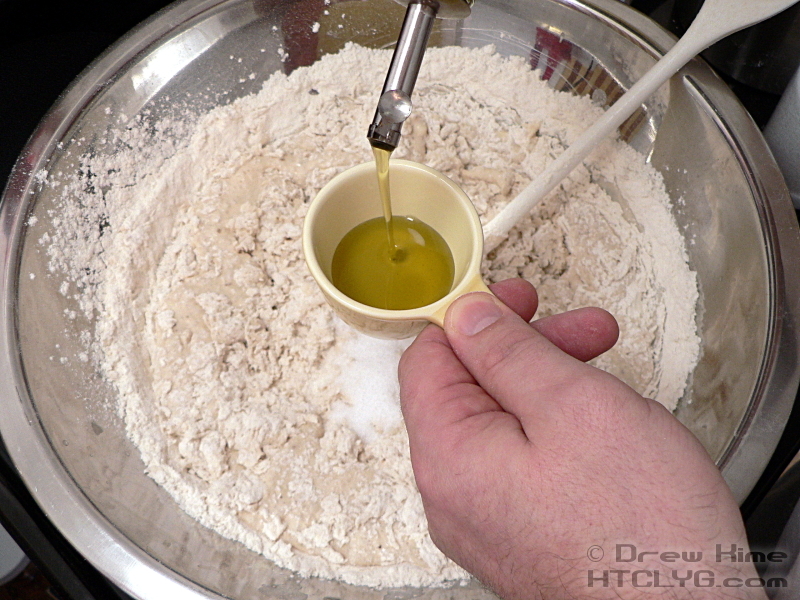
Knead the dough in the bowl until all the flour is incorporated. It should still be slightly sticky. If not, add a little more water.

Turn the dough out onto a floured surface and knead for 10 minutes, until it is smooth and elastic.
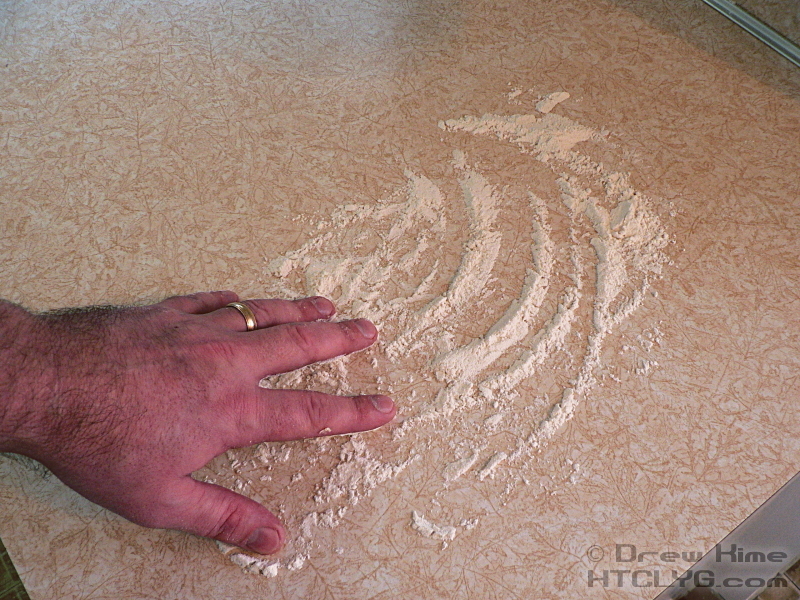

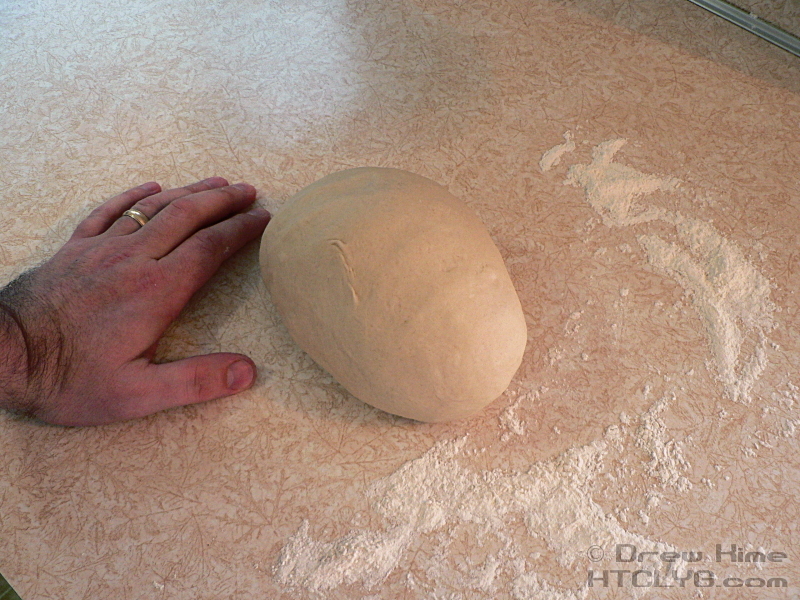
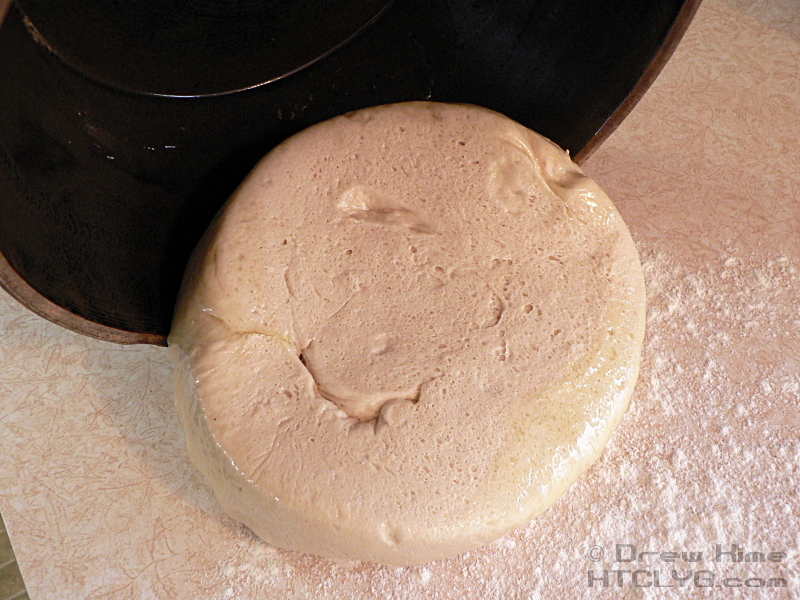
Add a few tablespoons of oil to a bowl and turn the dough in it until the dough is oiled all over. Cover the bowl with plastic wrap or a wet towel and set somewhere warm for 45 minutes to an hour-and-a-half, until the dough is doubled in size.
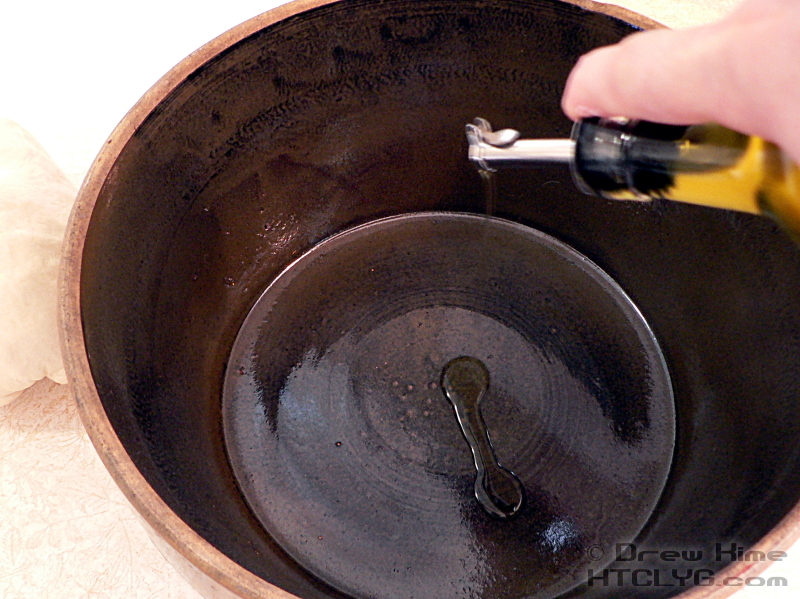
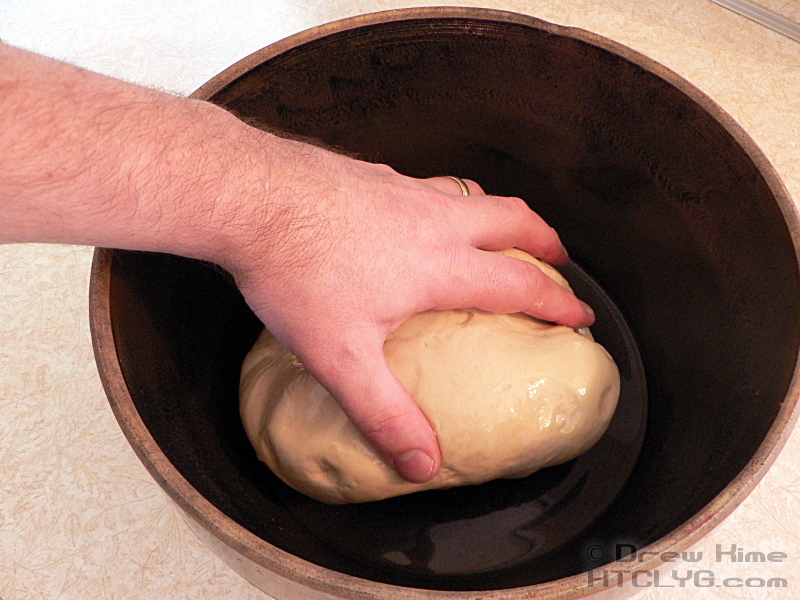
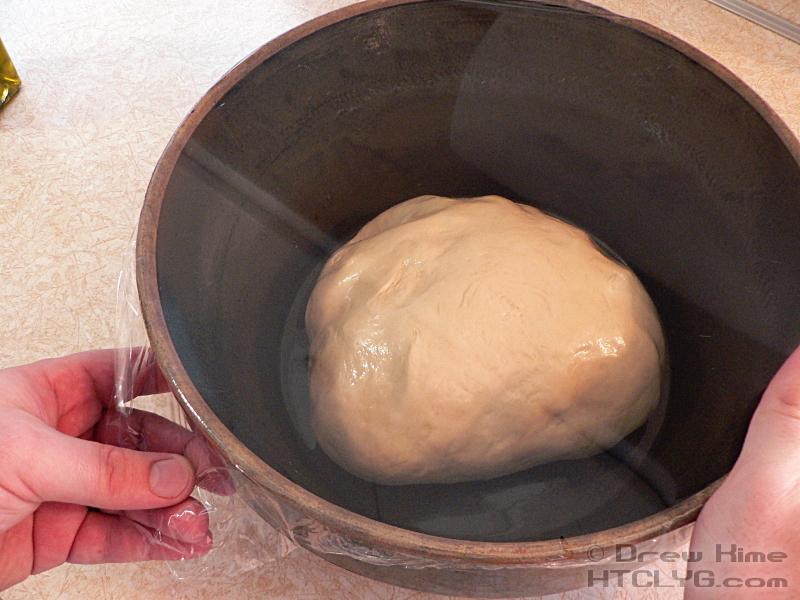
Turn the risen dough out onto a floured surface.
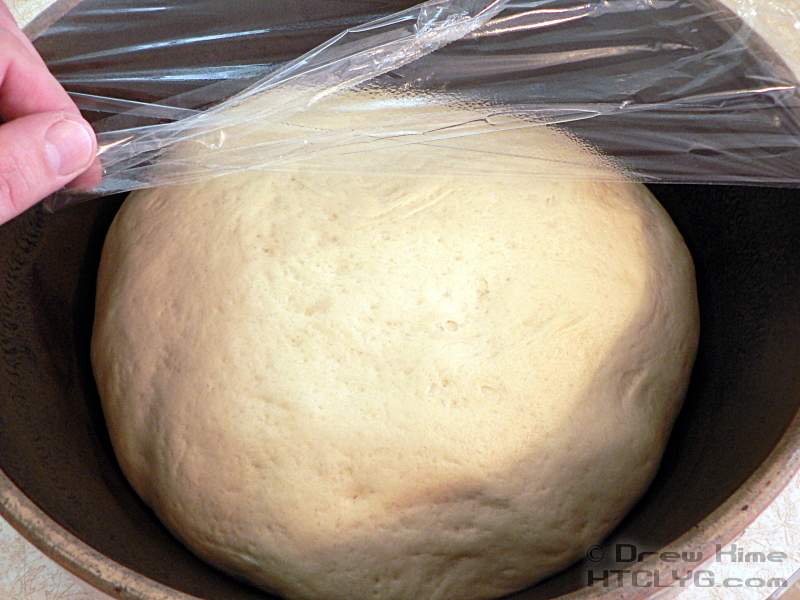
Punch it down, knocking most of the air out of it.
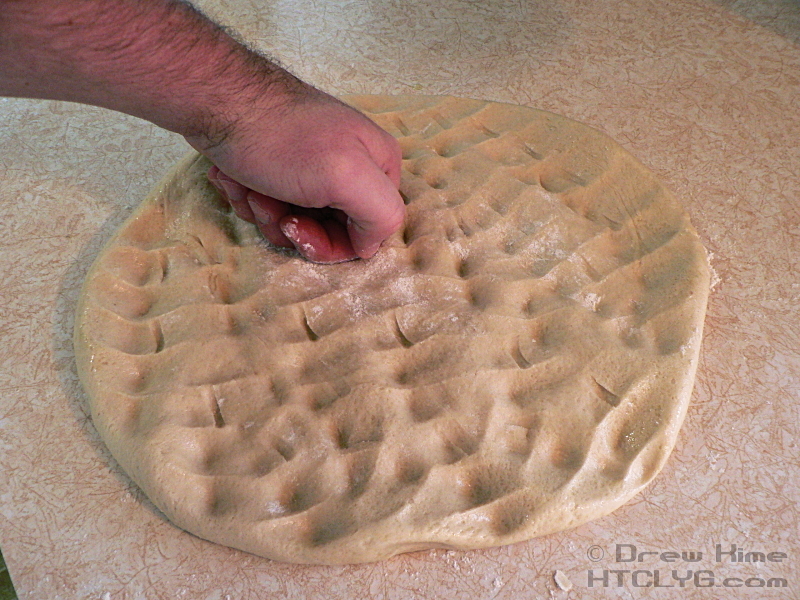
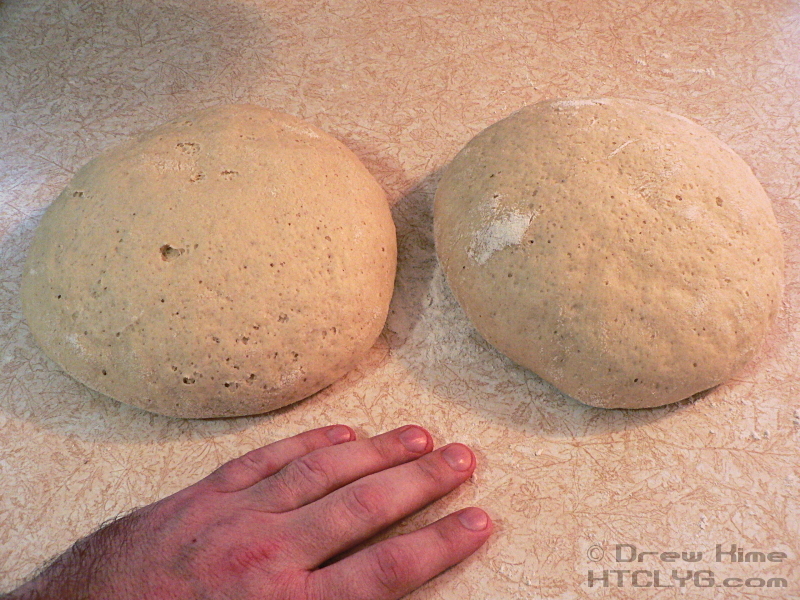
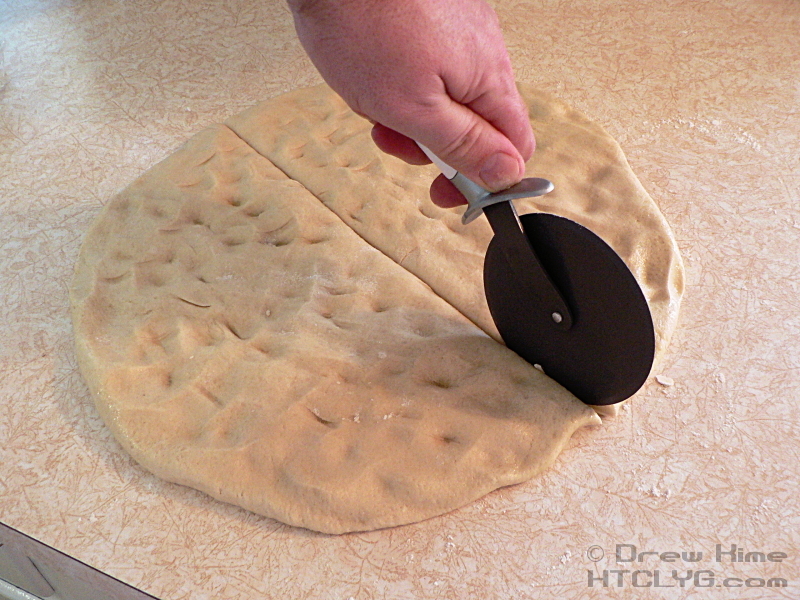
Unless you’re making a really huge pizza, cut the dough into two equal pieces.
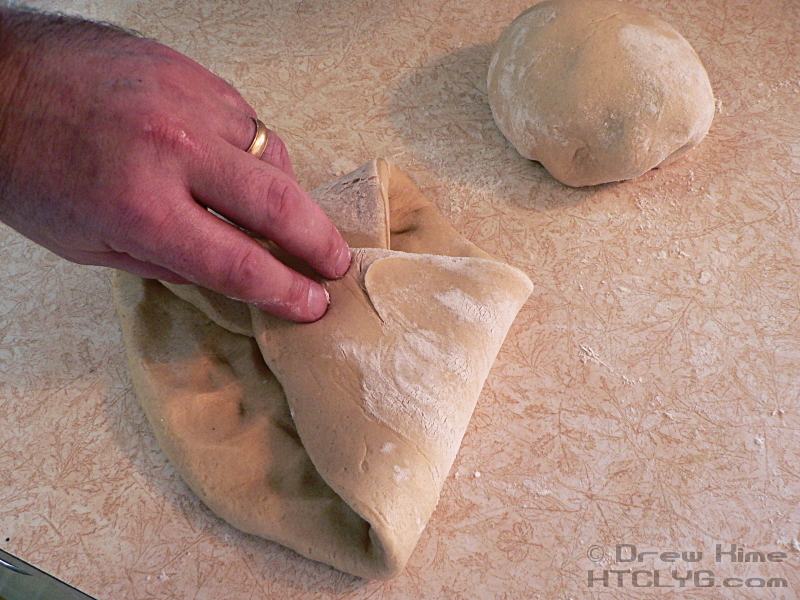
Fold the edges in, then turn over and tuck all the edges under.
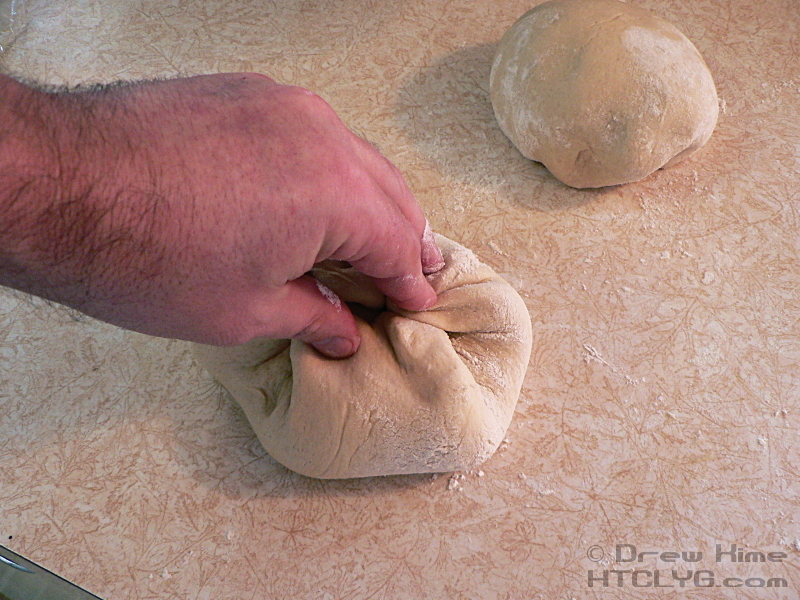
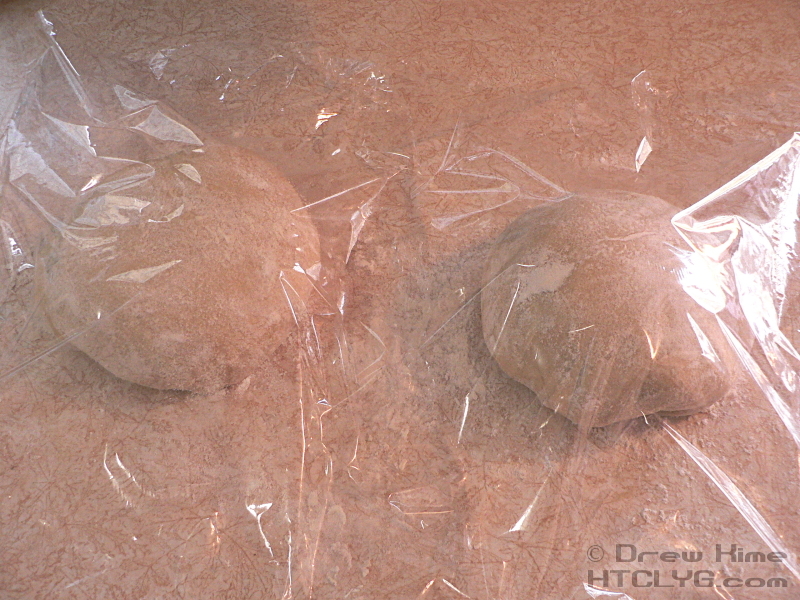
Cover the dough with plastic again and leave until it has doubled in size again.
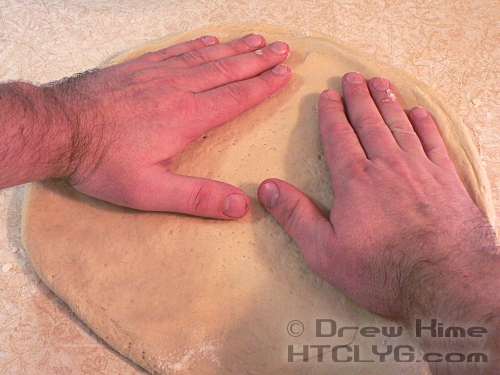
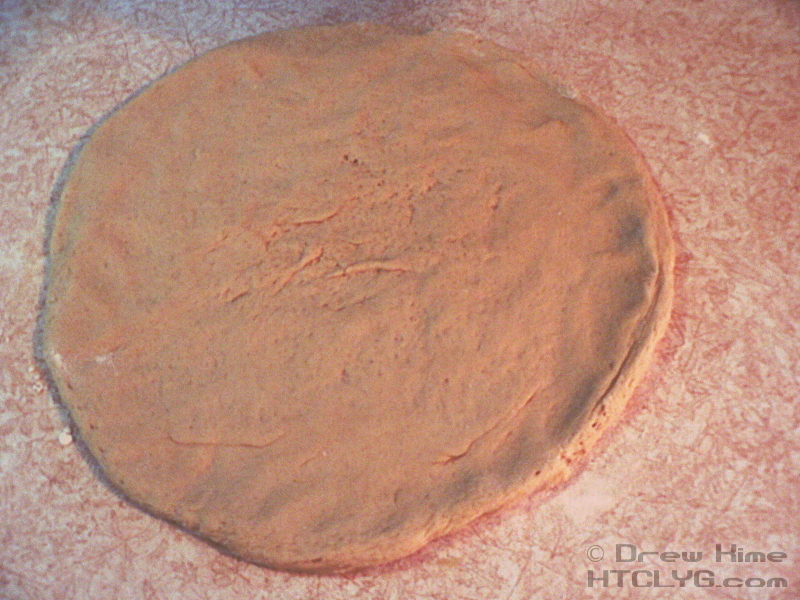
Press the dough out into a circle with your fingertips, then smooth it out to a 12-inch circle.
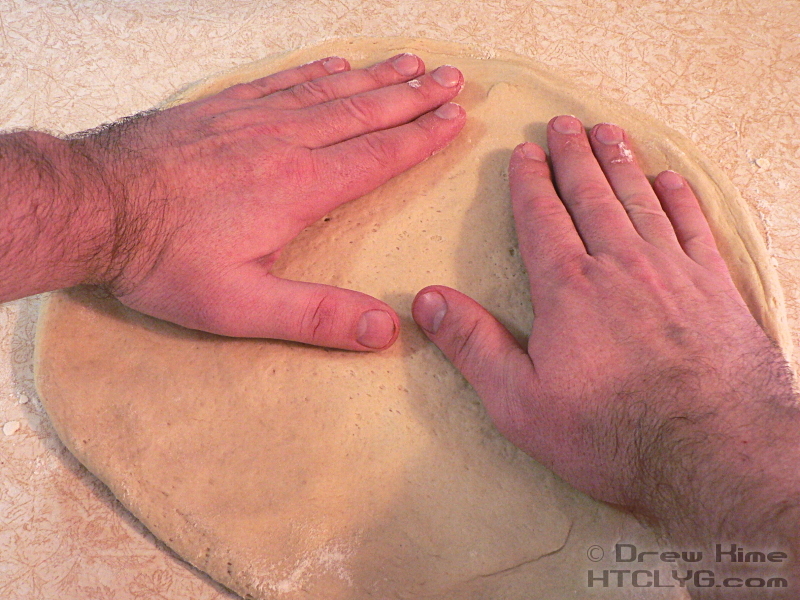
This is easier to show than to describe. (If you can’t see the video in email, view this post at the blog.)

You can top the crust now, or leave it to rise one more time if you want a thicker crust.
If you don’t have a pizza stone, dust a baking sheet with cornmeal to keep the dough from sticking. Don’t skimp on the cornmeal, it’s cheap and you really don’t want sticking.
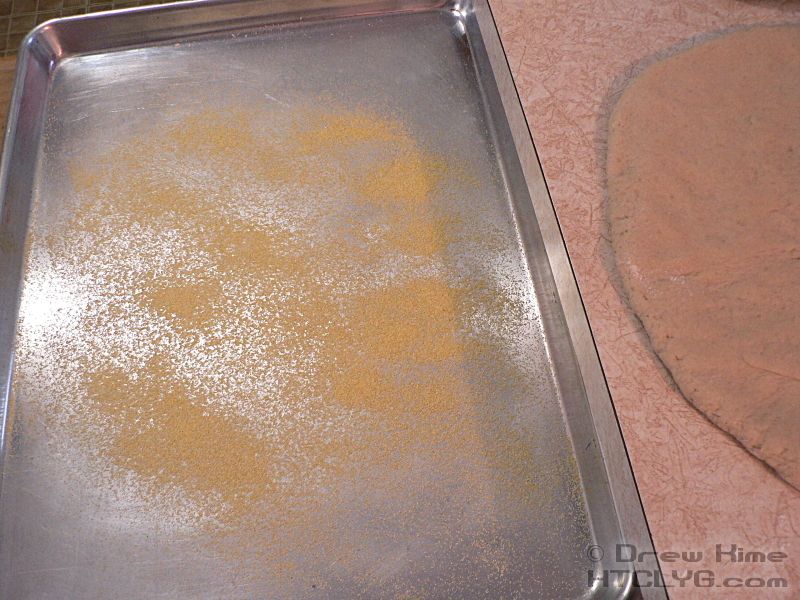
Transfer the crust to the baking sheet, add your favorite toppings, and bake at 500° for 15 minutes.

And that’s it.

Oh don’t worry, I’ll show you the finished product real soon now. But first I’ve got to show you how I made the sausage. Stay tuned …

Want more like this? For more recipes like this, that you can hold right in your hands, and write on, take notes, tear pages out if you want (Gosh, you're tough on books, aren't you?) you might be interested in How To Cook Like Your Grandmother, 2nd edition, Illustrated. Or to learn your way around the kitchen, check out Starting From Scratch: The Owner's Manual for Your Kitchen.

This entry was posted in Bread and tagged . Bookmark the permalink. Post a comment or leave a trackback: Trackback URL.

16 Comments

  1. Bob
    Posted February 10, 2009 at 2:15 am | Permalink

    I need to make some more pizza dough soon, it’s been a while. I’ve never used high-gluten flour, but have always had a decent chew to my crust. I bet it would be even better with that stuff.

  2. Amanda
    Posted February 10, 2009 at 7:01 am | Permalink

    Drew, I just made pizza on Sunday using my favorite crust. The person I got the recipe from suggested that I replace 1/2 c of the flour with semolina flour. I did and it made a difference for sure, yum!

  3. Kristin
    Posted February 10, 2009 at 7:52 am | Permalink

    Wait. You made sausage? And now we have to wait for that post? You’re such a tease.

  4. B.Cool
    Posted February 10, 2009 at 10:11 am | Permalink

    I’m still chuckling over your “admission” regarding measuring yeast…

  5. Posted February 10, 2009 at 10:46 am | Permalink

    Bob, maybe I’m just picky. Actually I think the problem is I’ve watched too many people spin the crust and seen it stretch like crazy. I know the crust I had wouldn’t do that, so it must not be the same.

    Amanada, that’s exactly what my wife said. I’ll ask about that when I call Minneapolis.

    Kristin, me? A tease? Oh no [giggle] I’d never be a tease.

    Barb, yeah, it’s real funny. Now I have to go back and re-make everything to see if I really got the recipes right. [sigh]

  6. Maria
    Posted February 10, 2009 at 5:25 pm | Permalink

    We love making pizza!! We have some recipes on our blog!!

  7. Posted February 10, 2009 at 6:02 pm | Permalink

    Maria, omigod I just checked out your blog. I demand an invitation to your next cookie party.

    Anyone else reading this, go check out Maria’s blog right now. Damn, now I want a cookie.

  8. Renata
    Posted February 10, 2009 at 9:47 pm | Permalink

    Please tell me more about Minneapolis Flour Co. I am new to the area and I’d love more info.

    (By the way, I found your blog via Local Food Cleveland).

  9. Posted February 10, 2009 at 10:47 pm | Permalink

    It’s just off of E 56th and Harvard. They sell by the pallet load, but you can also get single sacks. Pay cash at the door and they’ll bring it to the loading dock for you to throw in the back of your car.

  10. Mike Stockman
    Posted February 11, 2009 at 1:33 pm | Permalink

    Your post got me wondering what the difference is between bread flour and high-gluten flour. This site suggests it’s just a question of additives (all bread flours are high-gluten flours, but not all high-gluten flours are bread flours).

    Anyway, have you tried just using off-the-shelf bread flour for your pizza crust? That’s what I use (well, half that, half whole-wheat) and it’s pretty stretchable dough.

  11. Posted February 11, 2009 at 3:57 pm | Permalink

    Mike, there’s so much written about gluten on pizza sites you wouldn’t believe it. What I get from all of it is that it’s not necessarily additives, it’s how much of the hard (usually semolina) wheat is included. But yes, it is possible to get gluten as an additive.

    Bread flour should be better than plain white for pizza dough. But I’m still going to try to get some of the highest gluten I can find. I can always cut it with plain white flour if it’s too stretchy/chewy.

  12. Amanda
    Posted February 11, 2009 at 4:04 pm | Permalink

    I know I posted earlier that I replaced 1/2 c of flour with 1/2 c semolina flour, thought I would mention i also use bread flour instead of all purpose.

    I’m always anxious to hear improvements :)

  13. How to make pizza
    Posted April 16, 2009 at 11:52 am | Permalink

    Great post, I also started a blog which is targeted on making pizza and I was just searching for other similar blogs.

  14. dcole
    Posted June 17, 2009 at 4:14 pm | Permalink

    if anyone is interested, the frozen yeast dough loaves that you can buy in the freezer section in packs of 3 at the grocer is great dough when you are in a pinch for time. Let it thaw and rise (I do the quick-rise steps). It's great for pizza, calzones, and bread bowls for home made potato soup. Also, if you have a great sourdough starter, that's AWESOME for pizza and bread bowls. YUM!!!

  15. Michael
    Posted April 15, 2012 at 6:37 pm | Permalink

    Hey Drew,
    I was wondering if I could make this dough the night before and store it somewhere overnight so it’s ready the next day.
    I don’t have extensive knowledge when it comes to doughs so your advice would be appreciated.

    • Posted April 15, 2012 at 8:04 pm | Permalink

      Michael, the best time to refrigerate it is after the first rise. Punch it down, cover with plastic wrap and put in the fridge. Next day, take it out at least an hour before you want to start baking. That will give it time to warm up and rise the second time before you start shaping it.

Subscribe to comments on this post

Post a Comment

Your email is never published nor shared. Required fields are marked *

*
*

You may use these HTML tags and attributes: <a href="" title=""> <abbr title=""> <acronym title=""> <b> <blockquote cite=""> <cite> <code> <del datetime=""> <em> <i> <q cite=""> <strike> <strong>

Subscribe to comments on this post
  • Follow this blog

     Subscribe in a reader

    -- OR --
    To get recipes in your email
    Enter your email address:
    -- OR --
    Sign up for the weekly newsletter.Email address:
  • All-time Favorites

    Perfect Brownies
    Banana Cake
    French Onion Soup
    Egg Salad
    Onion Rings
    Bruschetta Pizza
    Peach Cobbler
    Cheesesteak
    Frozen Chocolate Truffle Pie
    Emily's Creamy Cheesecake


  • What Would Granny Cook?
  • No Secret Recipes
  • No Awards Please