For special deals and more great content, sign up for the free How To Cook Like Your Grandmother Newsletter.
Email address:


Also receive blog posts via email

Name: (optional)

Not now, thanks

Fudge — FAIL!

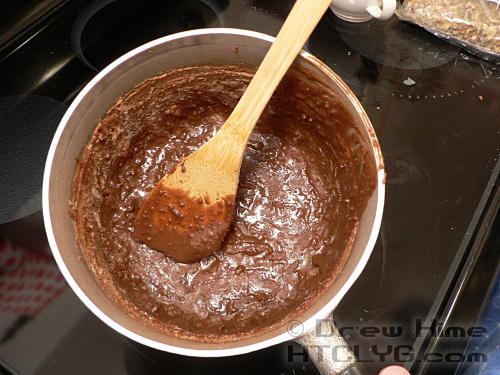
This is not how fudge is supposed to look. You know, just in case you were wondering. The ingredients were right. The process was right. Just that little bit right at the end, the part where you stop cooking it when it’s done … that’s kind of important.

Ingredients
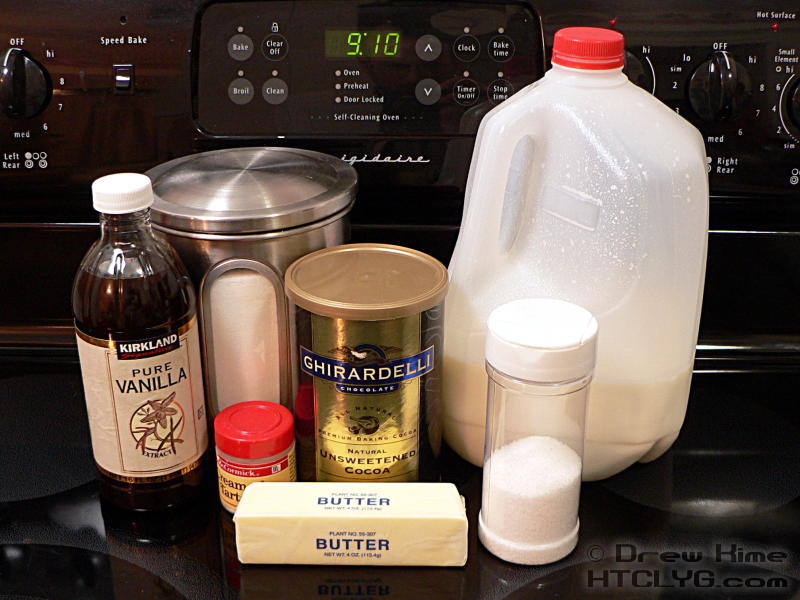

3 cups sugar
3 tablespoons cocoa powder
1/4 teaspoon salt
pinch cream of tartar
1 cup milk
4 tablespoons butter (plus more for the dish)

Directions

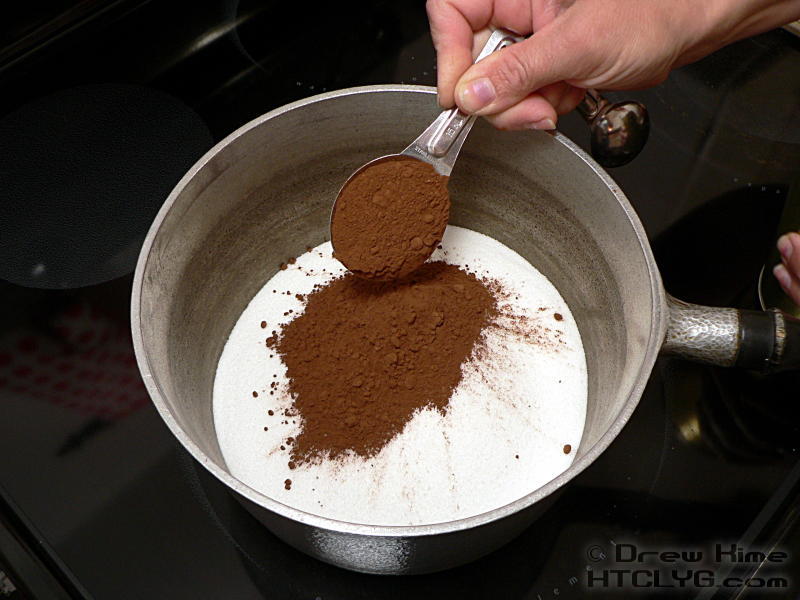
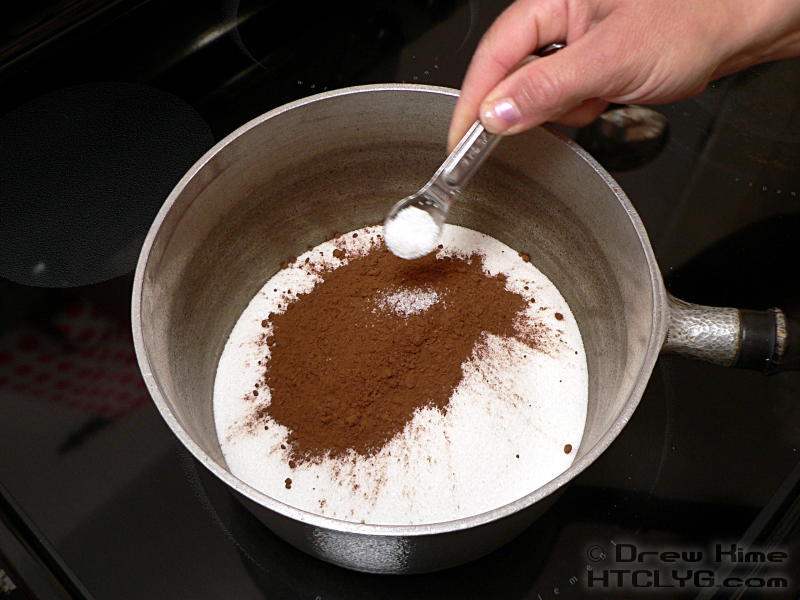
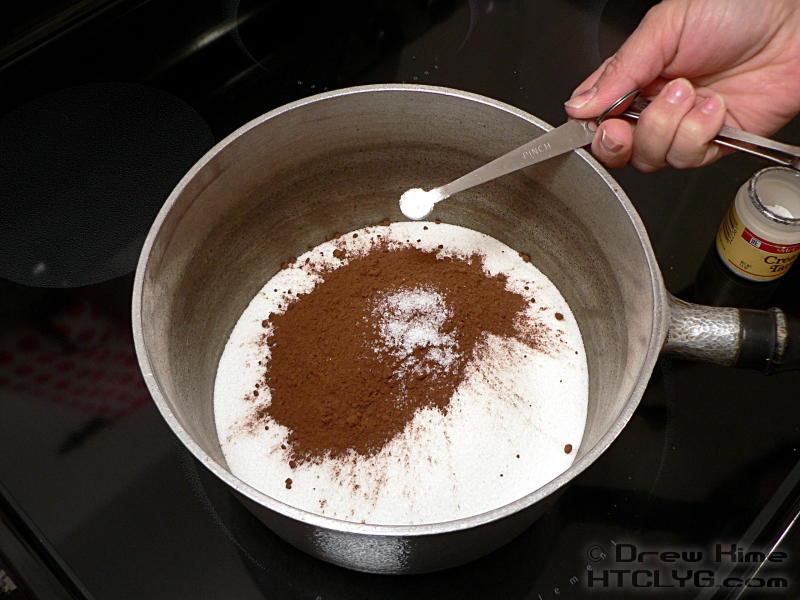
Combine all the dry ingredients: sugar, cocoa, salt, cream of tartar.
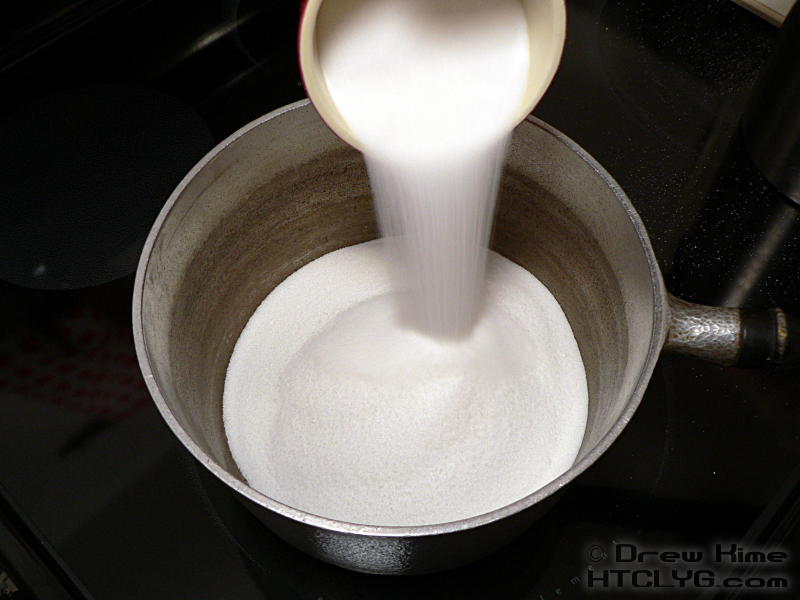

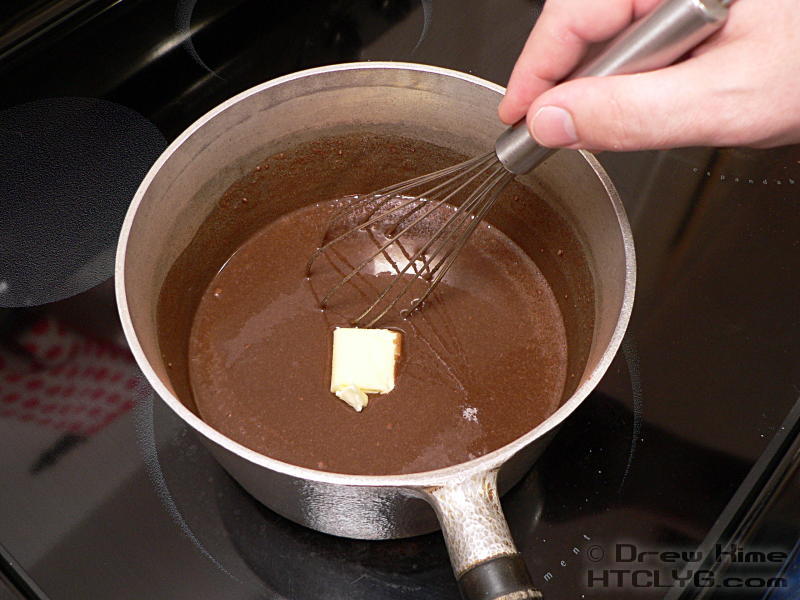
Stir the dry ingredients to combine, then stir in the milk and add the butter. Don’t melt the butter first, it will melt as you heat everything together.
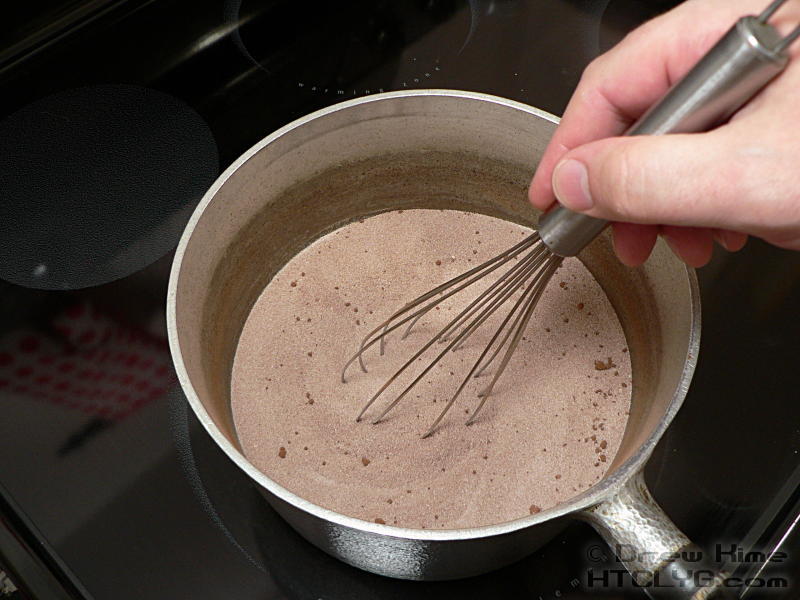
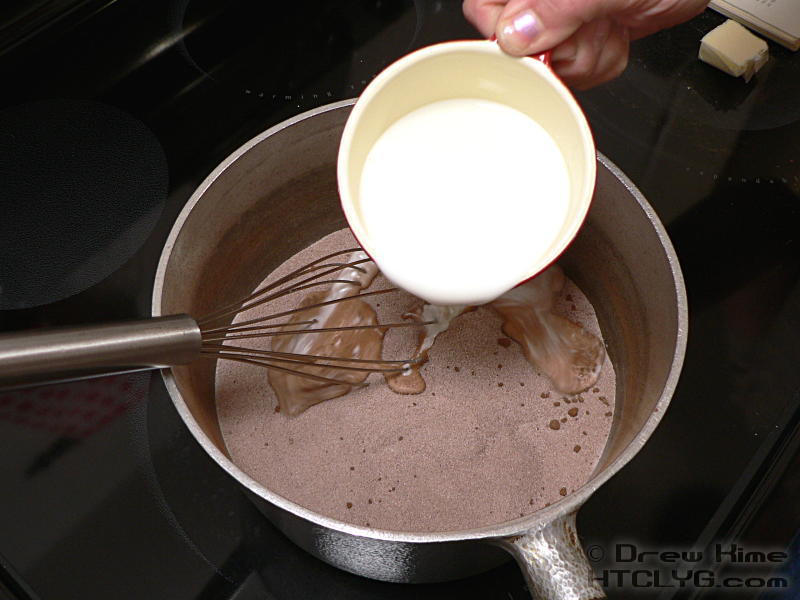
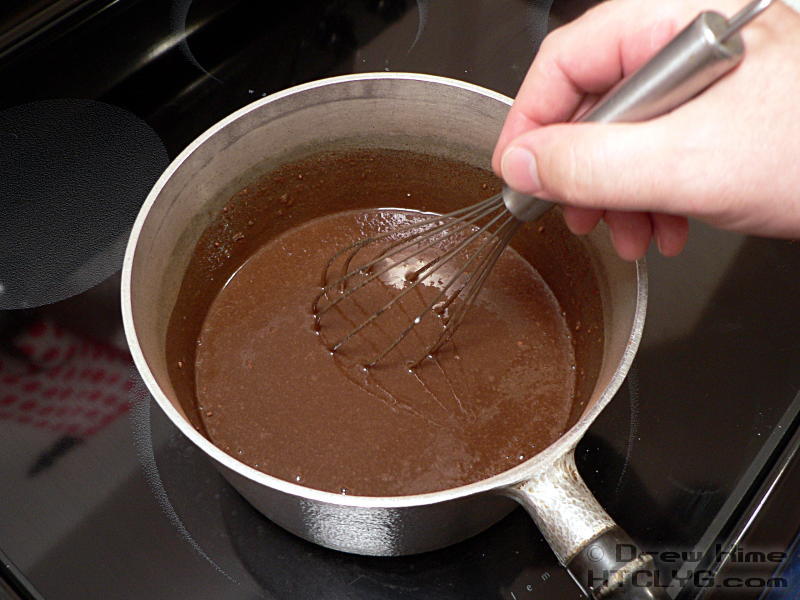
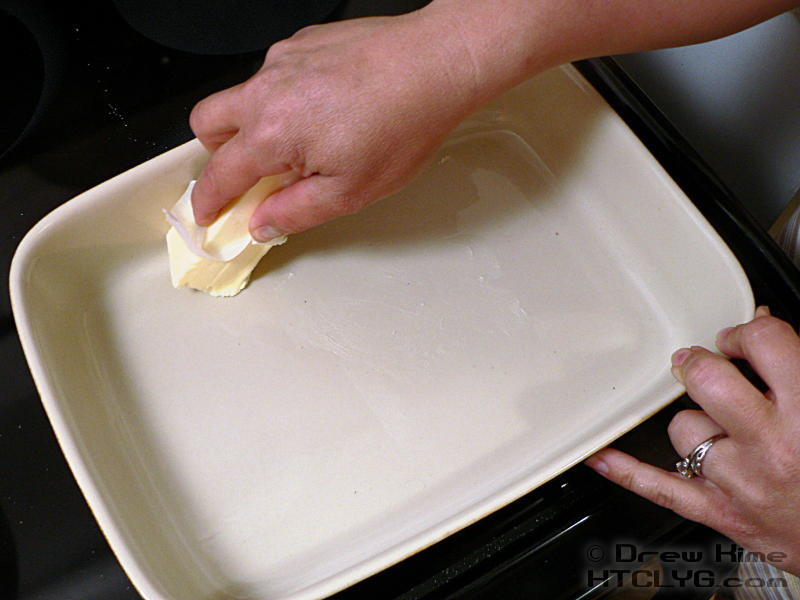
Before turning on the heat under the mixture, butter the dish you’re going to cool the fudge. You need to have this done before you start cooking.
Bring the mixture to a boil over medium-high heat, stirring constantly.
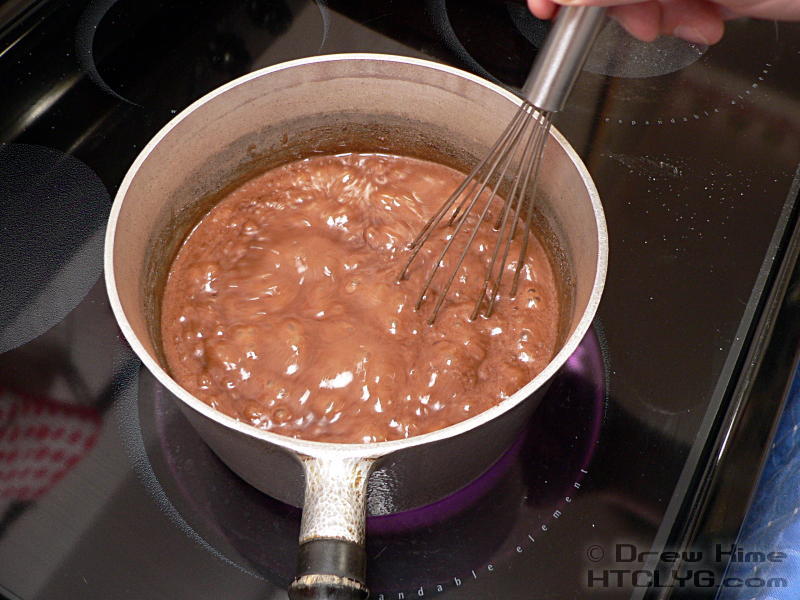
Optional: Look over at the cat drinking from the dog’s bowl, and notice that he looks like he’s hugging the toilet after a rough night.

Keep stirring until the mixture starts to thicken. This can take 20 minutes, so plan plenty of time for standing over the stove.

The consistency will change all of a sudden, going from very thin to very thick in the space of about 30 seconds.
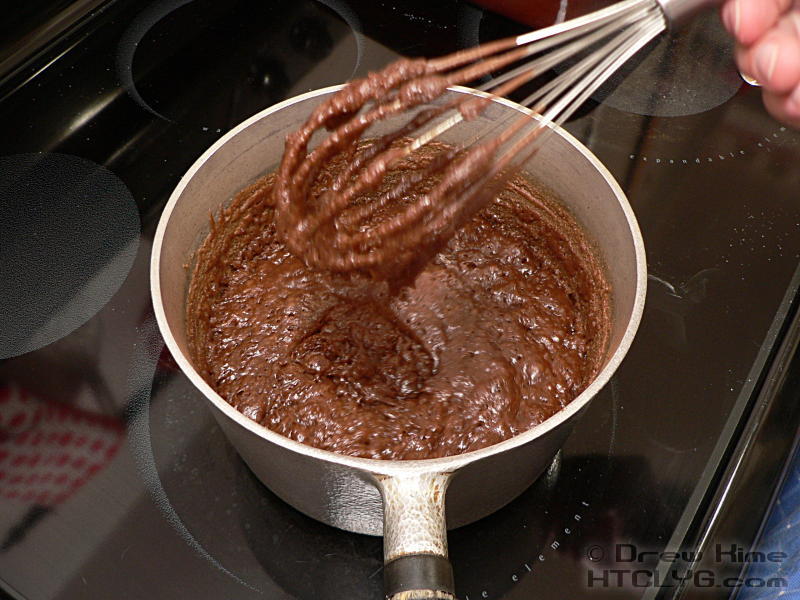
IMMEDIATELY remove it from heat, stir in the vanilla, and pour the mixture out into your buttered dish. If you don’t, about eight-and-a-half seconds after getting thick it goes straight to this:

FAIL!

Well, it’s still sugar and chocolate, can’t be all bad. I added a couple of tablespoons of milk and stirred again, then scraped what I could into two cups. Topped with walnuts and ate it like that.
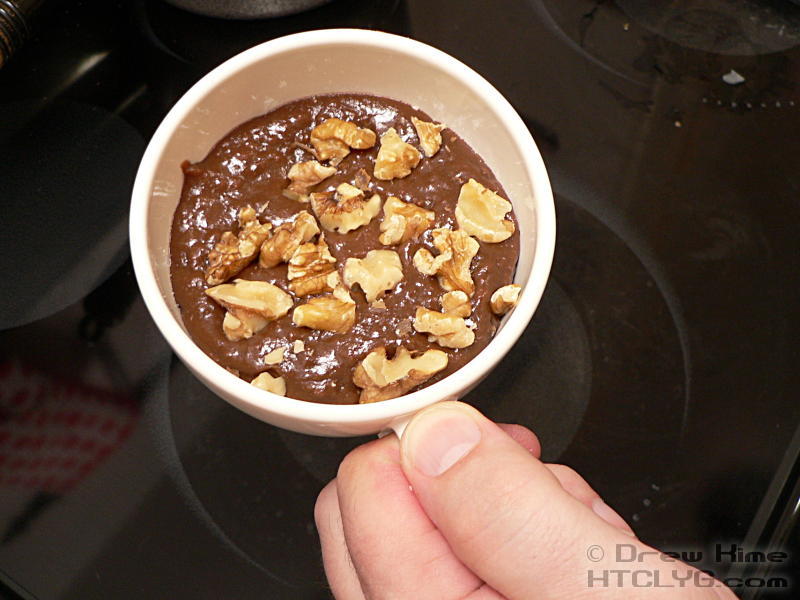
About half of it stayed stuck in the pan.

Anyone out there who’s made fudge, please leave a comment telling me what I did wrong. I know I should have pulled it off the heat sooner than I did, but is it really supposed to go from thick to crumbly that fast?

I want to try this again this weekend. I’d really like to know if there’s anything else I need to change.
Want more like this? For more recipes like this, that you can hold right in your hands, and write on, take notes, tear pages out if you want (Gosh, you're tough on books, aren't you?) you might be interested in How To Cook Like Your Grandmother, 2nd edition, Illustrated. Or to learn your way around the kitchen, check out Starting From Scratch: The Owner's Manual for Your Kitchen.

This entry was posted in Dessert and tagged . Bookmark the permalink. Post a comment or leave a trackback: Trackback URL.

35 Comments

  1. Stephanie
    Posted May 8, 2009 at 11:11 am | Permalink

    I make fudge all the time, but I use butter, sugar, evaporated milk, marshmallow creme, chocolate (whatever kind you want), flavoring, and optional nuts. I think the recipe is somewhat idiot proof because the worse thing that has happened was a bit of scorching with the sugar-butter-milk mixture. Fine for a “brown” chocolate fudge, not so good for “white” chocolate.
    Recipe following…

    3 cups sugar
    3/4 cup (1-1/2 sticks) butter or margarine
    1 small can (5 oz.) evaporated milk (about 2/3 cup) (Do not use sweetened condensed milk.)
    12 oz Chocolate (anything from unsweetened to white), chopped
    1 jar (7 oz.) Marshmallow Creme
    1 cup chopped nuts (optional)
    1 tsp. flavoring

    LINE 9-inch square pan with foil, with ends of foil extending over sides of pan; set aside. Place sugar, butter and evaporated milk in large heavy saucepan. Bring to full rolling boil on medium heat, stirring constantly. Boil 4 min. or until candy thermometer reaches 234°F, stirring constantly to prevent scorching. Remove from heat.

    ADD chocolate and marshmallow creme; stir until completely melted. Add nuts and flavoring; mix well.

    POUR immediately into prepared pan; spread to form even layer in pan. Let stand at room temperature 4 hours or until completely cooled; cut into 1-inch squares. Store in tightly covered container at room temperature.

    Makes about 3 pounds

  2. Bob
    Posted May 8, 2009 at 12:26 pm | Permalink

    Wish I could help you, but I’ve never made fudge. Did what you could get out at least taste good?

  3. A.L.
    Posted May 8, 2009 at 12:39 pm | Permalink

    I’m with Stephanie…I make fudge at Christmas every year or my family would disown me and I use a recipe similar to hers. The cooking time is much less than your recipe and the fudge is very creamy and delicious. I think you’ll be pleased if you try Stephanie’s recipe.

  4. Carole
    Posted May 8, 2009 at 12:50 pm | Permalink

    My brother is in charge of making fudge for our family (I can never seem to get it right). He uses the recipe from the back of the Kraft Marshmallow Creme jar.

    I found it here: http://tinyurl.com/6mtdkh

    He uses dark chocolate & milk chocolate; also makes some male (with nuts) & some female (without).

  5. Jill
    Posted May 8, 2009 at 1:24 pm | Permalink

    Alrighty, this is almost the fudge that I make regularly. The only difference in the recipe is that I use vanilla not cream of tartar. I mixed the dry stuff together and them add the milk until it’s dissolved. Then I cook it stirring constantly to softball stage (using a candy thermometer). Remove from the heat, put the butter and vanilla in. Let cool to 110 degrees. Then beat until it loses some of it’s shine then quickly spread in the pan. Let cool and cut! It’s something you have to practice at to get it right.
    Peace
    Jill

  6. Jill
    Posted May 8, 2009 at 1:25 pm | Permalink

    o one important part I forgot. When you add the butter and vanilla DO Not Stir! Just let it set until cooled to 110 degrees. If you stir too soon….tragedy

    Peace
    Jill

  7. Kristin @ Going Country
    Posted May 8, 2009 at 1:40 pm | Permalink

    What a coincidence–I just ATE some fudge. That I did not personally make, because baking is bad enough, but candy making? Nuh uh.

    So, in short, I got nothin’ for you on this one. Good luck.

  8. onlinepastrychef
    Posted May 8, 2009 at 1:46 pm | Permalink

    Oh, dear–very sad, Drew! But still tasty–glad you were able to salvage some.

    Here–I wrote a post about this Very Thing several months ago. Maybe this will help: http://onlinepastrychef.wordpress.com/2008/11/24/homemade-fudge/

    PS Love the cat pic–I hate the morning after a rough night!

  9. Linda
    Posted May 8, 2009 at 1:48 pm | Permalink

    This is the recipe I use, and it never fails!

    Fantasy Fudge

    3 c sugar
    3/4 c margarine
    2/3 c evaporated milk
    1 12oz pkg semi-sweet chocolate pieces
    1 7oz jar marshmallow cream
    1 c chopped nuts (opt)
    1 measuring tsp. vanilla extract

    combine sugar, margarine and milk in heavy 3 qt saucepan, bring to full rolling boil, stirring constantly.
    boil for 5 minutes over medium heat or until candy thermometer reaches 234 degrees.
    remove from heat; add marshmallow cream and vanilla, stirring until blended, and the add choc chip, blend well.
    Pour into a greased 13×9 inch baking pan.

    Cool, cut into squares.

    This never fails! I’ve made it since high school, which was a LONG time ago!

  10. Randall
    Posted May 8, 2009 at 2:42 pm | Permalink

    For what it’s worth, MY grandmother always insisted on two things: using a thin/cheap pan that would release its heat quickly rather than holding the heat and continue to cook the candy, and taking the pan completely off the stove at the “remove from heat” step (not just turning the heat off). In over 40 years that I know of, the only time fudge failed was when the ingredients somehow got out of proportion.

  11. Jennifer Liang
    Posted May 8, 2009 at 2:58 pm | Permalink

    Did you get water in it? It looks like the chocolate seized.

  12. Posted May 8, 2009 at 3:21 pm | Permalink

    Stephanie, A.L., Carole and Linda, I’m trying really hard to rationalize my decision to make fudge (With refined white sugar? Oh my God!) while at the same time avoiding the evil corn syrup in marshmallow creme.

    Bob, it tasted good, but had a slight grainy texture. Not unpleasant, but definitely not as smooth as it was supposed to be.

    Jill, I broke our candy thermometer a couple of years ago. I really should get another one if I’m going to try to make candy. And when you say, “If you stir too soon … tragedy,” I think I know what that looks like.

    Kristin, you ate something that didn’t come out of a jar? I’m shocked.

    Jenni, oh now look how pretty that is. I’m nine kinds of jealous. (And I’m bookmarking this to come back to this weekend before my second attempt.)

    Randall, I was planning to put the pan in an ice bath to cool it down. I had no idea it was going to turn so quickly, so I never even got the ice in the bowl.

    Jennifer, that’s about the one thing I apparently did right was keeping water out of it. I’ve worked with chocolate before and know how little it takes to ruin a whole batch.

    Thanks to everyone for the suggestions. I’ll let you know next week how it came out.

  13. Melissa
    Posted May 8, 2009 at 4:52 pm | Permalink

    My mom makes the best fudge in the entire world. I don’t have her recipe for it right now, but I will get it for you tomorrow when I go home if you’d like. She doesn’t use cream of tartar at all, but she does use corn syrup, sugar, and cocoa. The butter and vanilla go in at the end, when it comes off the stove and into a sink filled with cold water. Also, she brings it to a gentle boil, and just keeps it simmering for at least an hour. To tell if it’s done, she takes a bit and puts it into a glass of water; if it can form a ball, it’s ready.

    Then she generally ruins it by adding chopped nuts. But before that part, it’s the best stuff ever. The only time she runs into problems is that sometimes it doesn’t set and is too soft. She gives that batch to us – the good stuff is given outside the home.

  14. Linda
    Posted May 8, 2009 at 5:23 pm | Permalink

    Drew,
    I don’t think fudge is supposed to be good for you! Even if we use the evil ’stuff’, it sure tastes good! We only make it around the holidays, so it’s not like we eat it every day!

  15. Kim
    Posted May 8, 2009 at 6:05 pm | Permalink

    Drew – I’ve done that plenty of times, it’s just plain overcooked. I use a candy thermometer and like suggested, put the butter and vanilla in and do not stir until cooled. The thing is, undercooked is better than concrete. You can always use it on top of ice cream!

  16. Bobbi Jo
    Posted May 8, 2009 at 6:40 pm | Permalink

    It may not have worked out as fudge but I would just sit down with a big old spoon and enjoy. Hugs, Bobbi Jo

  17. momofonefornow
    Posted May 8, 2009 at 6:41 pm | Permalink

    I finally broke down and bought a candy thermometer so that I could avoid anymore pans full of chocolate crumbles.

    So, that is my suggestion. Get a candy thermometer and don’t attempt without it.

  18. Tori
    Posted May 8, 2009 at 6:47 pm | Permalink

    I’ve only ever made my great grandmother’s peanut butter fudge, so I’m not quite sure how to make chocolate fudge. I try to steer away from the candy making because I know I have no will power to STOP eating it. xD

  19. Tori
    Posted May 8, 2009 at 6:50 pm | Permalink

    Oh yeah, that’s what I forgot to mention. I use a candy thermometer! My recipe has specific instructions on the temperature, so it’s the most useful tool in the kitchen.

  20. thpt
    Posted May 8, 2009 at 8:28 pm | Permalink

    Could it be that you used beet sugar instead of can sugar? The molecules are nothing alike, they react alarmingly differently to candying techniques. Your recipe looks just about right.

  21. Posted May 8, 2009 at 8:44 pm | Permalink

    Melissa, I knew about dropping some in a glass of water. I kept checking when it was thin, and it just ran to the bottom. When it thickened up, it went straight to crumbles in literally 10 seconds. I panicked and stirred faster to try to recover, and from what I’m seeing in the comments here that was the exact wrong thing to do.

    Linda, I actually prefer brownies. This was my wife’s request. If it were just for me, I wouldn’t be trying again this weekend.

    Kim, momofone and Tori, the consensus seems to be I need a candy thermometer. I’ll be getting one before I try again.

    Bobbi Jo, that’s what we did.

    thpt, it was cane. Looks like I just overcooked it.

  22. Audrey
    Posted May 8, 2009 at 10:52 pm | Permalink

    My recipe is pretty much what Jill said: sugar, cocoa powder, little salt, milk, butter and vanilla.
    Mix all dry ingredients, add milk and bring to a boil stirring constantly. Here’s where mine gets different though…
    After it has reached a rolling boil, I let it continue to boil, untouched, until it reaches soft ball stage. I kept stirring once and it became a grainy mess, leaving it as it boils to soft ball stage keeps the sugar from re-crystallizing so easily.

    I will take a pastry brush, dip it in water, and run it around the inside of the pan, above the boiling fudge to wash any that has stuck there as the level decreases back down into the pan two or three times while it boils because the stuff that sticks to the sides as the level recedes during boiling can be more crystallized and that keeps it from collecting on the sides of the pan too much and getting back into the fudge when I am stirring later.

    Anyway, after it reaches soft ball stage I take the pan off the stove and let it cool on the counter until it is warm, not hot, without touching it. Once it is cooled to warm I add the butter and vanilla, stir until it loses its glossiness and pour into a buttered pan.

  23. HoneyB
    Posted May 9, 2009 at 6:52 am | Permalink

    I use a candy thermometer and let it get to the soft ball stage which is 238 degrees. Also, the butter and vanilla in my recipe doesn’t go in until the end after you have brought it to the soft ball stage. Hope this helps.

    P.S. Your ingredient list is just fine (looks like mine pretty much)

  24. Posted May 9, 2009 at 8:20 am | Permalink

    Audrey, I would be afraid that the water would cause the chocolate to seize. Any idea why it doesn’t?

    HoneyB, okay okay, I got it, get a candy thermometer. :-)

  25. Stephanie
    Posted May 9, 2009 at 4:34 pm | Permalink

    Drew, This past year I bought myself a digital candy thermometer just for the fudge making. I can set it to beep when I get to the right temperature. It’s so much better than the old glass one I use to have. And it can be used for frying too!

  26. Laura P.
    Posted May 10, 2009 at 8:33 am | Permalink

    most fudge recipes I’ve seen call for evap. milk, not regular milk. I’m assuming you used “real” butter not a substitute right? Also, maybe you had the heat on a little too high? I’m not a pro by any means, just some ideas. By the way, I believe it’s a “pinch” of cream of tartar, not a “ping.” ; ) One of my cats loves to drink out of our dog’s water bowl by the way. : )

  27. Posted May 10, 2009 at 12:39 pm | Permalink

    Stephanie, they make a digital candy thermometer? I’m so glad I didn’t buy one yet. Now I know what to look for.

    Stacy, thanks for the suggestion, but the flavor was good with this version. Just the texture was wrong because I overcooked it.

    Laura, I expected evaporated milk, too. But I saw lots of pretty close variations of this, and I already had everything I needed.

  28. Melissa
    Posted May 10, 2009 at 1:46 pm | Permalink

    Ok Drew, this is my grandmother’s fudge recipe, and has been in use for at least 80 years. So here you go.

    2 cups white sugar
    2 cups brown sugar
    6 heaping tbsp cocoa (sifted)
    1/4 tsp salt
    1 can evaporated milk
    2 tbsp corn syrup (mom’s recipe says ‘optional)

    Cook slowly – 1 to 2 hours, just enough heat for a slow boil. It is ready at medium ball stage.

    Remove from heat and add:
    2 tbsp butter
    1-2 tsp vanilla
    1 cup chopped nuts (ewwww, not in mine!)

    Place pot in cold water for 4 minutes or less, then beat until it starts to thicken (1-3 minutes).

    It might not seem like a lot of cocoa, but I guarentee you it is very chocolatey and incredibly rich! This is my mom’s most requested treat from both our immediate and extended family. When I was serving overseas, this is the first thing I asked for. If you try it, I hope you enjoy it.

  29. Bluefilly
    Posted May 10, 2009 at 11:19 pm | Permalink

    That is not the way I made fudge – I would melt the ingredients together, boil it, and test it by putting a small amount into cold water to test it – if it set into a soft ball, it was done. You can also use a thermometer to check the temp. Then take it off the heat and beat it with a wooden spoon until the sugar crystalises. Then pour into buttered tray and let it set and cool before cutting into slices and eating.

  30. onlinepastrychef
    Posted May 18, 2009 at 12:09 pm | Permalink

    Drew, the chocolate in Audrey’s version won’t seize w/the addition of the water from the pastry brush because there’s already enough water-type ingredients in with the chocolate to keep the cocoa solids from clumping. Also, she’s using cocoa powder, not chocolate, so seizing isn’t an issue in this case, anyway.

  31. Posted May 18, 2009 at 1:14 pm | Permalink

    Jenni must be moved in and getting caught up. :-)

    So anyway, I don’t understand why Audrey’s wouldn’t seize. Her recipe looks like the same ingredients you’d use to make chocolate. (Except maybe the salt, and butter is a different form of milk but the same stuff.) Is it about the proportions? ie: More milk for the amount of cocoa?

  32. Anonymous
    Posted May 18, 2009 at 5:36 pm | Permalink

    I did not see a comment that explains why your fudge seized so quickly, so I thought I’d say a few words about it:

    We start with your ingredient list:

    3 cups sugar
    3 tablespoons cocoa powder
    1/4 teaspoon salt
    pinch cream of tartar
    1 cup milk
    4 tablespoons butter (plus more for the dish)

    You are working with about 3 1/4 cups of solid ingredients, which you are trying to dissolve in 1 cup of milk. At room temperature, there is no way that the sugar and cocoa powder alone would dissolve in that little milk. Even if it were water alone, you couldn’t get it done.

    Small wonder that you had to heat the milk, and not a little bit, either. Fortunately for you, as the sugar and cocoa powder dissolves, it raises the boiling point of the milk. In other words, you can get it hotter than the normal boiling point of milk (just about that of water; 212 Fahrenheit, or 100 Celcius) before the water in the milk boils away into water vapor, and makes your job even harder.

    And so you heated your ingredients, and eventually dissolved them. So far so good. But your troubles started when you took the mixture off the heat. And here is what probably happened:

    [WARNING: CHEMISTRY TERMS WILL BE USED UNASHAMEDLY.]

    You started with a solution that dissolved more of the sugar/cocoa powder/salt/Cream of Tartar than it could at a lower temperature. In other words, as your solution cooled down, it became a supersaturated solution. In such a solution, the molecules of sugar MAY recrystallize and come out of solution. I say MAY, as in WILL, because in order for the crystallization to occur, there must be some initiating event. Something to get the crystals going. In chemistry, we call this “nucleation”, and it could come from a lot of things. For example, a single granule of sugar could do it. This is why many fudge recipes call for the cook to constantly scrape the walls of the cooking vessel, or wash down the walls of the cooking vessel with water during the heating phase, but ONLY during the heating phase. You should NEVER do that once the heating is completed. The likelihood of scraping in a stray crystal is too great.

    In fact, a speck of dust from the air is enough to serve as a nucleation site for crystal formation, which would explain why the fudge went bad on you so quickly. It may sound hard to believe, but it is true (Not that I want you to test this. A lot of fudge would be ruined.)

    So, what to do about it? Well, we turn to chemistry again. Either that, or we have to make fudge in some dust-free laboratory, which is way too much trouble.

    When crystals form, and your fudge goes all grainy and gritty, molecules of sugar are arranging themselves in a regular pattern around the nucleation site(s). You can stop this crystal formation if you add an ingredient that:

    1) Is edible (Duh!)
    2) Doesn’t decompose at high temperature.
    3) Doesn’t itself form crystals, even at low temperature.
    3) Is kind-of, sort-of alike in chemical structure to sugar, but just different enough, so that…
    4) It gets between the sugar molecules, so that they cannot form that network of crystals that gives your fudge the texture of sand.

    The answer is: CORN SYRUP!

    About one-half tablespoon of corn syrup per cup of sugar should be enough to solve your fudge problems. You may have to play around with the exact amount for your recipe, but I’ll bet you won’t need much more corn syrup than that to stop all of the nucleation. In fact, add too much corn syrup, and your fudge won’t set at all. As in, permanently!

    Now, if you know enough fudge chemistry, you would observe that the cream of tartar would serve to convert the sucrose (the chemistry word for table sugar) into glucose and fructose, which would have the same effect as the corn syrup (which, by the way, is glucose). So why didn’t the cream of tartar do its job?

    The answer here may lie in proportions.

    You have a recipe that calls for 3 cups of sugar and only 1 of milk. A single pinch of cream of tartar is not enough to handle all that sugar. In fact, at that ratio of sugar to milk, you would have to add so much cream of tartar that it might throw off the recipe.

    It may also be the case that your cream of tartar may be old. The chemistry name of this ingredient is potassium hydrogen tartrate, and it has a very long shelf life, but only if you keep it away from light, air, and heat. You’re on your own on this one, and anyway, my money is on the proportions reason in the paragraph above.

    So, get yourself some insurance, and add corn syrup to your recipe. And let us all know how your fudge turns out.

    I could hardly think of a better reason to write about chemistry-related issues than this one. Thanks a bunch!

  33. Posted May 18, 2009 at 8:19 pm | Permalink

    Michael, wow! That is awesome; reads like a Good Eats science content segment on steroids. (Michael sent this to me via email, too. That’s how I know his name.) Are you a confectioner, or is this straight chemistry experience talking?

  34. Anonymous
    Posted May 19, 2009 at 4:10 pm | Permalink

    Drew:

    Thanks so much for the kind words.

    I am not a confectioner, but I do like to make (and eat) fudge.

    I have a degree in chemistry, but I always say that a passion for learning beats a degree every time. And as I said before, I couldn’t imagine a better way to put these two together.

    You “Good Eats” comment may be more telling than you thought. I am a fan of the show, and also one of the transcribers of episodes for the G.E. Fan Site (http://www.goodeatsfanpage.com/GEFP/index.htm).

    All the best. . .

  35. Evangeline
    Posted July 30, 2009 at 9:38 pm | Permalink

    I would have to say that Jill is absolutely correct.

» Subscribe to comments on this post

Post a Comment

Your email is never published nor shared. Required fields are marked *

*
*

You may use these HTML tags and attributes: <a href="" title=""> <abbr title=""> <acronym title=""> <b> <blockquote cite=""> <cite> <code> <del datetime=""> <em> <i> <q cite=""> <strike> <strong>

  • Free Online Class

    Sign up now for my free 10-day online course in the basics: Starting From Scratch

  • Buy the Book


    Cooking used to be all about making food that tasted good. But somewhere along the way, we seem to have decided the diet-of-the-week was more important. How to Cook Like Your Grandmother is a return to recipes and techniques that are based on what tastes good, not on junk science and fad diets. You won't find the words lite, low, lean, free or skim anywhere. This is all real food, cooked the way Grandma would have done it.
  • Buy the Other Book


    People have been making and eating food as long as there have been people. And food. But somehow we've let ourselves believe that it's something only experts can do "right". That's where Starting From Scratch comes in. I'm not saying you'll go from zero to hero just by reading it, but at least now you'll know what those self-proclaimed experts are talking about.
  • Follow this blog

     Subscribe in a reader

    -- OR --
    To get recipes in your email
    Enter your email address:
    -- OR --
    Sign up for the weekly newsletter. Email address:
  • All-time Favorites

    Perfect Brownies French Onion Soup Bruschetta Pizza Egg Salad Onion Rings Banana Cake Cheesesteak Peach Cobbler Frozen Chocolate Truffle Pie Emily's Creamy Cheesecake
  • No Awards Please

Page optimized by WP Minify WordPress Plugin