For special deals and more great content, sign up for the free How To Cook Like Your Grandmother Newsletter.
Email address:


Also receive blog posts via email

Name: (optional)

Not now, thanks

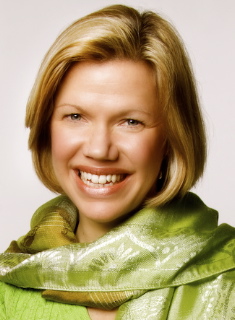
Introducing Dinneen

A couple of weeks ago I got a comment from Dinneen, who said she liked what I was saying about eating real food. It turns out she’s been saying the same thing on her blog and with private clients ever since … well, I don’t want to tell the good part of the story. Go ahead and read her story and see if it doesn’t make you feel better about your decision to eat real food.

What You Should Eat

As a weight loss coach and mentor, people are constantly asking me what foods they should eat. They want to know exactly what to eat for breakfast, lunch, and dinner (and the snacks in-between) to help them look better, feel better, and live better. They often look for me to tell them about some “secret food” that will melt the pounds away, make them look younger, have more energy, and sleep better at night.

As I try to come up with some fancy answer, I can’t help but look them straight in the eyes and say this: Eat real foods. I then see a glazed look come over them, as they can’t believe it. “You mean THAT’S the answer?” they say. “Yes,” I tell them.

But here’s the problem: for years we’ve been told to eat the newest foods or the latest food products. The majority of the foods sold at supermarkets are not real foods. Instead, they’ve been packaged, marketed, and redesigned to look and smell like a real food, but in reality are not. The majority of them are manufactured foods.

So what’s a “real food”? Basically, a real food is one that nature gave us, something that is not processed and stripped of its nutrients and minerals. Real foods don’t come in a box and when you read the ingredients you actually KNOW what the items are.

Nobody’s Perfect

Let me say straight out that I do eat manufactured foods from time to time. The majority of the time I eat real foods (about 80-90% of the time), and the other part of my diet (10-20%) will consist of manufactured foods. This is because (a) I do like the taste of some manufactured foods (b) sometimes that’s all that is available, and (c) I don’t live on a farm.

But give me the choice between homemade lasagna, and a store-bought frozen, packaged, or ready-to-eat version, and the homemade version trumps every single time. And this goes for ANY food or meal.

But I didn’t always think this way. I didn’t always fully understand the concept of eating real foods. I thought eating real foods would make me unhealthy or gain weight.

I Believed What They Told Me

Really. Scientists, the media, diet gurus, and even the government were telling us to eat low-fat and low-calorie foods, to use margarine, and avoid high-fat (but real) foods like eggs and avocados. So instead of butter I ate margarine; instead of whole milk I drank skim or low-fat milk; instead of eggs I ate egg substitutes; instead of sugar I used artificial sweeteners.

I also avoided anything remotely guilty, like real chocolate cake, and instead opted for the lower-calorie kind with artificial sweeteners (and most times ended up eating more than I should have, as I was never fully satisfied).

Another challenge today is that we’re constantly bombarded with the newest scientific advice about what to eat. On top of that, companies are marketing to us all the time to purchase their “new and improved” packaged foods. It’s no wonder we no longer know what to eat!

So like many of you, I spent years trying to figure out what to eat. Literally. I kept looking for that newest food or product that would be the answer to my health, energy and weight-loss prayers.

I Learned Better

But then my life was turned upside-down. I went to live and work in France.

The French are known to eat wonderful foods with high levels of carbs and fats, including breads, creamy sauces, meats and cheeses. I was horrified that over time my cholesterol would sky-rocket, I would be on the road to a heart-attack, and worse I would gain weight — quelle horreur! Literally, I didn’t know how I would survive.

What do you mean you put REAL butter on the vegetables? Heavy cream in the sauce? Oh no! Real, decadent chocolate cake for dessert? How can I resist? I literally thought I was my way to an overweight, diabetic, and unhealthy life — but I couldn’t have been more wrong.

Though the French eat these foods, their obesity rate hovers around 9%, compared to the American level of 33%. And despite their daily consumption of high-fat foods, the French have one of the lowest rates of heart disease in the world, have very low rates of diabetes, and have 300% fewer heart attacks than Americans! So in addition to being slimmer, they’re healthier.

And ONE of the reasons is because they eat real foods.

This Isn’t A Theory, It’s Real Life

If you were to step into the kitchen of a typical home in France, you’d be hard pressed to find industrialized packaged food. Instead, they fill their kitchens with fresh, wholesome vegetables, fruits, dairy products, breads, herbs and spices. In their freezer you wouldn’t find many frozen dinners; instead, you’ll find they keep frozen vegetables, meats, poultry and maybe some fish in the freezer, but not many frozen dinners.

They understand that anything nature gave us is not only healthier, but also tastier and better for the body, than anything artificial. When you eat real foods, or foods with real ingredients, your body — and mind — are much more satisfied so you’re less likely to overeat.

And It Works

By adding more real foods in my diet when I lived in France, I felt better, looked better, my cholesterol levels went down, and best of all … I did not gain any weight!

When I came back to the states, I continued this path of eating mostly real foods. A few years later when I attended nutrition school, I learned more about the benefits of eating real, wholesome foods. And I have never looked back.

So if you want to know the first step to the road of a healthier, happier, and slimmer life — then start eating more real foods. It’s not some fancy answer, but it’s the honest to goodness truth, and the REAL answer of what you should eat.

© Dinneen Diette, 2009

Dinneen Diette is founder of Eat Without Guilt.com, a speaker, and contributor to various online health & wellness magazines, newsletters and websites. For more information about Dinneen, and to receive her easy tips, advice, how-to articles, and Special Report for FREE, visit www.EatWithoutGuilt.com.

Want more like this? For more recipes like this, that you can hold right in your hands, and write on, take notes, tear pages out if you want (Gosh, you're tough on books, aren't you?) you might be interested in How To Cook Like Your Grandmother, 2nd edition, Illustrated. Or to learn your way around the kitchen, check out Starting From Scratch: The Owner's Manual for Your Kitchen.

This entry was posted in Uncategorized. Bookmark the permalink. Post a comment or leave a trackback: Trackback URL.

12 Comments

  1. Cindy
    Posted March 3, 2009 at 4:44 pm | Permalink

    Well said. People think it’s hard to eat real food, or expensive, but it doesn’t have to be either. And it’s truly amazing how much better you feel, and how much better food tastes, when your dinner didn’t come out of a box!

  2. MeadowLark
    Posted March 3, 2009 at 5:02 pm | Permalink

    This made me cry when I heard it http://www.cnn.com/2009/HEALTH/02/25/best.diet/

    Researchers at the Harvard School of Public Health and the Pennington Biomedical Research Center put four popular diets — high carb, high fat, low-fat and high protein — to the test to see which of the regimens resulted in more weight-loss success.

    After two years they found:
    “The key really is that it’s calories. It’s not the content of fat or carbohydrates, it’s just calories,” said Sacks. The findings are published in the latest edition of the New England Journal of Medicine.

    We didn’t know that? We had to have a STUDY? It’s this kind of thing that the Dinneen’s of the world have to battle. Utter ignorance. And so sad.

  3. Posted March 3, 2009 at 6:25 pm | Permalink

    I don’t see a low-carb diet in that list. I would normally think high fat is the same thing, but low-fat is listed as different somehow.

    In any case, read this article then tell me if you still think it’s “just calories”.

    http://www.fourhourworkweek.com/blog/2008/02/25/the-science-of-fat-loss-why-a-calorie-isnt-always-a-calorie/

    What’s interesting about the Yudkin study is that they weren’t consciously restricting calories. By eating a diet that they all thought was very filling, they voluntarily ate less and felt better.

  4. MeadowLark
    Posted March 3, 2009 at 6:35 pm | Permalink

    Drew, I guess my point was that we’ve made “nutrition” this big holy grail, but in the end we need to eat real food, listen to our bodies and stop buying it (always) in a box.

    Sorry if I was kinda unclear on that.

  5. Posted March 3, 2009 at 6:53 pm | Permalink

    I completely agree with your point. But I think this study doesn’t prove anything. If anything, people will use it to support bad conclusions.

    The first problem is that they started from a baseline assumption about what is “high” fat. In the Yudkin study they were eating over 60% of their calories from fat. And at that ratio they self-limited themselves to 1560 calories, more than 400 below what the Harvard study reported.

    Further, the Harvard study didn’t actually measure the amounts of food eaten. It’s entirely self-reported, which is notoriously unreliable.

    Finally, the study reports that, “These findings together point to behavioral factors rather than macronutrient metabolism as the main influences on weight loss.” So why does the author claim in the summary that it shows anything about calories?

    But that’s a much less interesting headline: Study shows behavior is more important than diet in weight loss.

  6. troy and christina
    Posted March 3, 2009 at 6:57 pm | Permalink

    Amen for real foods!

    But the next thing to watch out for is how “manufactured” our “real” food is. I don’t know exact stats, but plain corn contains (I think) up to 30% less nutrients than it did 30-50 years ago b/c of modern “efficient” farming methods. If you can garden, use heritage seeds/plants and natural fertalizers/soil amendments to really up the goodness of real foods.

  7. Stephanie
    Posted March 4, 2009 at 7:44 am | Permalink

    One thing I notice with all of these diets: most people don’t exercise. I’m not saying that exercise will let you eat whatever you want, but I’ve noticed in this society there aren’t many people exercising. I’ve noticed that while the French do eat the “rich” foods, they also walk a lot. They are outside. That’s something our grandparents did as well.

  8. wosnes
    Posted March 4, 2009 at 8:18 am | Permalink

    I’d come to the conclusion that eating fake food is at the root of the problems with diet and obesity and health. Eating real food is at the root of the cure.

    I’m convinced that one of these days the nutrition experts are going to say, “Uh, we’ve been wrong. It’s not the fat, or the carbs (even the white stuff) or meat — it’s all the junk you’ve been eating.” And I don’t mean only “junk food”, but the junk in the food we’ve been eating.

    I’ve done a lot of reading about the various traditional or indigenous diets and the one thing they all have in common is the absence of overly refined and processed foods with a multitude of chemicals added. As those things are added, their health declines. I’m suprised that no researcher has seen the link between this and our obesity and health issues. There’s almost a direct correlation between the amount of chemically-enhanced, fake foods in our diet and our weight and health issues.

    Cindy just about said it all. People also seem to think it’s time consuming to prepare real food. Some things, certainly, are time consuming, but not everything is. Often all it takes is a little planning ahead.

    Stephanie is right about the exercise, too. We weren’t meant NOT to move!

    Sally

  9. Kristin
    Posted March 4, 2009 at 8:19 am | Permalink

    It’s amazing how often the simplest solution is the right one. But no one would make any money on the simplest and most obvious answer to the question of what’s best to eat.

    Welcome to America, where capitalism triumphs over public health every time!

  10. Melanie
    Posted March 4, 2009 at 2:06 pm | Permalink

    Yes! All real food is found around the perimeter of the store, and that’s where I shop. I try not to even set my foot into the junk and processed food isles :)

  11. jennifer
    Posted August 22, 2009 at 2:25 pm | Permalink

    Michael Pollan's new book called In Defense of Food goes into exactly what he means by " real foods" and has the motto "Eat food, less meat more vegetables." Which he then goes into well researched breakdown of the nutritionism behind it and what he means exactly. I highly recommend it.

  12. Posted August 22, 2009 at 7:48 pm | Permalink

    Jennifer, I'm a huge fan of Pollan. If you haven't yet, you should check out "The Omnivore's Dilemma", which came out right before "In Defense Of Food".

Subscribe to comments on this post

Post a Comment

Your email is never published nor shared. Required fields are marked *

*
*

You may use these HTML tags and attributes: <a href="" title=""> <abbr title=""> <acronym title=""> <b> <blockquote cite=""> <cite> <code> <del datetime=""> <em> <i> <q cite=""> <strike> <strong>

Subscribe to comments on this post
  • Follow this blog

     Subscribe in a reader

    -- OR --
    To get recipes in your email
    Enter your email address:
    -- OR --
    Sign up for the weekly newsletter.Email address:
  • All-time Favorites

    Perfect Brownies
    Banana Cake
    French Onion Soup
    Egg Salad
    Onion Rings
    Bruschetta Pizza
    Peach Cobbler
    Cheesesteak
    Frozen Chocolate Truffle Pie
    Emily's Creamy Cheesecake


  • What Would Granny Cook?
  • No Secret Recipes
  • No Awards Please