For special deals and more great content, sign up for the free How To Cook Like Your Grandmother Newsletter.
Email address:


Also receive blog posts via email

Name: (optional)

Not now, thanks

How To Make Pita Bread

I’m probably going about this all wrong. I just made my first yeast bread a couple of weeks ago and got a huge kick out of it. Now if I were smart, I’d probably make the same kind of bread several times until I really got the hang of it.

No one’s going to accuse me of being smart about this. My third bread, and it’s my third recipe. True, I keep learning things not to do. I guess by process of elimination I’m eventually going to stumble on the perfect bread.

On the bright side, bread is pretty forgiving. Even when it doesn’t come out exactly how you wanted, it’s still fresh bread. I guess that’s why we’ve been making it since we learned to cultivate grain.

All of which is a long way of saying I did bread again. Pita this time. It wasn’t perfect, but I know what I did wrong.

Ingredients


3 cups flour
1-1/2 teaspoons salt
1 tablespoon honey
1 packet active dry yeast
1-1/4 to 1-1/2 cups warm water
2 tablespoons olive oil

Directions

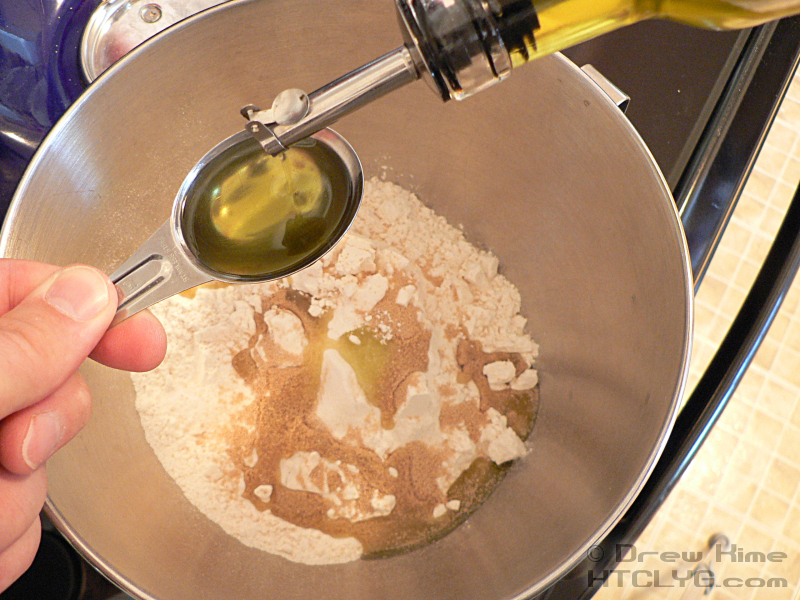
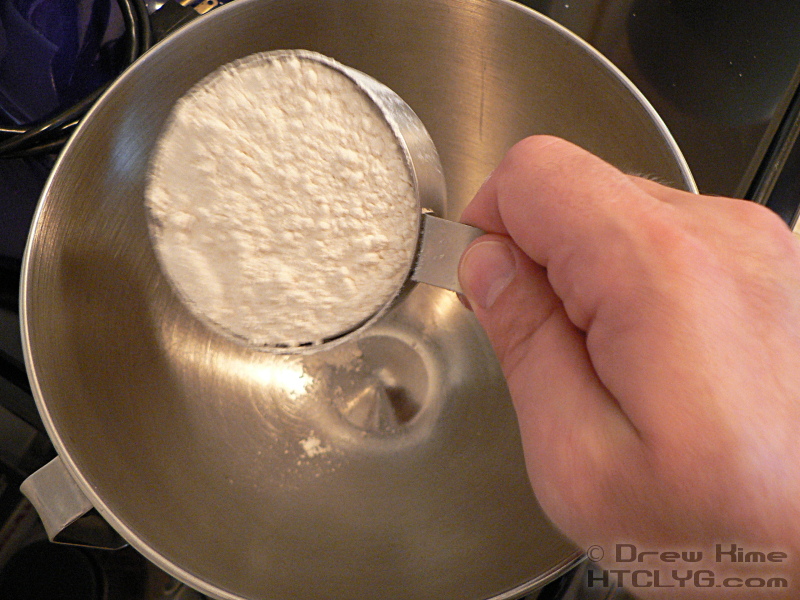
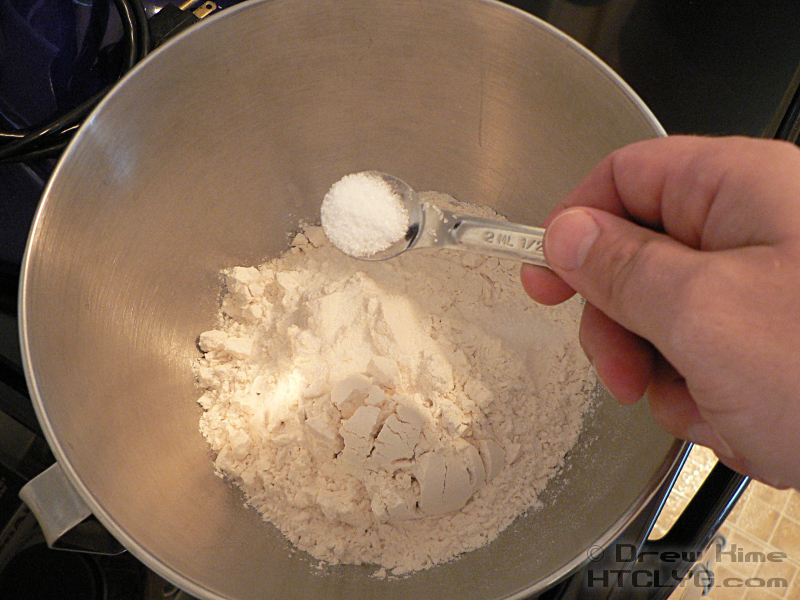
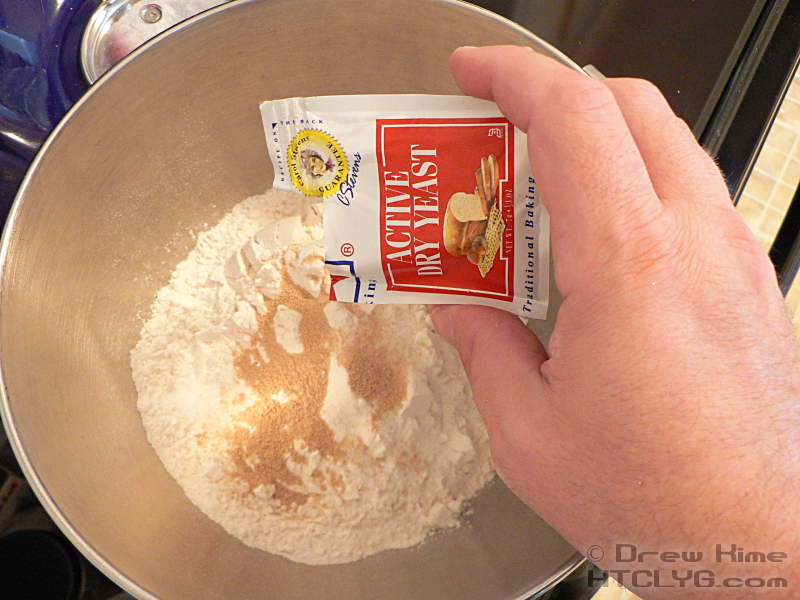
I decided to this one in the mixer, and it worked great. Add the flour, salt, yeast and olive oil.
It’s important to measure the oil before the honey. (I love this trick, by the way. I read it a couple of months ago and have been waiting until I had a recipe with oil and honey so I could use it.) The oil left on the measuring spoon will keep the honey from sticking, and it will all slide right off.
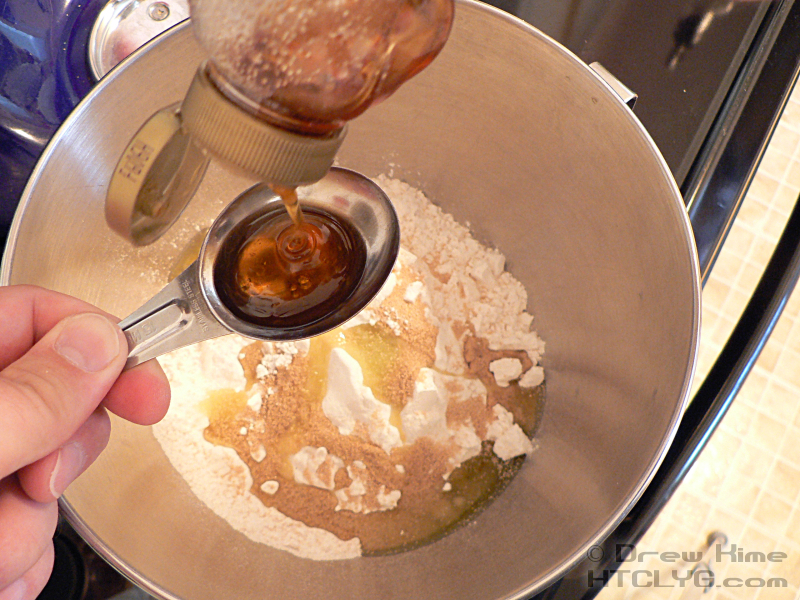
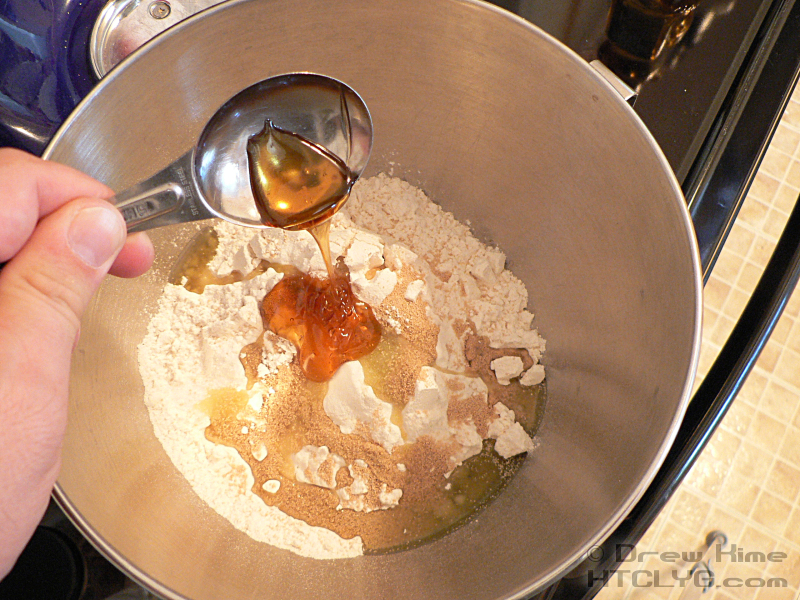
Cool, huh? (Okay, so I’m easily amused.)

Finally, add the warm water — almost hot, really, it should be just over 100° to activate the yeast — and mix on low with the dough hook.
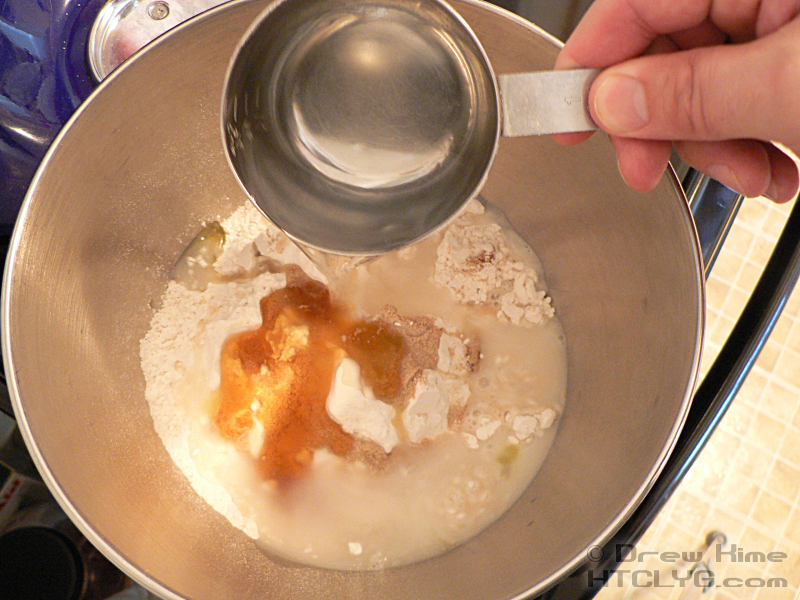
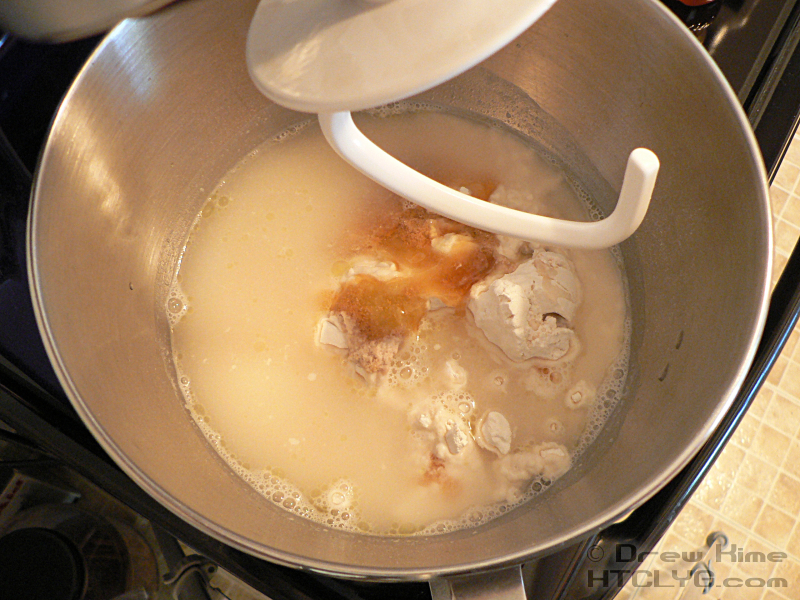
Scrape the sides down a few times while it’s mixing. This dough will be very sticky, but should come together and form a ball on the dough hook. If it doesn’t pick up all the flour, add a little water; if it sticks to the bowl instead of the hook add some flour.
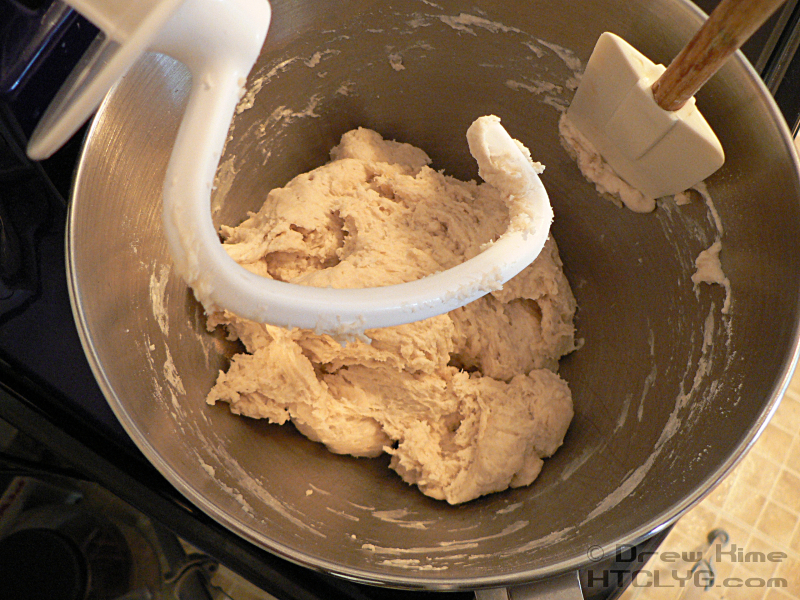
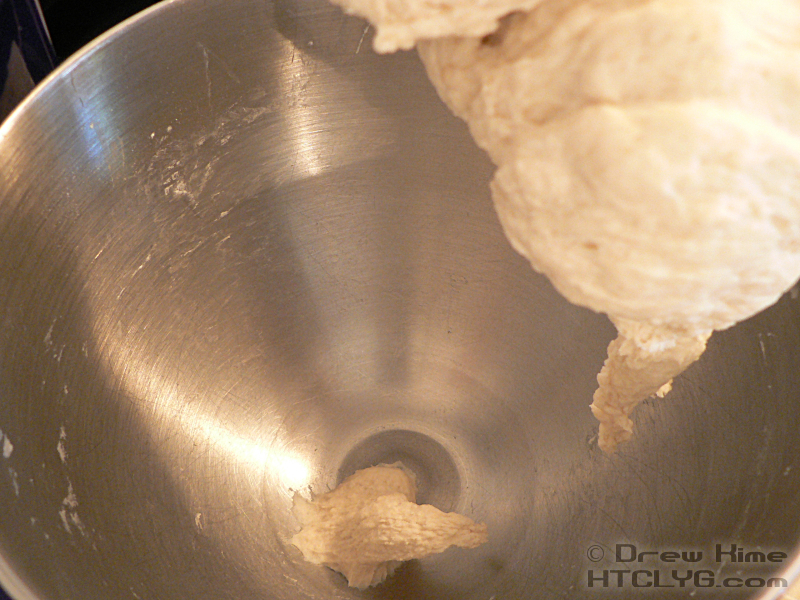
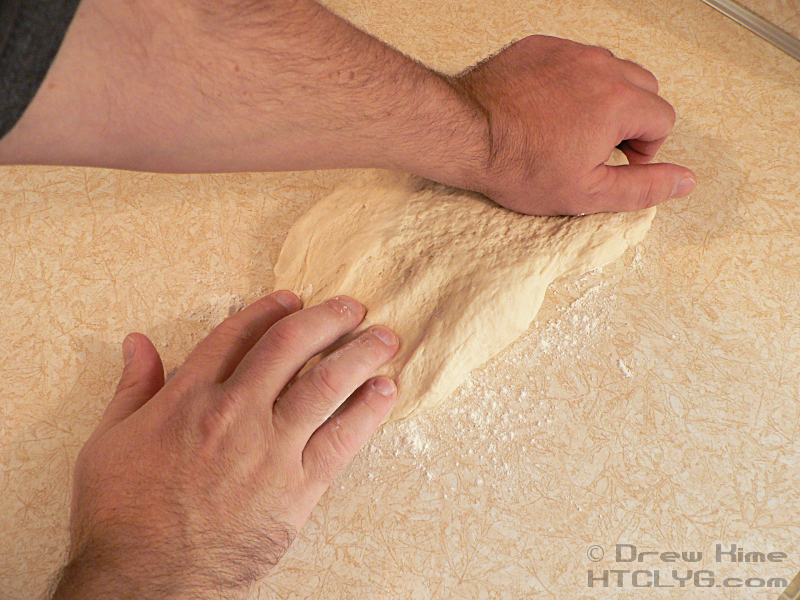
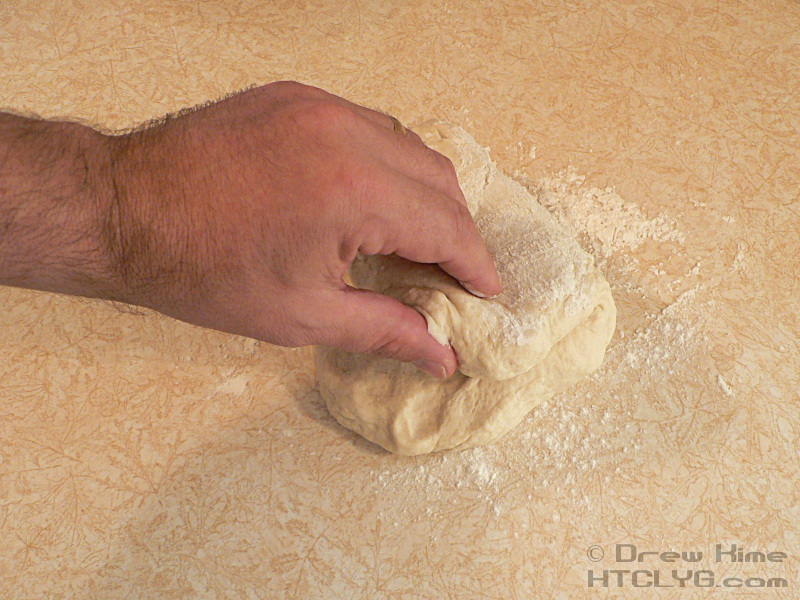
When the dough is ready, turn it out onto a floured surface. Knead the dough briefly, pushing it away with the heel of your hand, then folding it back and pushing again.
Put a tablespoon or two of oil in a bowl — your great-great-grandmother’s bread bowl, if you’ve got it.
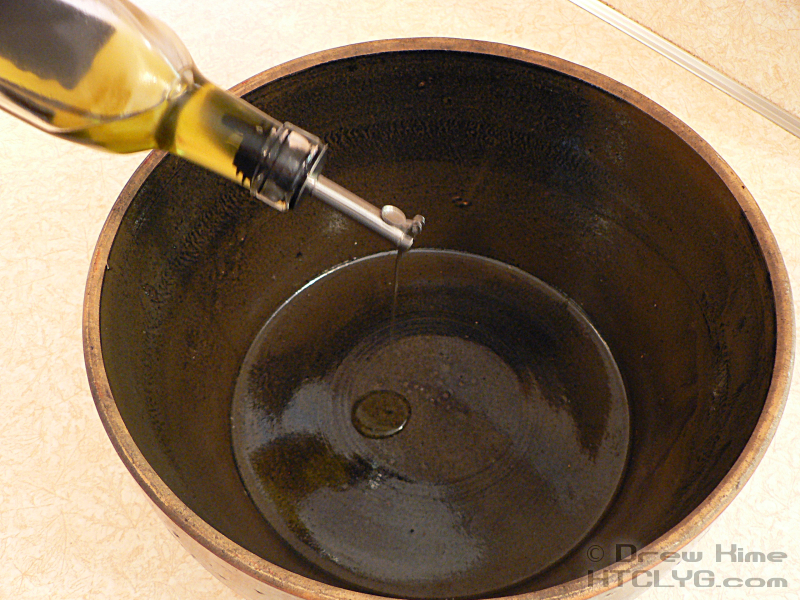
Put the kneaded dough in the bowl and roll it around to coat it with oil so it won’t stick.
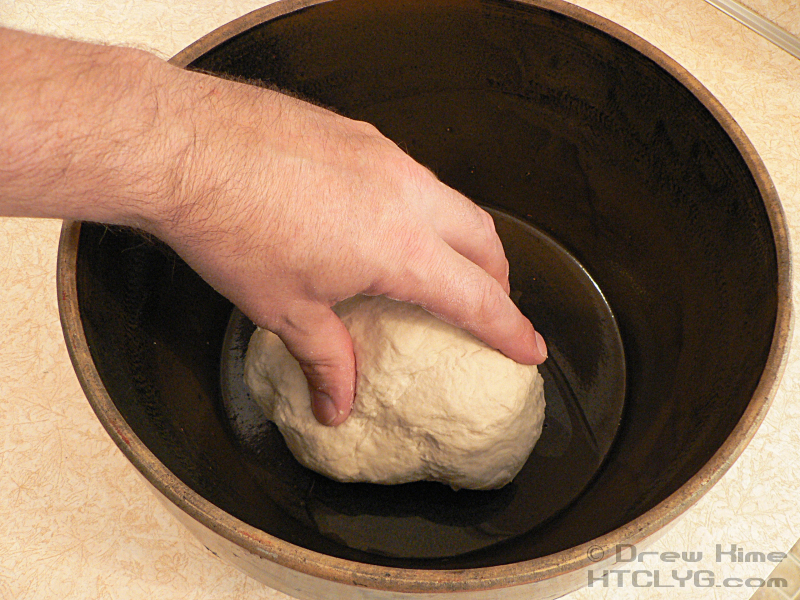
I’ve done other dough that didn’t stick in this bowl even without oil. This dough was exceptionally sticky, so I wasn’t taking chances.

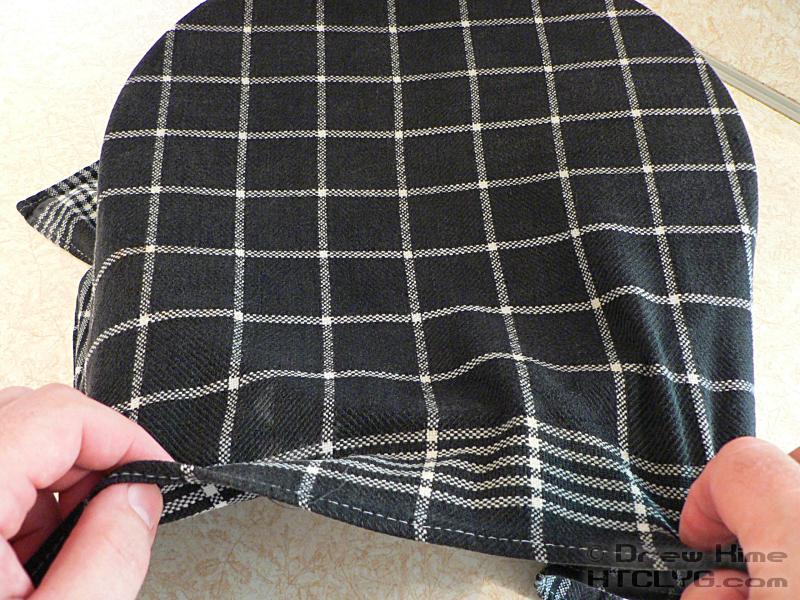
Cover the bowl with a damp towel and leave in a warm place until it has doubled in size, about 45 minutes to an hour-and-a-half. Yes, that’s a pretty wide range; it really depends on how active your yeast is and how warm it is.
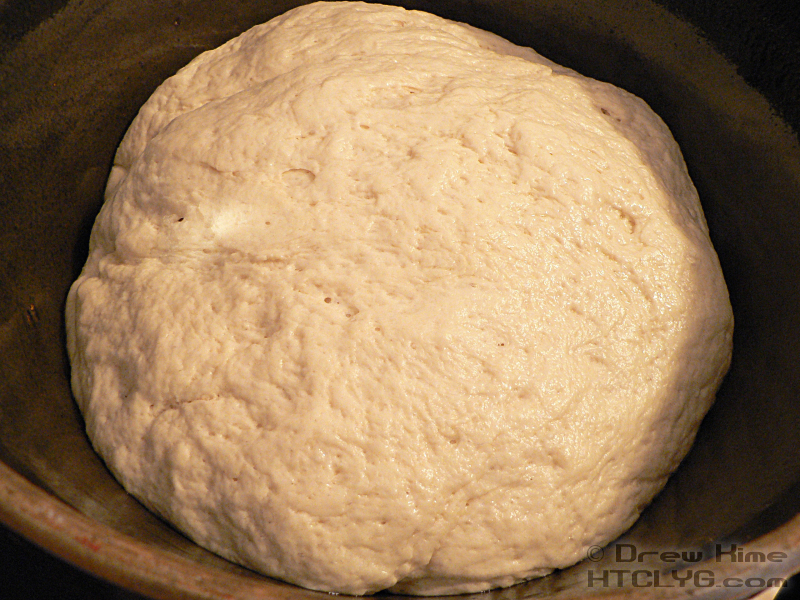
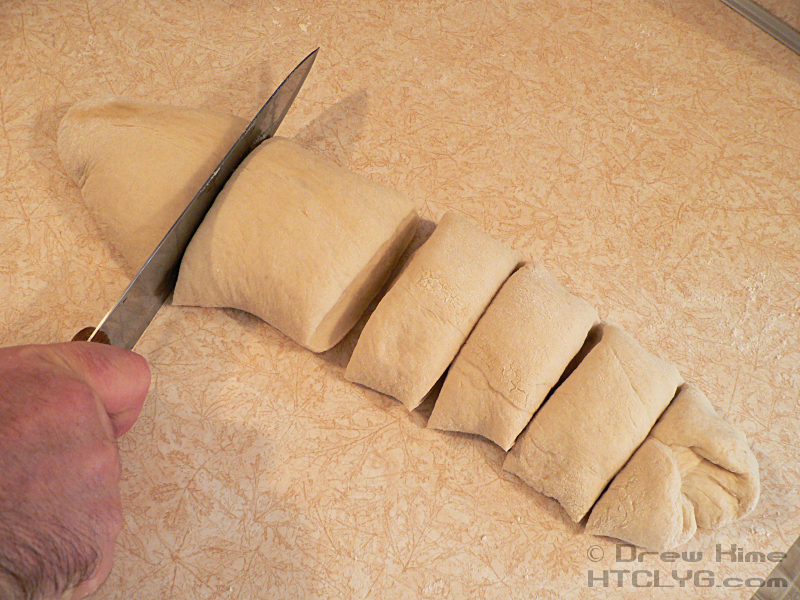
When the dough has doubled in size, punch it down and roll it out to a long tube shape.
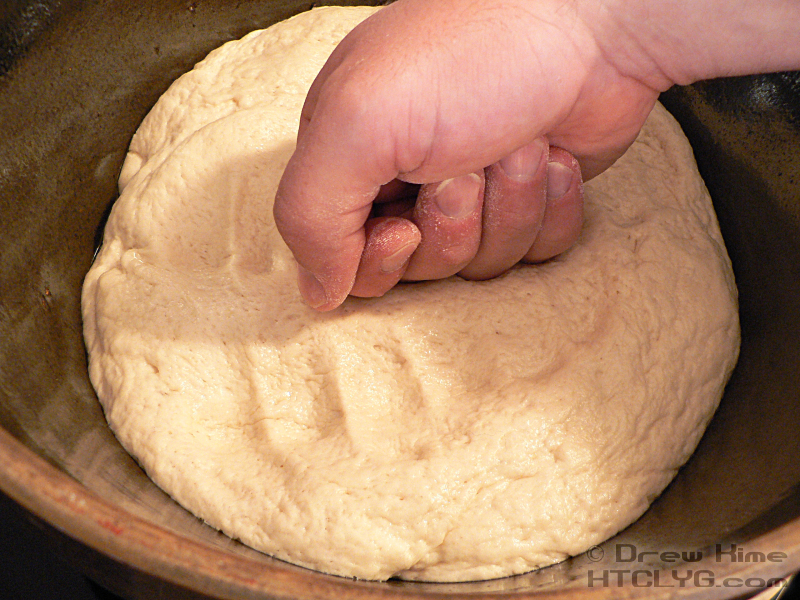
Cut the dough into six or eight even pieces. I did eight, but next time I’ll do six with this amount. Roll each piece into a ball and place on a baking sheet to rest for 20 minutes. They’ll keep rising, so space them out.
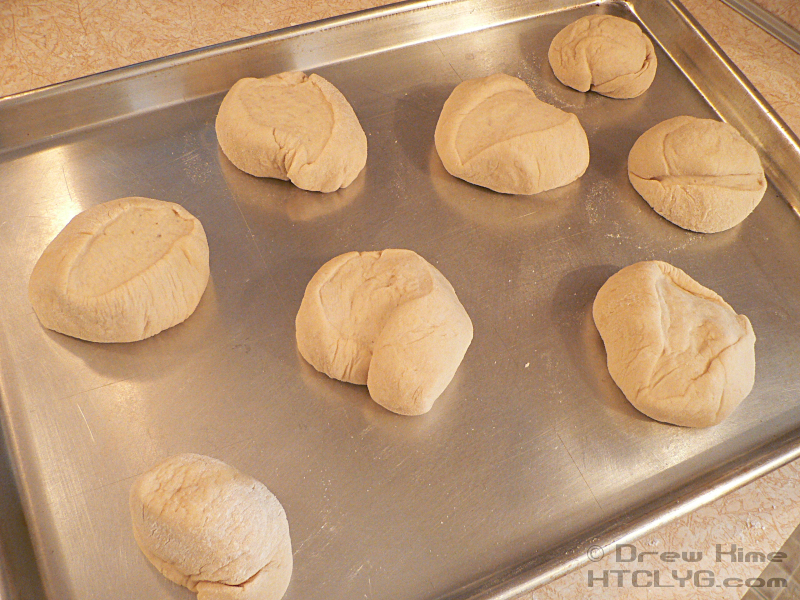
While they’re resting pre-heat the oven to 450°. If you have a pizza stone put that on the bottom shelf. Otherwise, use a heavy baking sheet upside-down.

On a floured surface, and with flour on the rolling pin, roll each piece of dough out to about a quarter-inch thick. They should be about six inches across.
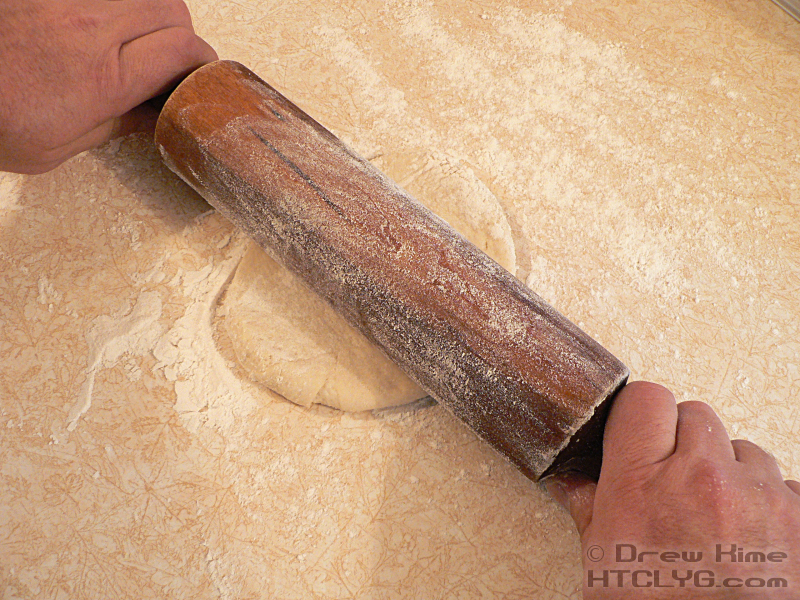
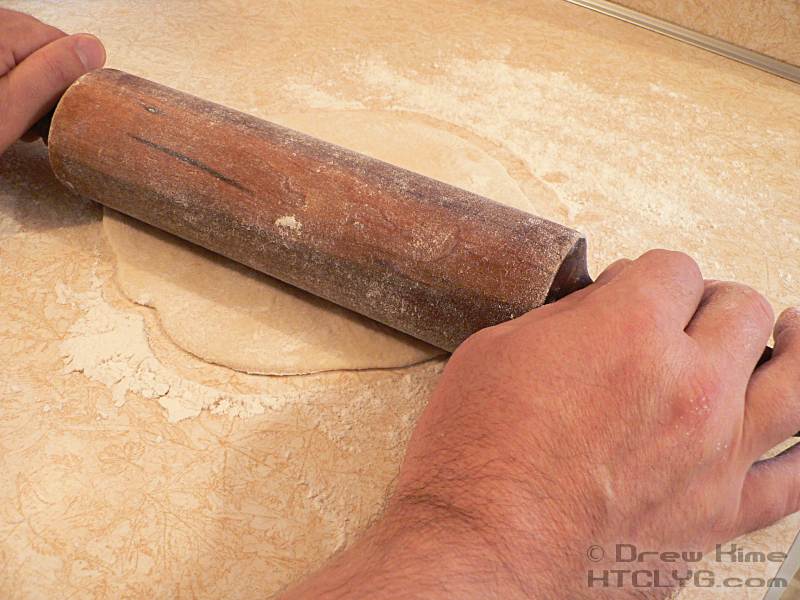
I did those a bit too thin. I need to either not make so many from this size batch, like I said above, or make them smaller around than I did. I’ll point out the problem down a little farther.

Place the rolled-out dough on baking sheets to rise until doubled in height. Apparently there’s a food blog rule that you have to take a low-angle shot of the final rise before putting bread in the oven. I’d hate to get in trouble, so here it is.

When the dough has risen, and the oven is completely heated, place as many pitas as you can on the stone without overlapping. I could only fit two at a time.

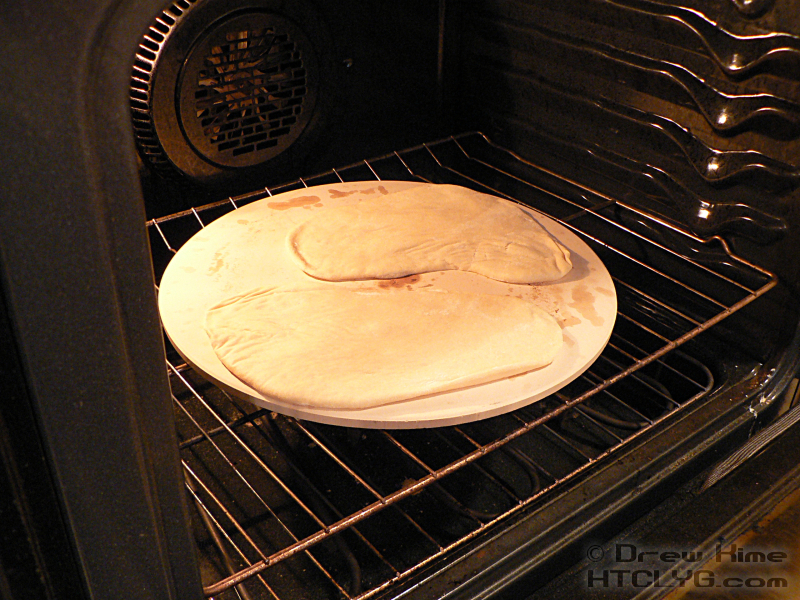
If you didn’t go overboard and roll the dough too thin, they’ll puff up like the one on the right in the next shot.
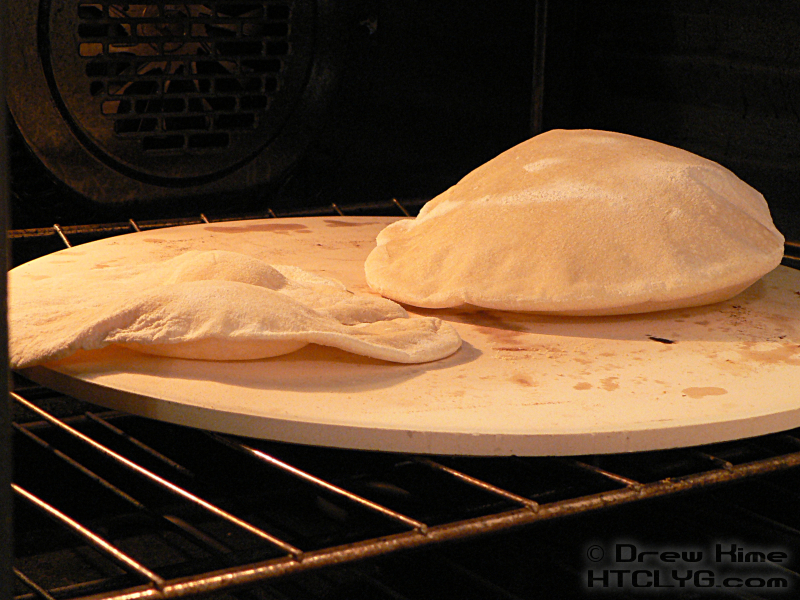
Whether they puff up or not, cook them for about three minutes, until they’re lightly browned on the bottom. If you want them crispy, flip them and do another two minutes on the other side.
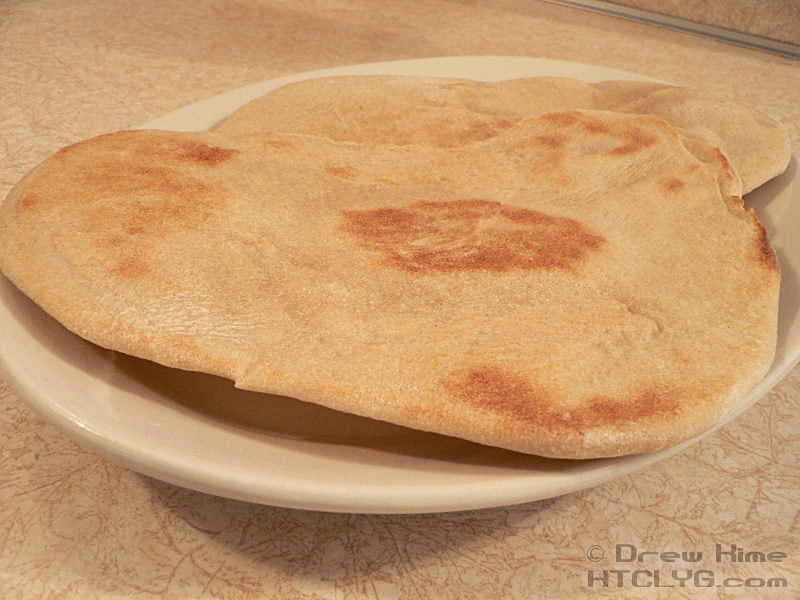
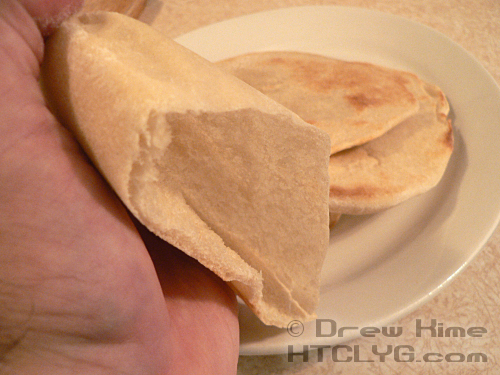
The ones that puff up can be cut in half and used for pocket sandwiches. (Ooh, foreshadowing …)
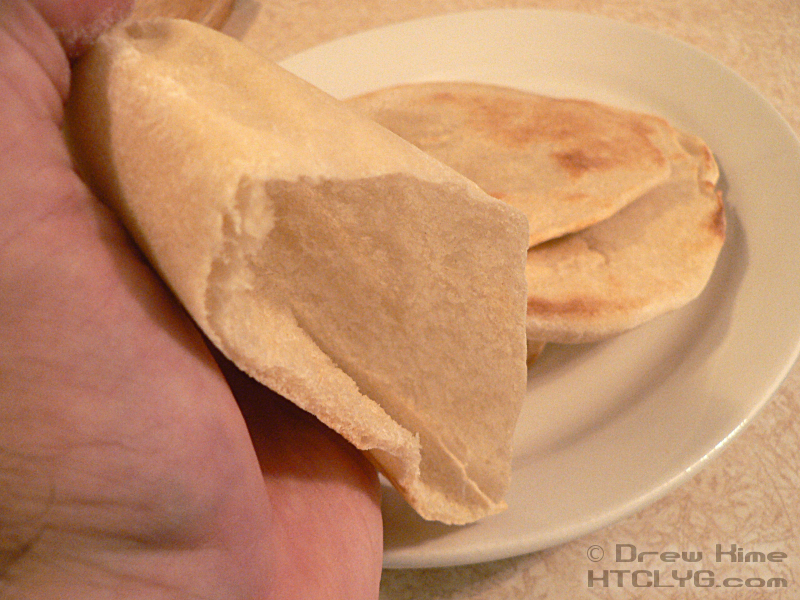
Or do what you always do with fresh bread, butter them up and dig in.
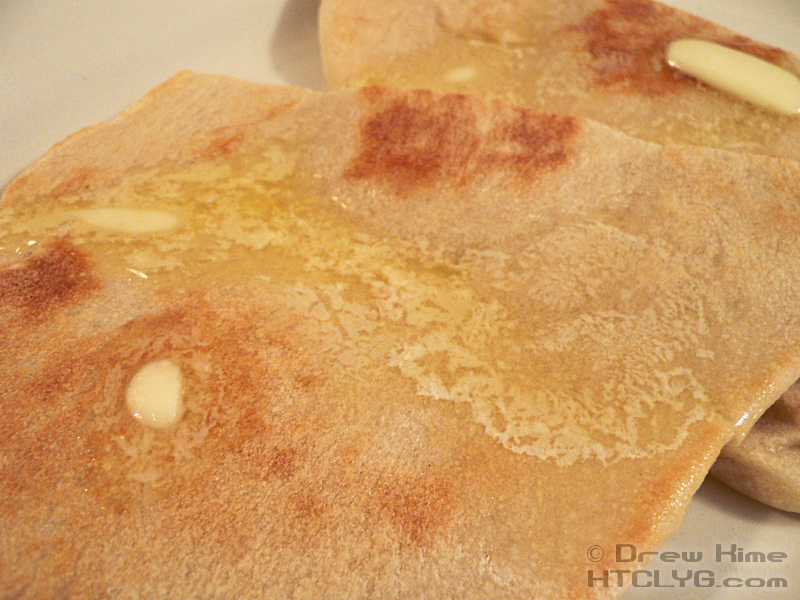
And that’s it.


Okay, the rest of it is posted. Check out the tzatziki sauce and gyro recipes.

Like what you see? Vote for me as one of the most influential people online. It only takes 10 seconds: Click here to vote.


Want more like this? For more recipes like this, that you can hold right in your hands, and write on, take notes, tear pages out if you want (Gosh, you're tough on books, aren't you?) you might be interested in How To Cook Like Your Grandmother, 2nd edition, Illustrated. Or to learn your way around the kitchen, check out Starting From Scratch: The Owner's Manual for Your Kitchen.

This entry was posted in Bread. Bookmark the permalink. Post a comment or leave a trackback: Trackback URL.

11 Comments

  1. Bob
    Posted October 21, 2008 at 10:40 am | Permalink

    Nice, fresh pita is a good time. Love the oil trick, I’ll have to remember that the next time I make bread.

  2. rubybean77
    Posted October 23, 2008 at 10:29 pm | Permalink

    That is so cool I can’t stand it! I need to make pitas!

  3. Posted October 24, 2008 at 7:59 am | Permalink

    It’s a good thing I don’t have celiac (gluten intolerance) because I’m really getting into this whole bread making thing.

  4. Amanda
    Posted December 29, 2008 at 11:33 am | Permalink

    Oh gosh, it seems I ended up with a soupy mixture rather than a dough. I probably messed up quite badly. This probably won’t turn out too well.

  5. Posted December 29, 2008 at 4:55 pm | Permalink

    Amanda, I’m sorry to hear that. This dough was pretty thin, but I wouldn’t call it soupy. I’m sure it’s too late now, but I’d just add flour until it’s workable. I’m getting much more confident with bread, and it’s really pretty simple: too wet, add flour; too dry, add water. Of course you have to know what the “correct” texture is first.

  6. Tasha
    Posted January 22, 2010 at 7:39 am | Permalink

    Hi! I’m just wondering if I don’t have a baking stone and If I put pitta bread directly on a hot 220 degrees non-stick pan, so will I get the same nice pittas like your ones with the hole inside??? Thank you.

  7. Posted January 22, 2010 at 8:39 am | Permalink

    Tasha, that should still work. The baking stone holds more heat so you’ll get a more even finish, but you’d have to compare two batches side-by-side to notice the difference.

  8. Posted July 9, 2010 at 1:18 am | Permalink

    Hi, tried these yesterday. The dough rose very well but when I baked it it came out a little flat and thick and spongy.. nothing like yours in the pic or what I’ve eaten all over the Levant, sigh! Dunno what I did wrong. Do you think it was the instant yeast vis-a-vis the active dry yeast? But since the dough rose quite a bit, I thought that wouldn’t have been the problem.

    BTW the oil trick was really neat, the honey just slides off!

  9. Posted July 9, 2010 at 9:16 am | Permalink

    Hmm … did you use a baking stone? My guess is they didn’t get hot enough, fast enough.

  10. Posted July 23, 2010 at 5:48 am | Permalink

    love your way of showing how to cook pita bread…
    it’s been so long that i wanted to learn how to cook pita because me and my husband love to eat it with marinated pork or chicken…
    and buying instant pita bred here in the Philippines is quite expensive.

  11. Posted July 26, 2010 at 1:44 pm | Permalink

    Hi Drew, nope did not use a baking stoone cos I dont have one… nt sure if I baked it straight on a baking tray that was probably cold, or on the wire rack I think… shall try again by using a baking tray since I dont know where to get a baking stone from here…

Subscribe to coments on this post

Post a Comment

Your email is never published nor shared. Required fields are marked *

*
*

You may use these HTML tags and attributes: <a href="" title=""> <abbr title=""> <acronym title=""> <b> <blockquote cite=""> <cite> <code> <del datetime=""> <em> <i> <q cite=""> <strike> <strong>

Subscribe to coments on this post
  • Free Online Class

    Sign up now for my free 10-day online course in the basics: Starting From Scratch

  • Buy the Recipe Cards

    Start your own recipe box, or fill up the one you've got. How To Cook Like Your Grandmother: Recipe Cards are a perfect addition to your set. They also make great gifts.

    Click here to select how many you want.

  • Buy the Books

    Whether you're just starting out, or already know your way around a kitchen, I've got you covered. How to Cook Like Your Grandmother is chock full of recipes and techniques that are based on what tastes good, not on junk science and fad diets. You won't find the words lite, low, lean, free or skim anywhere.

    Or pick Starting From Scratch to learn the difference between braising and roasting, and everything else you need to get comfortable in the kitchen.

  • Follow this blog

     Subscribe in a reader

    -- OR --
    To get recipes in your email
    Enter your email address:
    -- OR --
    Sign up for the weekly newsletter. Email address:
  • All-time Favorites

    Perfect Brownies
    Banana Cake
    French Onion Soup
    Egg Salad
    Onion Rings
    Bruschetta Pizza
    Peach Cobbler
    Cheesesteak
    Frozen Chocolate Truffle Pie
    Emily's Creamy Cheesecake


  • What Would Granny Cook?
  • No Secret Recipes
  • No Awards Please

Page optimized by WP Minify WordPress Plugin