For special deals and more great content, sign up for the free How To Cook Like Your Grandmother Newsletter.
Email address:


Also receive blog posts via email

Name: (optional)

Not now, thanks

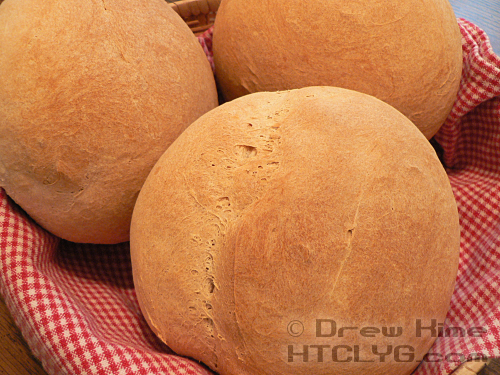
How To Make Sourdough Bread Bowls

I think I’m going to start annoying people this fall.

Have you ever had a friend “discover” some wonderful new plan for their life and couldn’t wait to tell everyone about it? I’m that person now. I’ve had a conversion.

I make bread now.

And I’m going to tell everyone allllllll about it.

Ingredients
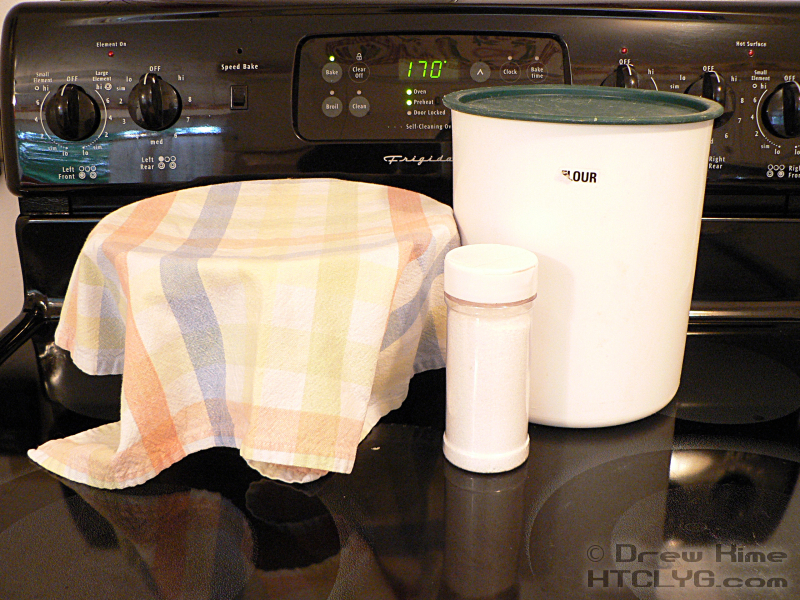

3 cups flour
1 tablespoon salt
1 cup sourdough starter
1/2 cup lukewarm water (over 100°)

Directions

I love fresh-baked bread. I love the way it makes the house smell. But since I didn’t know how to make it, every now and then I’d buy one of those packs that had five frozen loaves, ready to thaw and bake.

But you had to remember to take the loaf out several hours before you wanted to bake it. It needed to thaw and rise. And it was okay, but not that great, and your choice of flavors is limited.

Starting this week, if I’m going to start several hours out, I’m making it from scratch. It’s dead easy, and the sense of accomplishment is way out of proportion to the amount of work.

The sourdough I’m doing today actually takes a couple of days of lead time. You need to give the starter time to ferment.
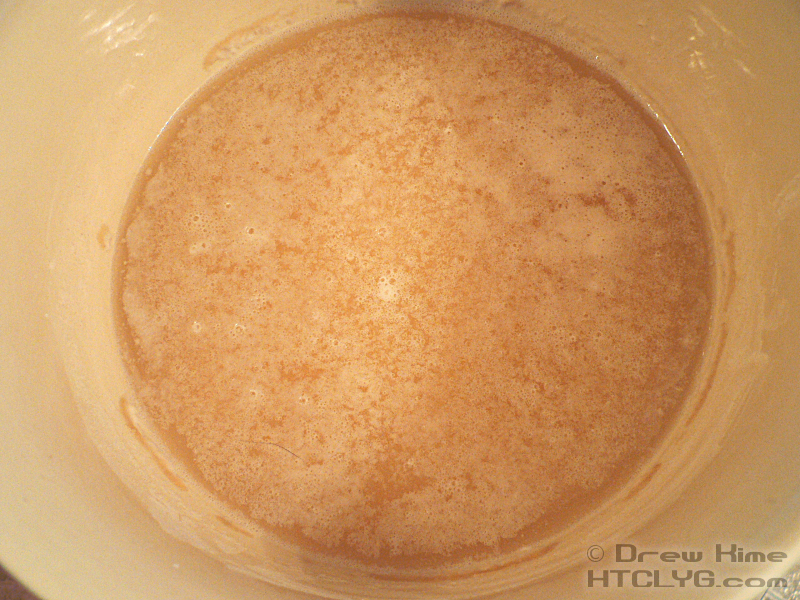
Yeah, that doesn’t look so appealing. But give it a quick stir and it’s all good. We’ll come back to that.

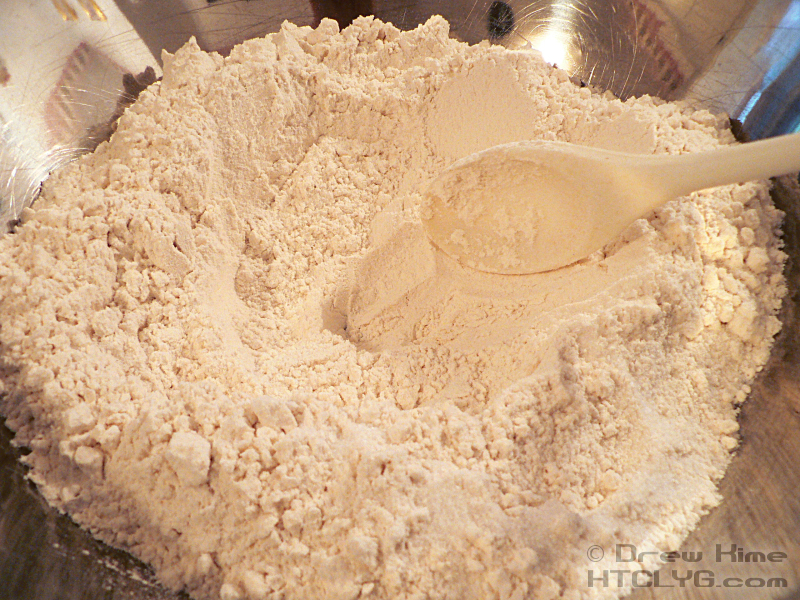
Start by combining the flour and salt in a large mixing bowl and making a well in the center.
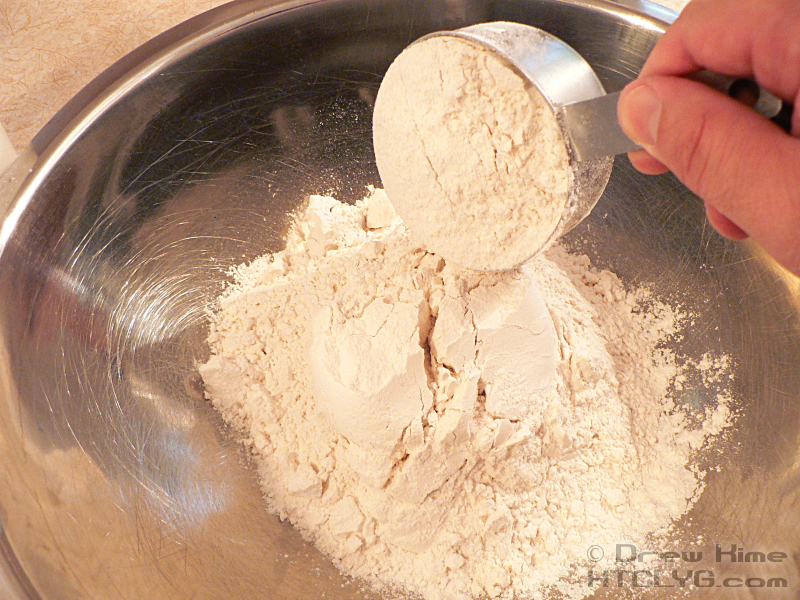

I’m actually doing a double recipe here, so yours might look a lot less full than this.

Give the starter a good stir. After a couple of days of sitting to ferment, it will separate and the flour will settle to the bottom.
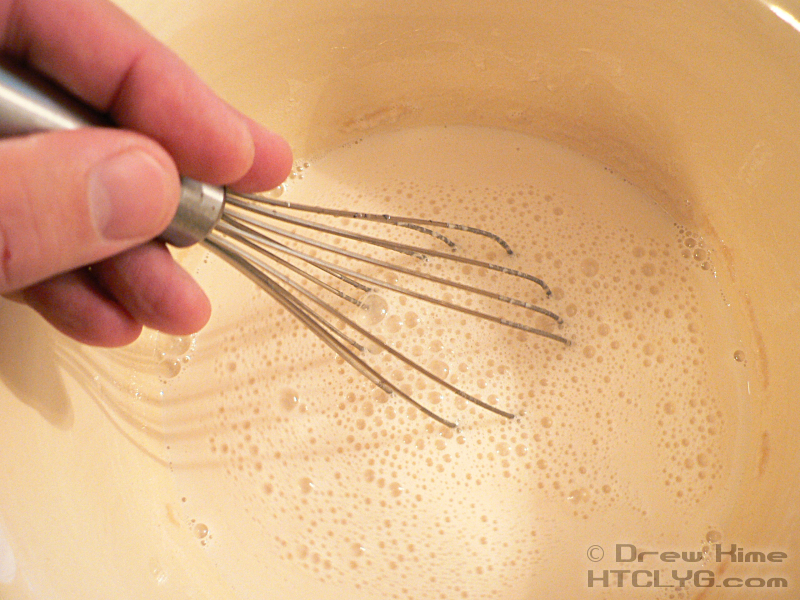
A single batch of starter is good for three cups, so unless you’re doing a triple batch you’ll need to scoop some out. I’m going to look for a mixing bowl with a good spout to keep my starter in from now on.
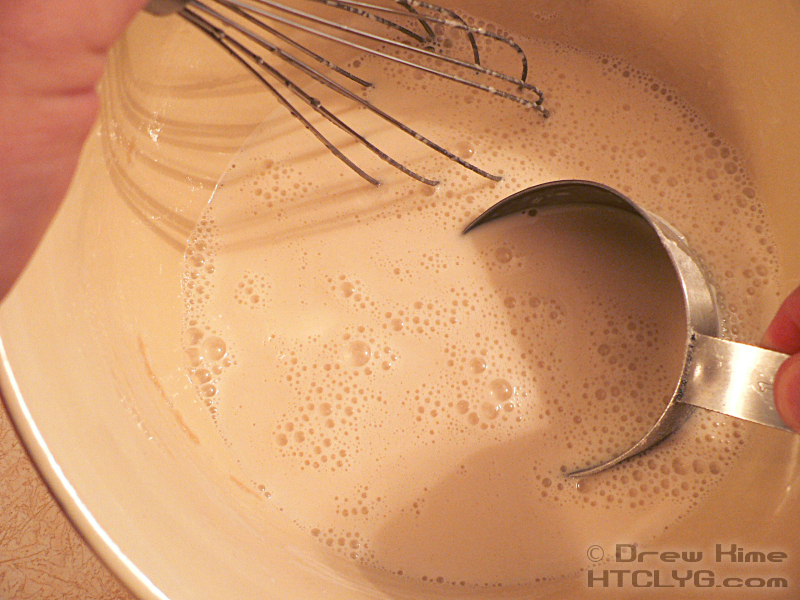
Add the starter and water to the flour, and stir until it forms a rough dough.
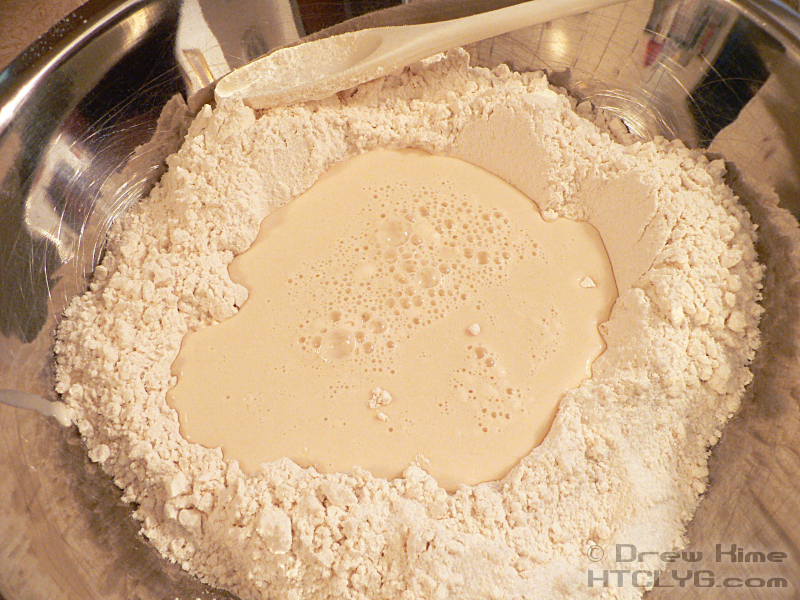
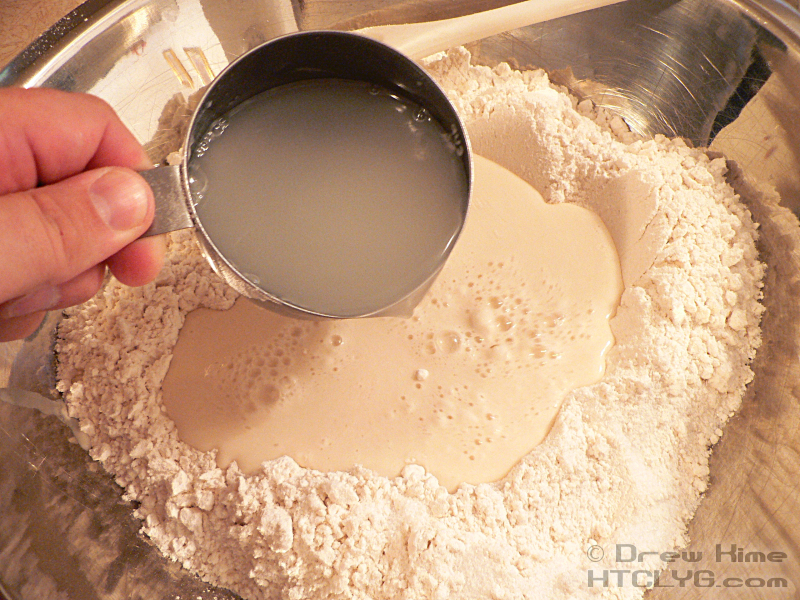
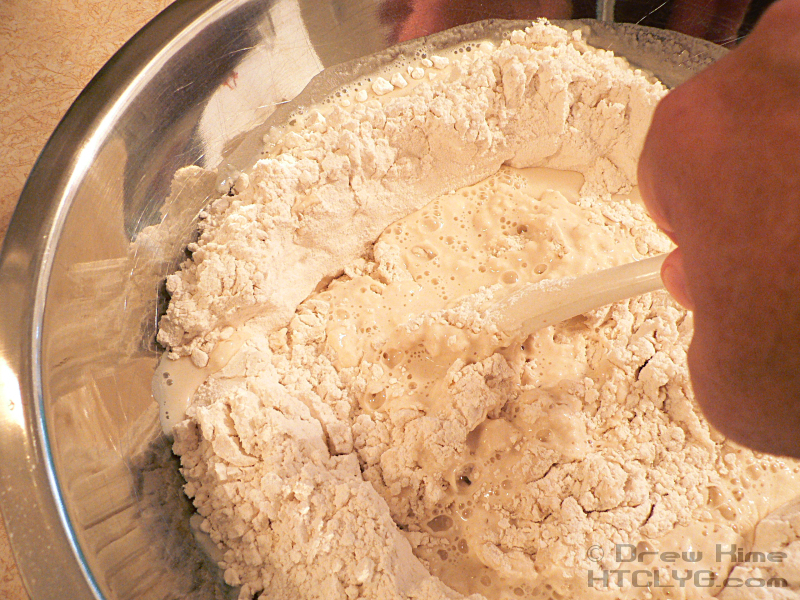
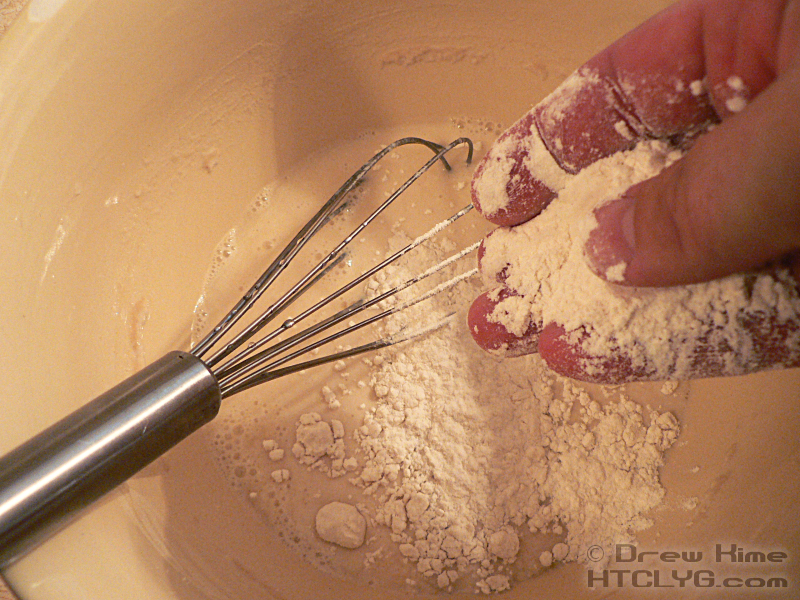
If you’re not using all the starter, add a handful of flour and a little warm water to it and stir. By “feeding” the starter, you can keep it going indefinitely. There are bakeries in San Francisco who claim they’ve been feeding the same starter for over a century.
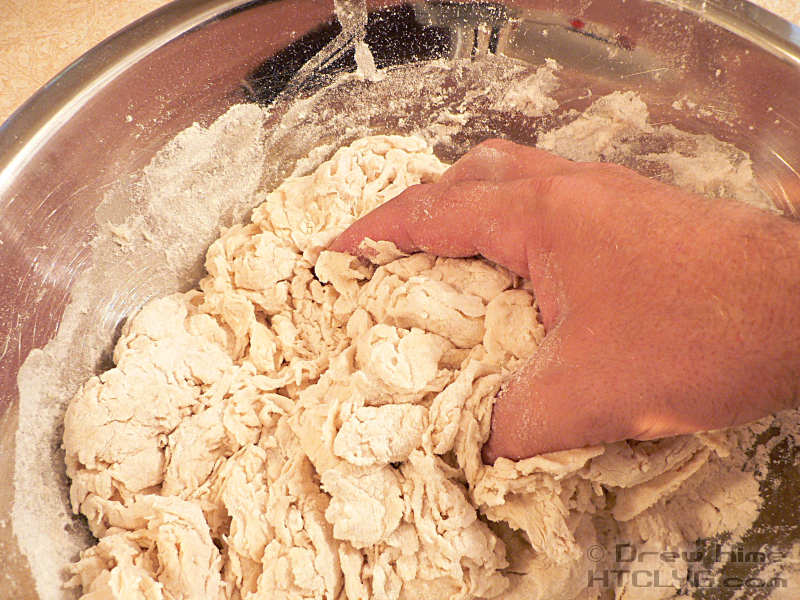
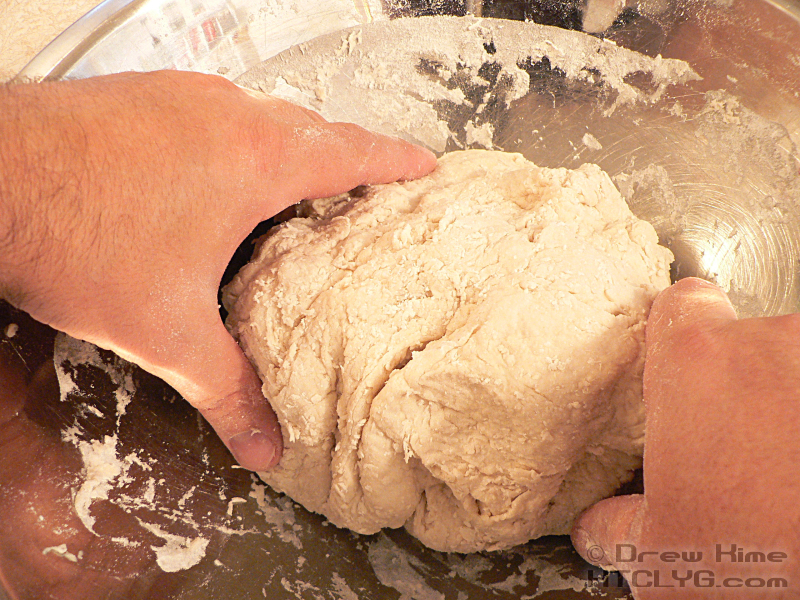
The dough won’t come together just using a spoon. Use your hands to work the dough in the bowl until it comes together into a ball.
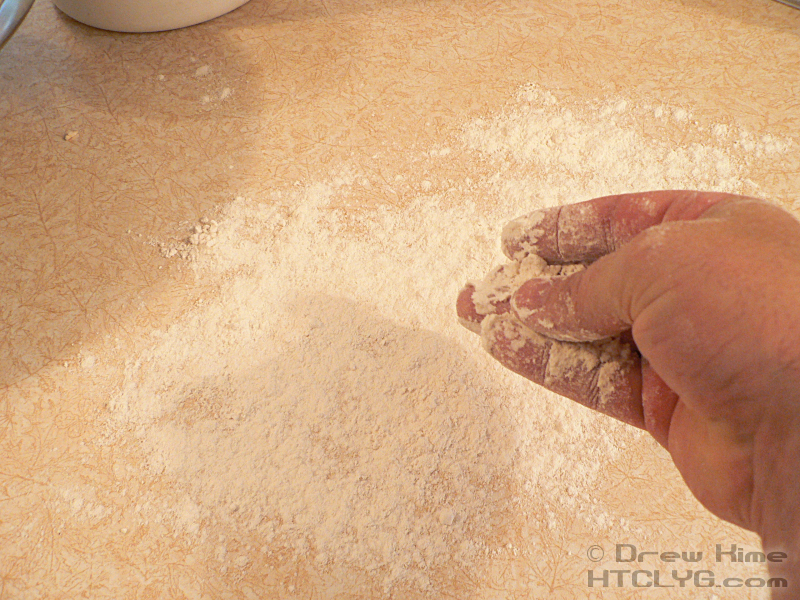
Make sure you have a spotlessly clean work surface. Anything on it will get picked up by the dough. Throw down a handful of flour and roll the dough in it.
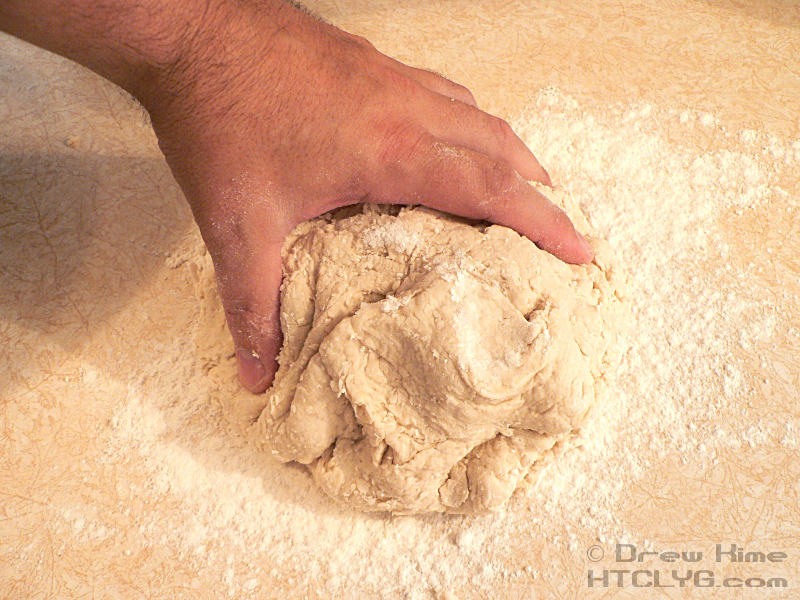
Kneading dough isn’t just about getting all the ingredients combined. You’re also stretching out the gluten. Start by pushing the dough away from you with the heel of your hand. Fold the end back towards you, and repeat. Keep doing this until the dough is smooth and elastic. This clip shows the last stages of the kneading.

You’re done when the dough is smooth and satiny.

Place the dough in a lightly-oiled bowl to rise. If you’ve got an antique bread bowl you can get away without oiling it.
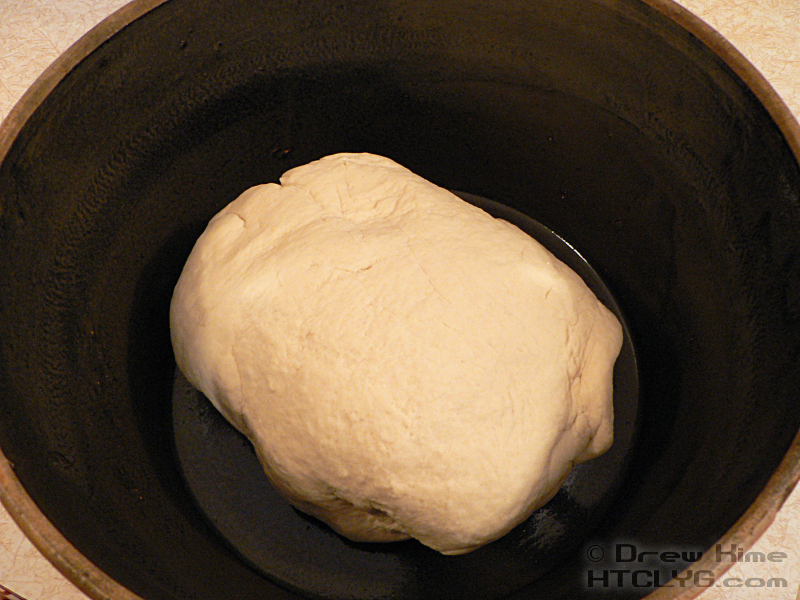
NOTE: Don’t use a stainless steel mixing bowl for this unless you’ve got a very warm place to put it. The metal will draw all the heat out of the dough. Even if you don’t kill your yeast, it will take forever to rist.

Cover the bowl with a clean dish towel and place it in a warm place until the dough has doubled in size — about two hours. It was cold in my house so, while I was mixing and kneading the dough, I set my oven on the lowest setting. I turned it off when I put the bowl in.
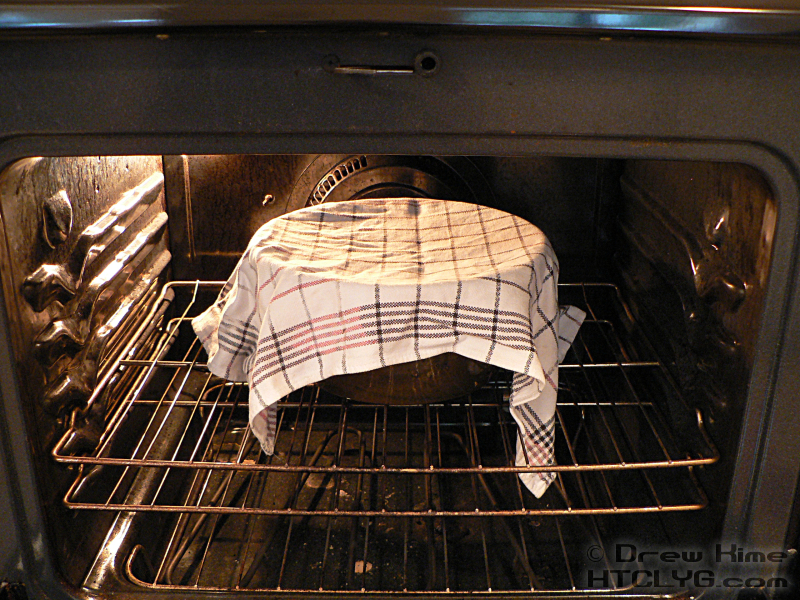
Unless your house is really cold, you shouldn’t need to do this, except to speed up the process. But it is possible to kill the yeast if it’s too cold. Mine was ready just a little short of two hours.
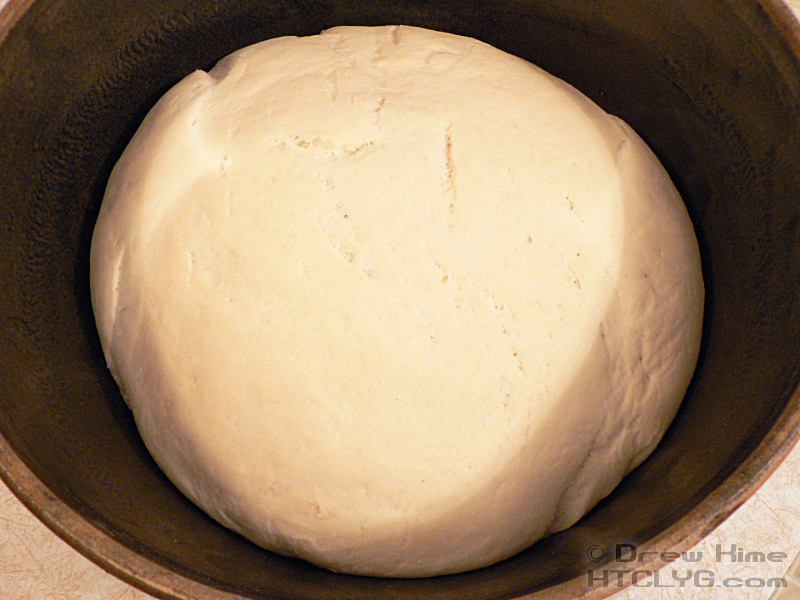
Remove the dough from the bowl and punch it down. You want to knock most of the volume out of it.
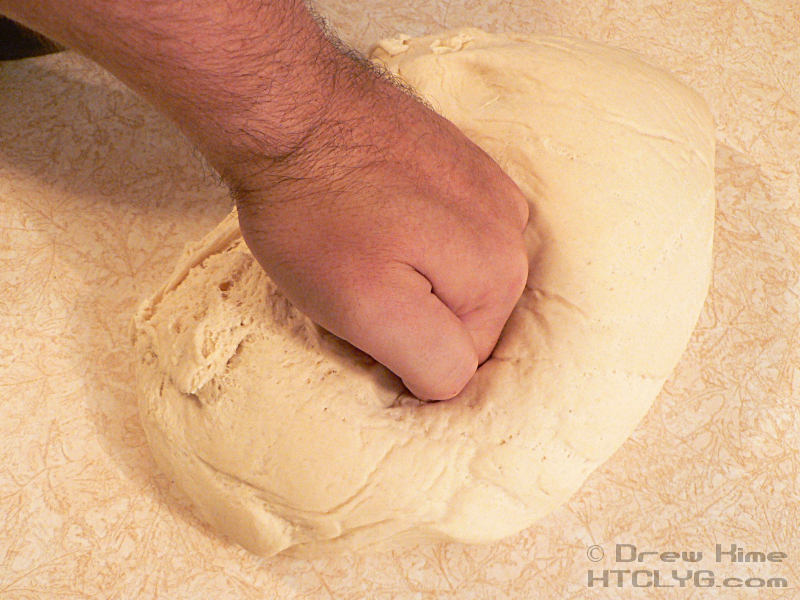
Then knead the bread briefly, just to get it back into a nice ball shape.
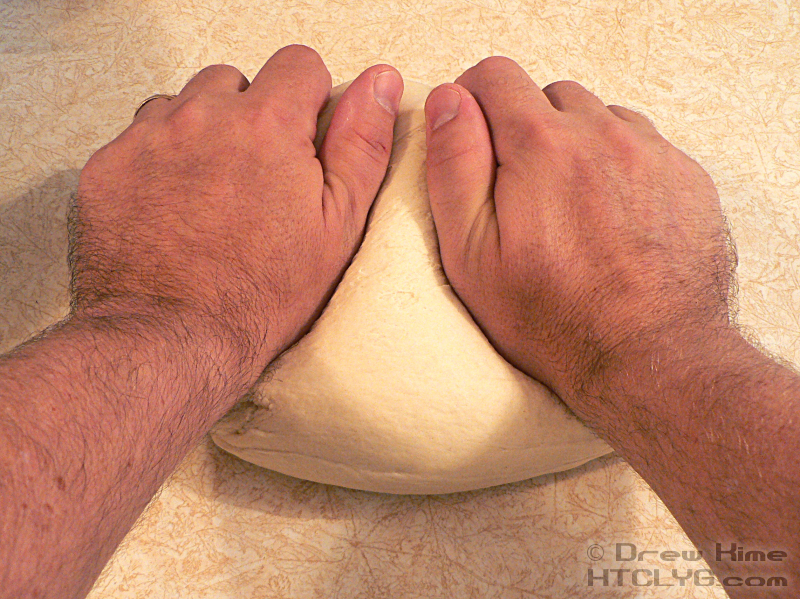
If you’re making a loaf, this is when you put it in the pan. Since I was making bread bowls I cut the dough in half, then in half again.
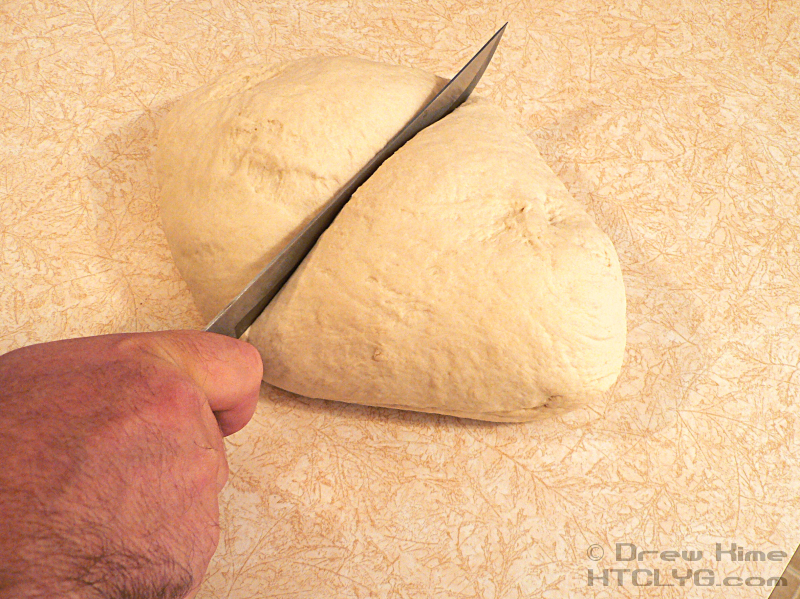
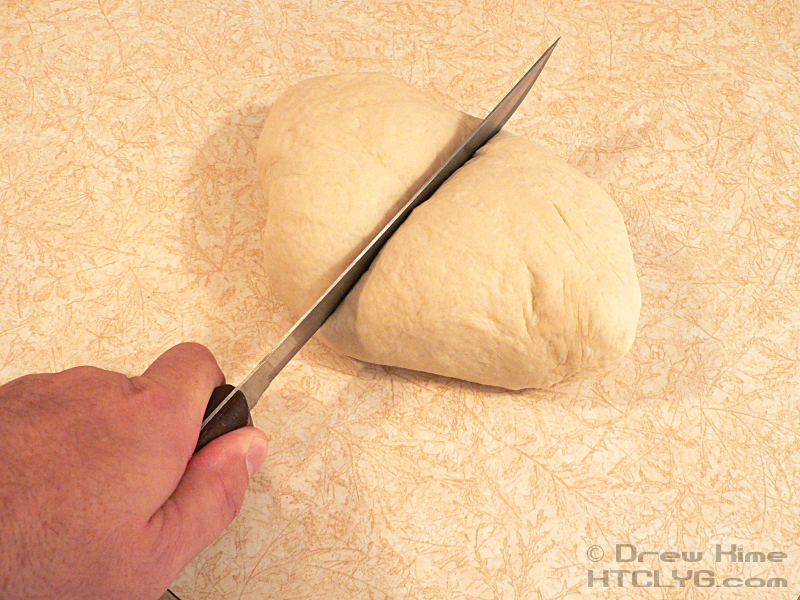
Then kneaded each of the pieces just until it was round again.

Form each piece of dough into a ball, and tuck any loose edges or seams underneath.
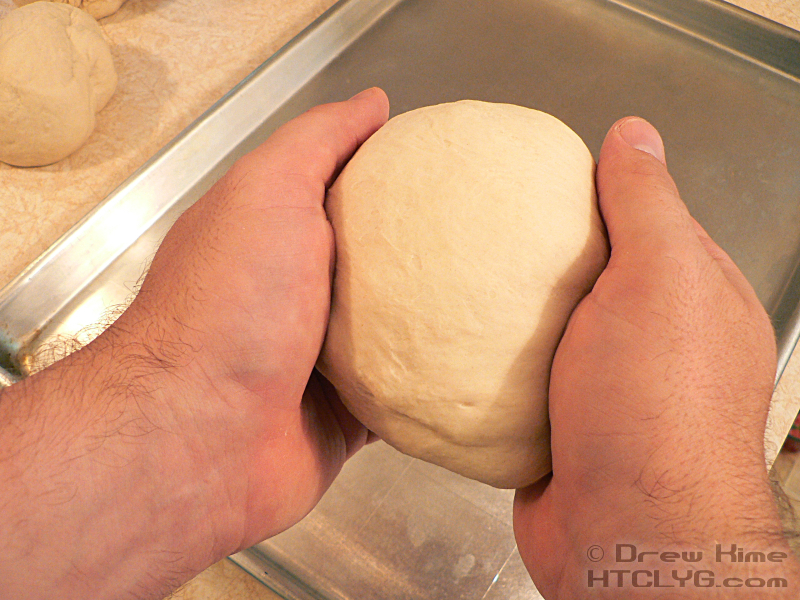
Place the dough on a baking sheet — ungreased — as far apart as you can.
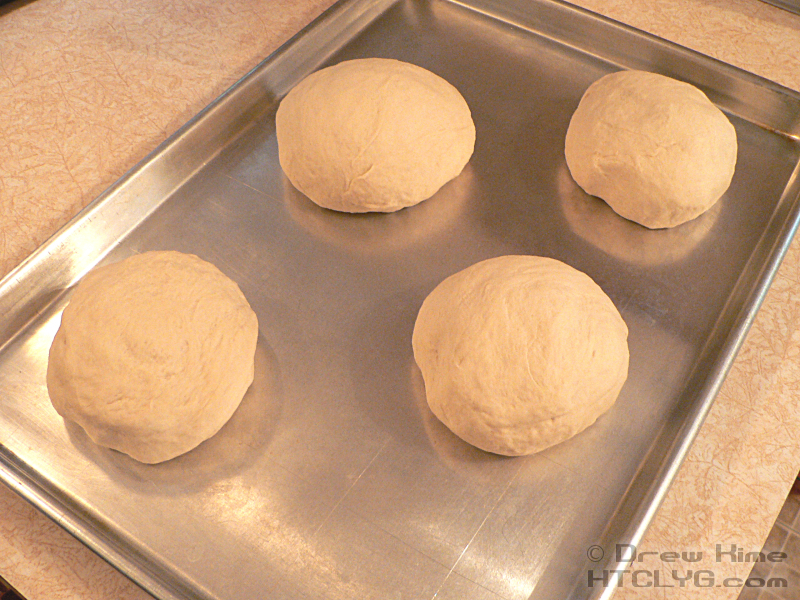
Put the baking sheet somewhere warm so the dough can rise a second time. (Yes, I put it back in the still-warm oven.) Let the dough double in size. It should take about an hour-and-a-half.
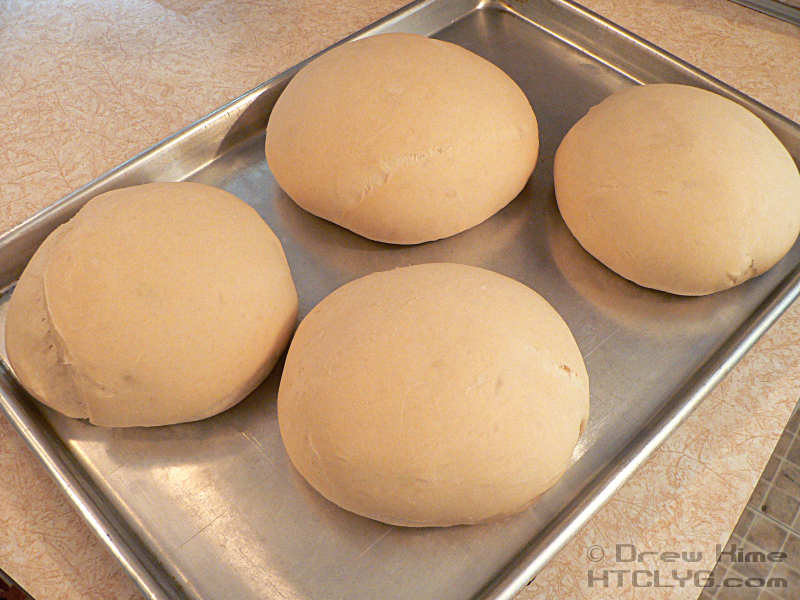
Bake at 425° for 15 minutes, then 375° for another 30 minutes. They are done when they make a hollow sound when you thump them.
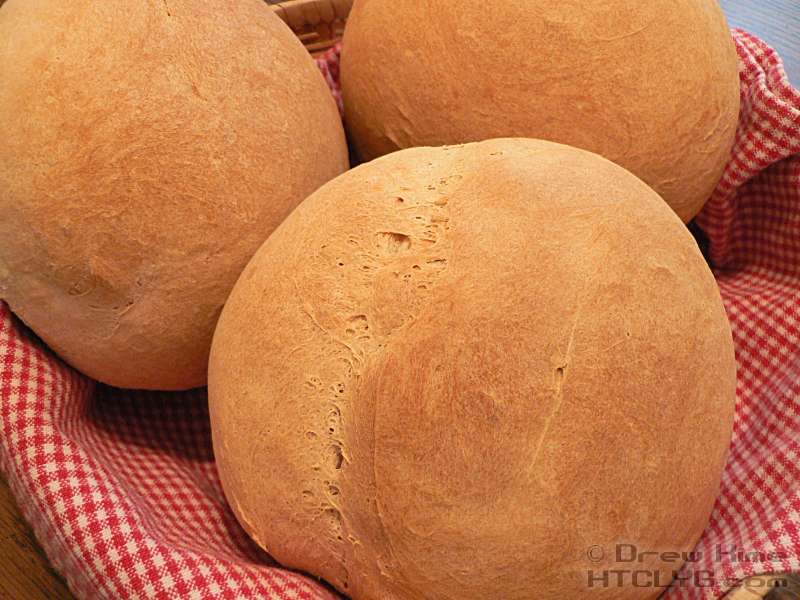
Slice a loaf while it’s still warm and serve with butter.

But the title of this post is “How To Make Sourdough Bread Bowls“. That first loaf was just to keep the family out of the kitchen long enough for me to prepare the bowls. I’ve learned to have the camera set up before I take food out of the oven or someone will eat it before I can take the shot.

Using a serrated knife, cut off the top of the loaf, about a third of the way from the top.

With a paring knife, make a cut straight down just inside the edge, nearly down to the bottom but not all the way through.
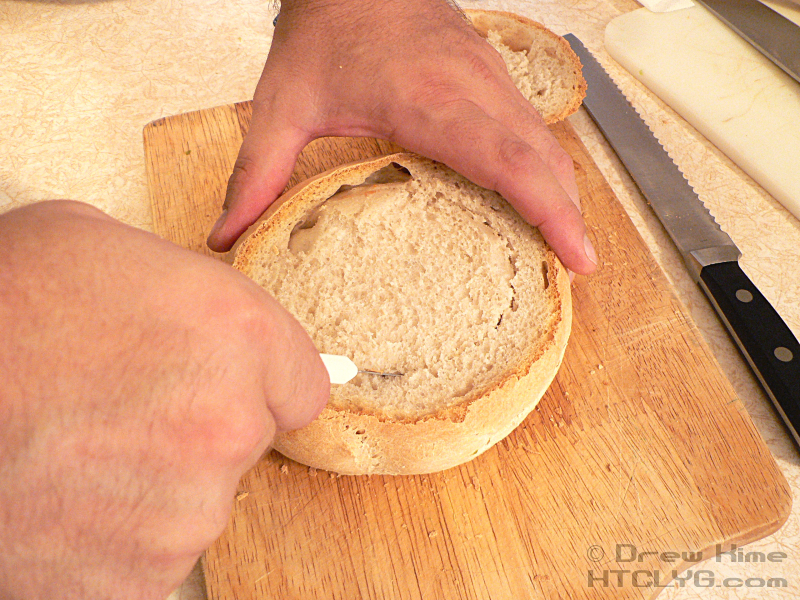
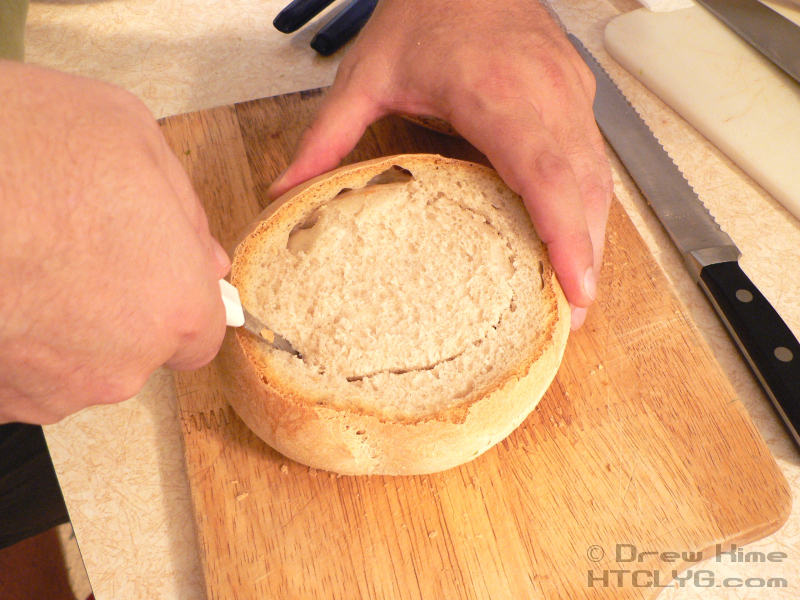
Reach into the cut with your fingers, and pry the center plug of bread out of the center.
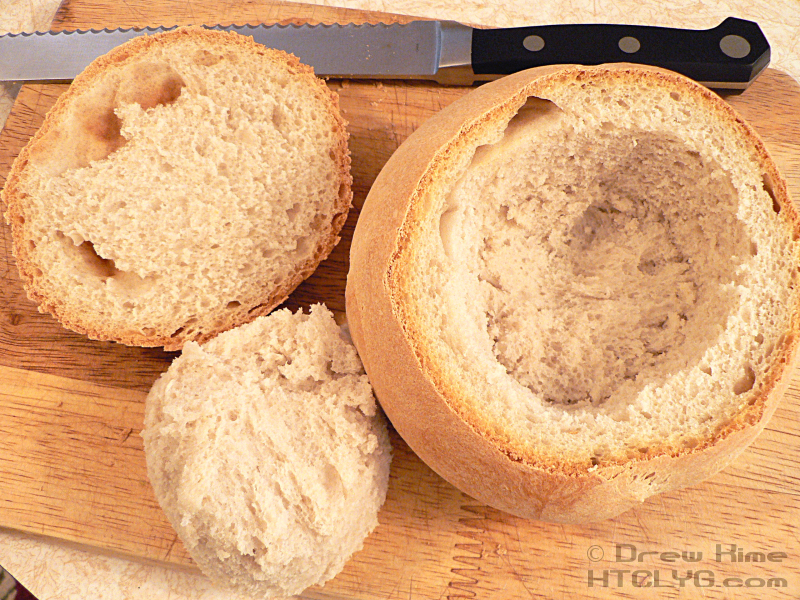
And that’s it.


Okay, that’s not completely it. You just know I’ve got to put something in that bowl, right?

Sign up using the form at the right to make sure you see the conclusion tomorrow.

I can guarantee I’ll be making these bowls several more times this fall, each time with something else to go in it. And I’m going to tell you all about it. Again.


Want more like this? For more recipes like this, that you can hold right in your hands, and write on, take notes, tear pages out if you want (Gosh, you're tough on books, aren't you?) you might be interested in How To Cook Like Your Grandmother, 2nd edition, Illustrated. Or to learn your way around the kitchen, check out Starting From Scratch: The Owner's Manual for Your Kitchen.

This entry was posted in Bread. Bookmark the permalink. Post a comment or leave a trackback: Trackback URL.

26 Comments

  1. Bob
    Posted September 16, 2008 at 11:06 am | Permalink

    Nice, I love bread bowls. Those look really good. Heh, I’ve recently started making bread too, it’s a good time. Yesterday I made challah, it came out awesome. Oh and your antique bowl rules.

  2. Megan
    Posted September 16, 2008 at 11:33 am | Permalink

    I’m on day 3 of my starter and I cant wait to make bread. My hubby has been asking for clam chowder in a bread bowl! I’m bookmarking!!!

  3. Posted September 16, 2008 at 11:51 am | Permalink

    Bob, what kinds have you made so far? This sourdough was my first, and I’ve got a sourdough garlic loaf sitting at home waiting for some tortellini tonight.

    Megan, will you be posting the clam chowder recipe? I need a list of things to put in these bowls. :-D

  4. Kristin
    Posted September 16, 2008 at 12:23 pm | Permalink

    They LOOK pretty, but . . . sourdough is not for me. I just can’t get into it. When we lived in Alaska, it was like some kind of state law that all bread must be sourdough. It was a long three years.

  5. northside food
    Posted September 16, 2008 at 2:51 pm | Permalink

    When I make sourdough starter at home, I keep it in a pitcher with a lid. Its super easy to pour that way.

    I lust after your antique bowl.

  6. Posted September 16, 2008 at 3:10 pm | Permalink

    Kristin, how about if I put some sun-dried tomatoes in it?

    Jennifer, a pitcher, that’s it! Got to stop at the thrift shop next Monday (it’s half-price day) and see what theyve got.

  7. Kristin
    Posted September 16, 2008 at 3:27 pm | Permalink

    NOOOOOO. I can’t stand sun-dried tomatoes. That would just make it worse. But luckily, you are not cooking for me.

  8. Posted September 16, 2008 at 3:48 pm | Permalink

    Hah! That was a “tomato panic” joke more than a real suggestion. But I like that reaction better.

  9. Sweet Bird
    Posted September 17, 2008 at 10:21 am | Permalink

    Snap Drew, nice crumb in that sourdough. I’m going to have to try out your recipe for starter.

    Just out of curiosity, how sour was your sourdough? I like them with a little pucker power…

  10. Posted September 17, 2008 at 11:18 am | Permalink

    Not very sour, actually. I got a tip from a friend to feed the starter with flat beer next time for more flavor. I’ll givt it a try.

  11. WishTrish
    Posted October 15, 2008 at 4:15 pm | Permalink

    Hi! I am making sourdough bowls today and found your blog while some of mine were rising. I decided to make my next batch by your recipe. They are rising now. :) However, mine are very small (and I used about 2 1/2 cups flour because I’m in the arid desert and it just couldn’t handle more). Can you give me rough dimensions of the size your bowls turned out? Thanks!

    P.S. I have some sourdough posts on my family blog as well. :)

  12. Posted October 15, 2008 at 7:19 pm | Permalink

    They were about 6 inches across.

    Just checked your blog. Holy cow, that’s a lot of sourdough starter. Did you read a recipe wrong or something?

  13. WishTrish
    Posted October 15, 2008 at 9:57 pm | Permalink

    Nope. I’m making A LOT of bread bowls and rolls as a favor to a friend of mine… special event…

    It was completely intentional. After a full day of baking, I now have about 1/3 less. Been on my feet with the smell of bread ALL DAY. ;)

    My bowls from your recipe came out delicious and perfect, except they are abou 3-4″ across. :( And I let them rise for like 7 hours. They just didn’t rise as much as yours did. Perhaps it’s a different stater. I didn’t read yours.

  14. Melissa
    Posted January 10, 2009 at 9:55 pm | Permalink

    Ok, Drew, I made some rolls with your sourdough starter and recipe (I decided to go with rolls rather than bread bowls). I just had one now and since it was pretty hot out of the oven what I mostly tasted was melted butter. ;) I think they’re okay, though. They do seem denser than the bread I’ve made before; is that normal with sourdough? Oh, and mine didn’t rise as high as yours (but they weren’t hard as rock, as I feared, so I’m eatin’ ‘em anyway).

  15. Posted January 10, 2009 at 11:09 pm | Permalink

    Melissa, I haven’t been baking yeast breads long enough to have made a whole lot of mistakes yet. (And that’s how I usually learn.) My sourdough was definitely denser than most white breads, but that’s what you need for bread bowls.

    The trick for a really light bread seems to be getting it into the oven after the second rising without deflating it. I’ve seen some of mine go down as I transferred them from the cutting board they were rising on to the pan I’m cooking them on.

    When you’re doing dinner rolls or a loaf, the second rise can happen in the same pan you’re going to bake in. If you have to transfer it, make sure you use way more corn meal on the board than you think you need. If it sticks even a little to the board it’s rising on, you’ll deflate it when you try to slide it off.

  16. Melissa
    Posted January 11, 2009 at 6:40 pm | Permalink

    Drew, I tried one today and I’m happy with it. :) I see what you mean with sturdier, and I do like the texture. Now that I know how it tastes, I will definitely make some bread bowls with them, and I think I’ll also make a loaf of bread and try some grilled cheese with ‘em (and mustard pickles, MMMMM).

    I always put them on the sheet I’ll bake with for the second rise. I am lazy, and I don’t want to have to clean two pans. ;) I line all my pans with parchment paper, too – so easy to clean up, and nothing burns with it!

    Thanks again for the recipe. I really enjoyed it. :)

  17. Posted January 11, 2009 at 7:22 pm | Permalink

    Thanks for the tip. I’ll have to get some parchment paper.

  18. Nivera
    Posted June 18, 2009 at 1:47 pm | Permalink

    I placed my bread bowls back in the oven as well for the second rise, thinking it would make them rise quicker. But then I thought….maybe just a *bit* hotter would be better and so I flipped on the oven to the lowest setting for a few minutes again. My bowls didn't rise at all. Did I kill em with too much heat?

  19. Posted June 18, 2009 at 2:18 pm | Permalink

    Nivera, I'm pretty sure that's exactly what happened. I thought the same thing once, and came out with totally flat dinner rolls. The lowest setting on my stove is 170°, and anything above about 120°-125° will kill it. I've even tried turning it on for two minutes then shutting it off before adding the bread. No luck.

    With bread, we just have to learn patience.

  20. Nivera
    Posted June 20, 2009 at 9:46 pm | Permalink

    Another attempt tonight at the bowls. It rose, but barely. Definitely not enough for a bread bowl. But the family said my "bread hunks" were good. :) My starter is bubbling so I'm pretty sure that's not the problem. I am planning another attempt for Monday. To go along with the French Onion soup recipe you put up. I'll let ya know if it's successful.

  21. Posted June 21, 2009 at 9:37 am | Permalink

    I really wish I could be more helpful. That's why I don't mind the times something doesn't come out the way I planned. When you get it right the first time, you don't know how to troubleshoot the problems.

    You might want to check out Knead To Be Loaved, a blog that is just about bread.

  22. Nivera
    Posted June 22, 2009 at 6:43 pm | Permalink

    Sucess! YAY!! I started WAY early in the day so it could have tons of sitting time to rise. And I made 2 batches so if one didn't go well, maybe the other would. One is better then the other, but both look great. Thank you!

  23. Posted June 22, 2009 at 8:36 pm | Permalink

    Woo-hoo! That's the thing with yeast. You just can't rush it. It's ready when it wants to be ready.

  24. Yoga Fitness
    Posted November 3, 2009 at 12:10 pm | Permalink

    Thank you so much for writing this post. I'm making bread bowls with broccoli and cheddar soup. It's the perfect weather for them now.

    You did a fantastic job, with the pictures and instructions, thanks again!

  25. Mia
    Posted April 27, 2010 at 10:11 am | Permalink

    Hi Drew,
    thanks for a lovely blog, I really enjoy reading it!
    Since I live in Sweden, I suppose our flours differ a bit. When I used your recipe, my dough turned out very tough, I had to put in a lot of effort when getting it together. Seems like the rising takes a lot of time aswell so it remains to be told if I succeed this first time :)
    Did you use all-purpose flour for these bread bowls? I used a flour which is a bit “enforced” to make it rise better. Maybe that was where it went wrong. Well, I’ll let it sit there and see what happens. Maybe we’ll have soup tomorrow instead!
    Again, I will continue browsing your blog for some more recipes. Since my husbands work brings him to the US every now and then, and we like to spend our holidays there aswell, it’s nice finding such an informative blog where we can check out our new favorite food!

  26. Posted April 27, 2010 at 11:59 am | Permalink

    Mia,

    I haven’t heard the term “enforced” for flour. Maybe “enriched”? What I used was all-purpose flour, which has less gluten than bread flour, but more than cake flour.

    This dough was fairly stiff, and today I probably would have added a little more water when kneading it. I’ve done a lot more yeast breads since then, and now I prefer a softer, stickier dough than when I started.

Subscribe to coments on this post

Post a Comment

Your email is never published nor shared. Required fields are marked *

*
*

You may use these HTML tags and attributes: <a href="" title=""> <abbr title=""> <acronym title=""> <b> <blockquote cite=""> <cite> <code> <del datetime=""> <em> <i> <q cite=""> <strike> <strong>

Subscribe to coments on this post
  • Free Online Class

    Sign up now for my free 10-day online course in the basics: Starting From Scratch

  • Buy the Recipe Cards

    Start your own recipe box, or fill up the one you've got. How To Cook Like Your Grandmother: Recipe Cards are a perfect addition to your set. They also make great gifts.

    Click here to select how many you want.

  • Buy the Books

    Whether you're just starting out, or already know your way around a kitchen, I've got you covered. How to Cook Like Your Grandmother is chock full of recipes and techniques that are based on what tastes good, not on junk science and fad diets. You won't find the words lite, low, lean, free or skim anywhere.

    Or pick Starting From Scratch to learn the difference between braising and roasting, and everything else you need to get comfortable in the kitchen.

  • Follow this blog

     Subscribe in a reader

    -- OR --
    To get recipes in your email
    Enter your email address:
    -- OR --
    Sign up for the weekly newsletter. Email address:
  • All-time Favorites

    Perfect Brownies
    Banana Cake
    French Onion Soup
    Egg Salad
    Onion Rings
    Bruschetta Pizza
    Peach Cobbler
    Cheesesteak
    Frozen Chocolate Truffle Pie
    Emily's Creamy Cheesecake


  • What Would Granny Cook?
  • No Secret Recipes
  • No Awards Please

Page optimized by WP Minify WordPress Plugin