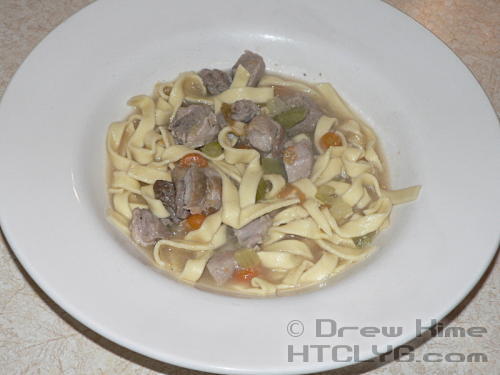
The last time I made turkey soup I totally spoiled my kids for ever giving them canned soup again. This time I think I’ve ruined myself.
I knew I wanted to get some turkey or chicken thighs, since I much prefer dark meat for soup. Actually I prefer it for just about everything. All I could find on short notice was bone-in. I didn’t think that would matter. (Remember this line — it comes back to bite me in the end.)
This would be the first time I did turkey soup that didn’t start from leftover roast turkey, so I decided to try something different. Instead of cooking the turkey, then dicing it up and tossing it in the soup, I butchered the thighs raw (mostly), and cooked it in the pot with the mirepoix. I noticed as soon as I tasted the finished product that the turkey was exceptional.
My wife told me the next day that she usually takes a little of the meat and a lot of the noodles. This time she went back for more of the meat. In most chicken and turkey soups the meat is actually dry, even though it’s literally floating in broth. This was tender and juicy.
I know I’ve seen boneless thighs at the butcher’s before. Next time I want to make soup, I’m going to call ahead and make sure they have some.
Ingredients
1-1/2 lb turkey thighs, bone in
— or —
1 lb boneless turkey thighs
1 cup turkey stock
1 cup carrot, sliced 1/8-inch thick
1/2 medium onion, diced (~1cup)
1 cup celery, chopped
2 large eggs
1 cup white flour
2 cloves garlic, minced
2-3 tbsp fat (rendered bacon fat or lard)
salt and pepper
Directions
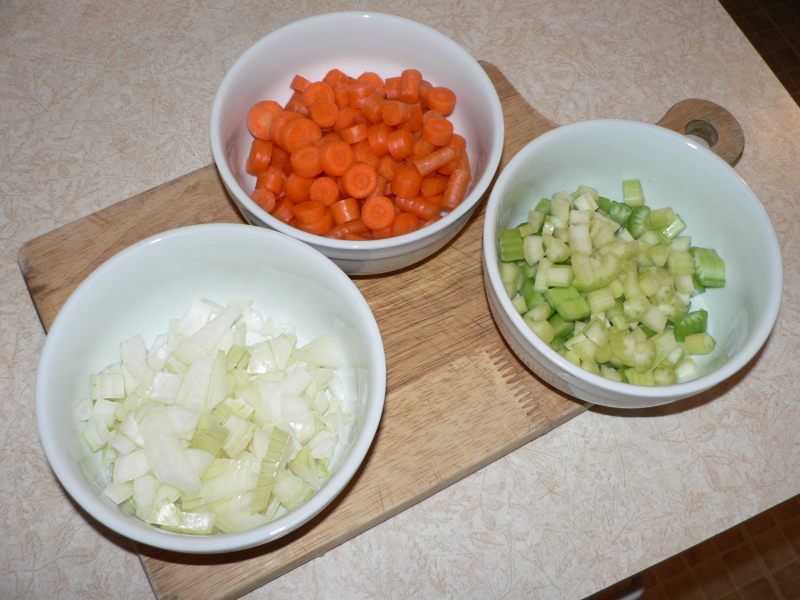
Make mirepoix from the onion, celery and carrot and set aside. All the veggies should be in half-inch or smaller pieces, slightly smaller than dice. (Yes, that’s why it’s called “dicing”.)
In a large pot or small dutch oven, melt a couple of tablespoons of fat over medium heat. Pat the turkey dry with a paper towel, then coat with salt and pepper.
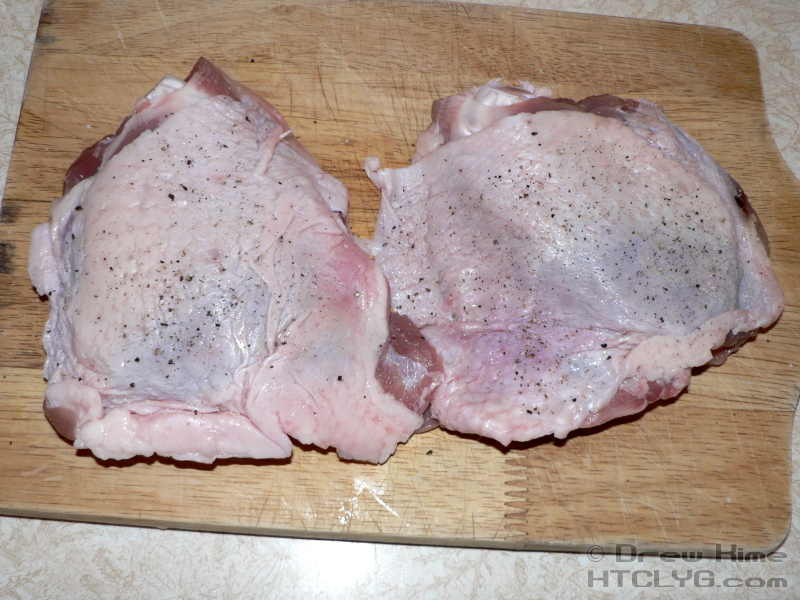
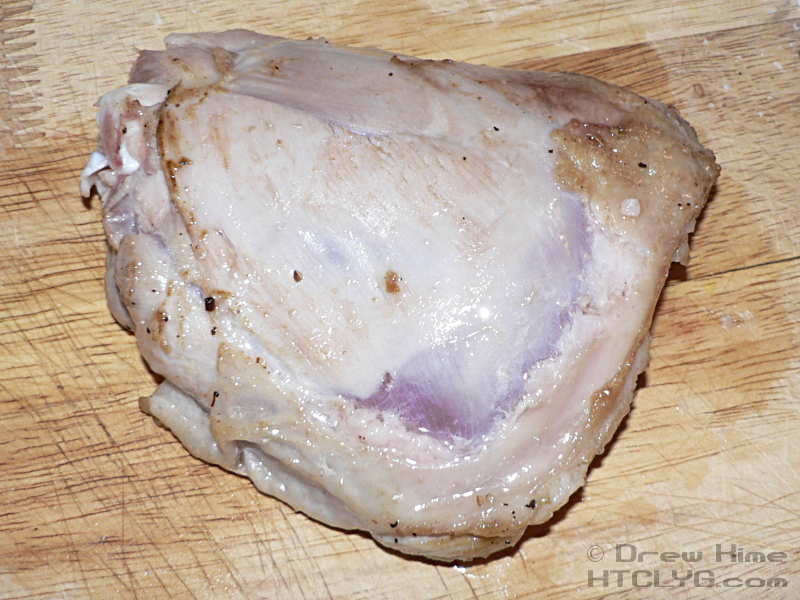
Put the thighs in the pot skin-side down and fry until the skin starts to peel back from the edges. Turn the turkey over and remove the skin using tongs and a sharp knife. Turn over one more time and cook until slightly browned.
Both the front …
… and back …
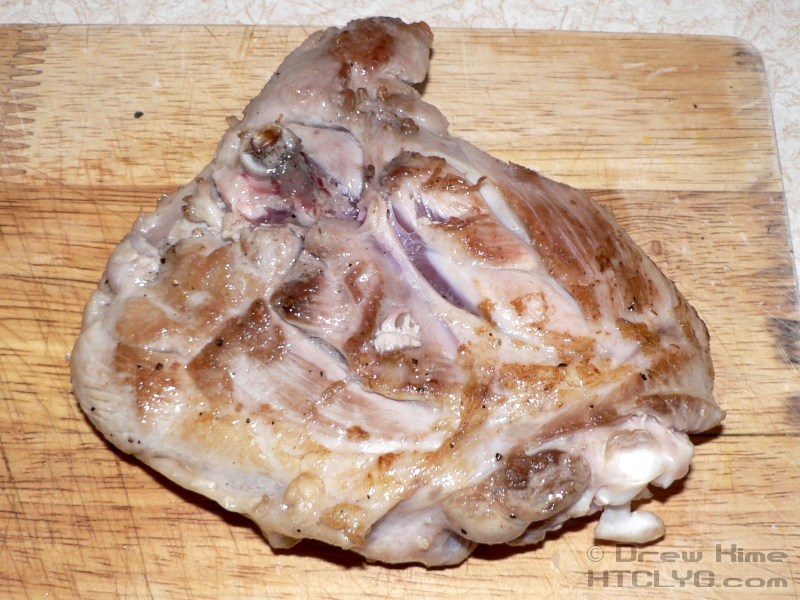
… should be just a little browned.
There are two goals to this step. First, to fry up the skin so you can have a snack while you’re working on the soup. Second, I find it easier to butcher the meat if it is a little cooked around the edges so I have something to grab it by. Completely raw poultry doesn’t give you anything to hang on to. Remove the meat and turn off the heat.
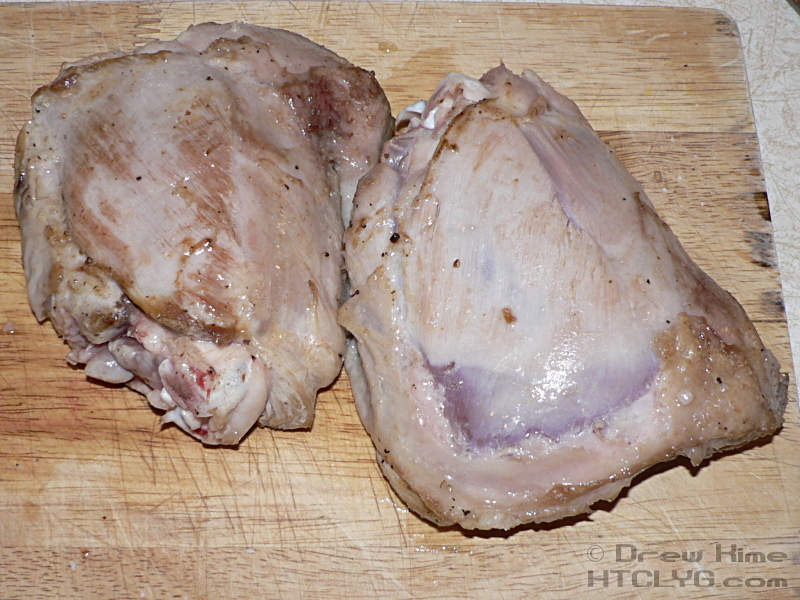
There is a good chance you’ll have a large amount of turkey fat in the pot at this point. I’ve never heard of a good use for it other than making biodiesel, so pour most of it out and discard it … unless you make biodiesel. (But that’s someone else’s blog.) Leave enough in the pot to keep it well lubed for the mirepoix.
Next you have to remove the bone. This is the most useful way to think about it, and is very different from carving a whole roast turkey. In that case you’re removing meat from the outside of the carcass. In this case you’re removing the bone from inside of the meat.
Rather than do a step-by-step of how to do this butchering, I’m going to recommend you order the thighs already boneless. That’s what I’m going to do in the future.
Once the bone is out, dice up all the meat into large bite-sized pieces.
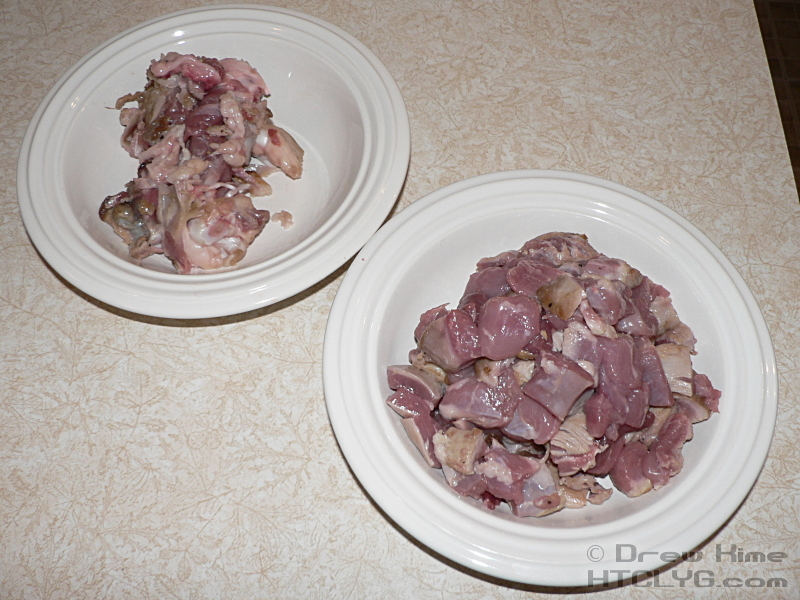
The second bowl above contains all the scrap that’s left over. Keep this in a zip-top bag in the freezer for the next time you make stock.
Wash your hands, knives and all surfaces the raw turkey has touched, except the inside of the pot. You don’t want to risk cross-contamination.
Now that everything is set, put the pot over medium heat again until the fat starts to bubble. Add the mirepoix and garlic and sauté until the onion is a little past clear and starts to pick up some color. Stir it frequently so the garlic doesn’t burn.
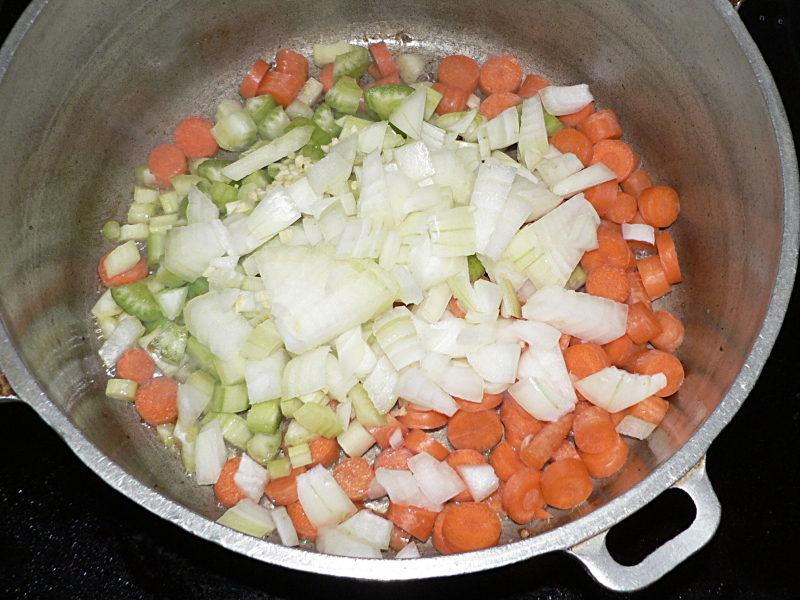
Push the veggies to the edges and put the turkey in the middle. Add plenty of salt and pepper — at least a teaspoon of each.
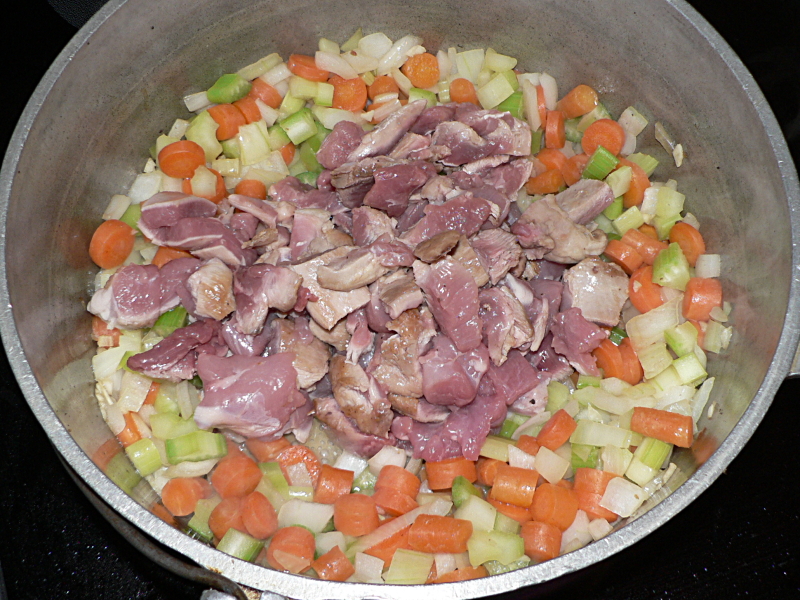
Turn the heat up and brown the meat, turning everything occasionally so all the meat gets well browned on all sides.
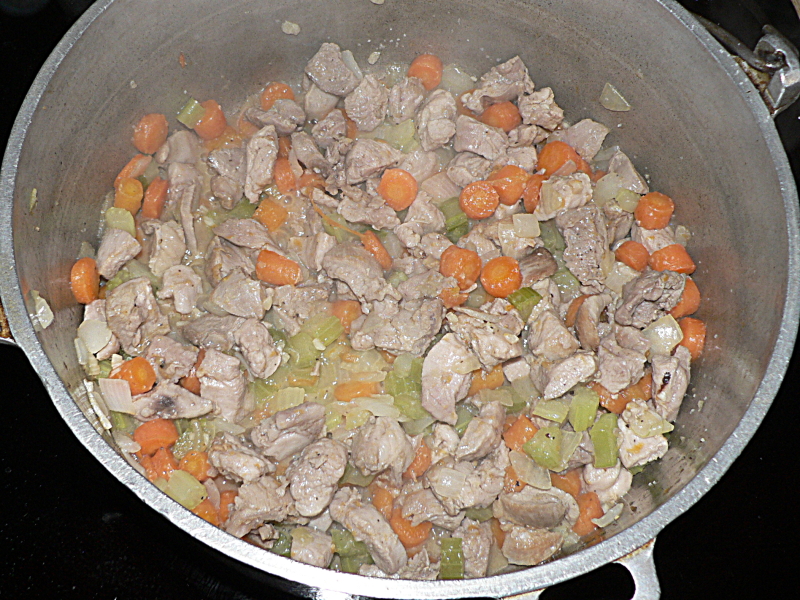
Add enough water to barely cover everything and allow the water to come to a boil.
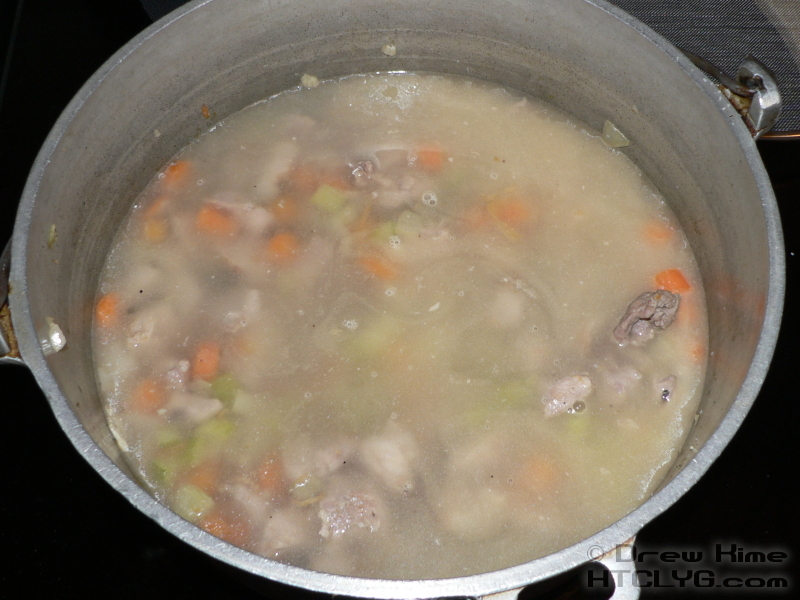
Add the stock and reduce heat to low. While it simmers for 20 minutes, make a thick pasta with the eggs, flour and salt. Cut into noodles 2 inches long and 1/4-inch wide and add to the soup.
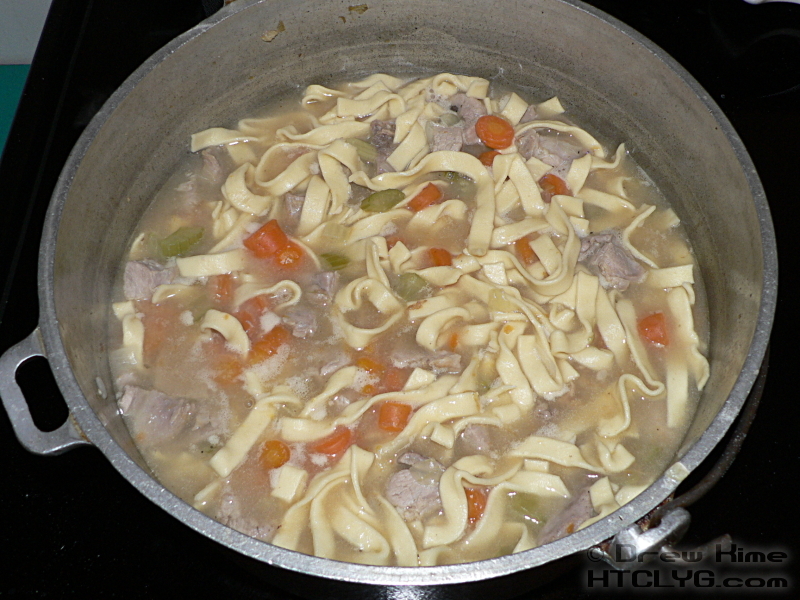
Check the salt and pepper and simmer another 10 minutes, stirring once or twice.
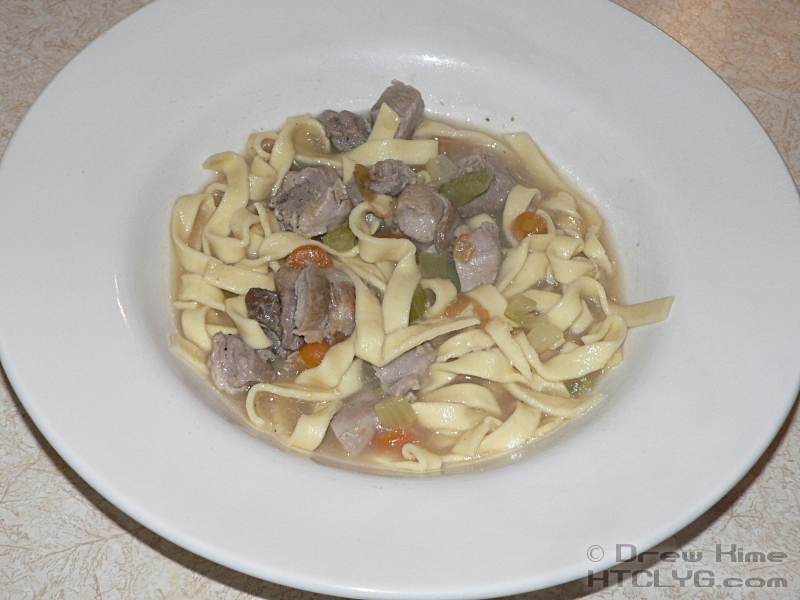
And that’s it.